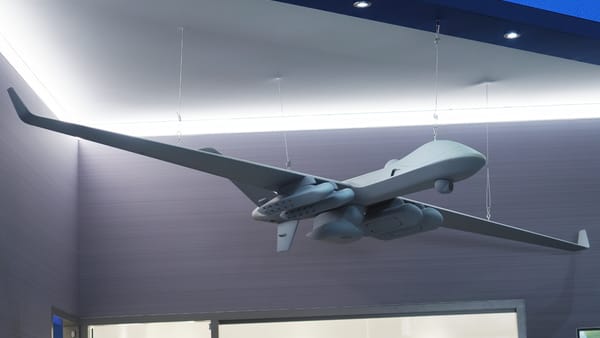

The landscape of war is constantly evolving. From phalanx to cavalry, tanks to submarines, new techniques and technologies are always being developed in an attempt to outwit or outgun the enemy. In more recent years, a major shift has been occurring. Though superior numbers and more powerful armaments will likely always remain a major factor, a larger emphasis has been placed on technological superiority — in the form of military drones.
Drones offer real advantages over traditional forms of warfare. They are unmanned and can be controlled with remarkable accuracy, minimizing the loss of human lives, particularly civilians. Compared to conventional weapons they can also be extremely cost effective, though powerful drones aren’t exactly cheap. Both Russia and Ukraine have employed various types of drones in the ongoing war, and Ukraine has not shied away from publicizing the success of its own.
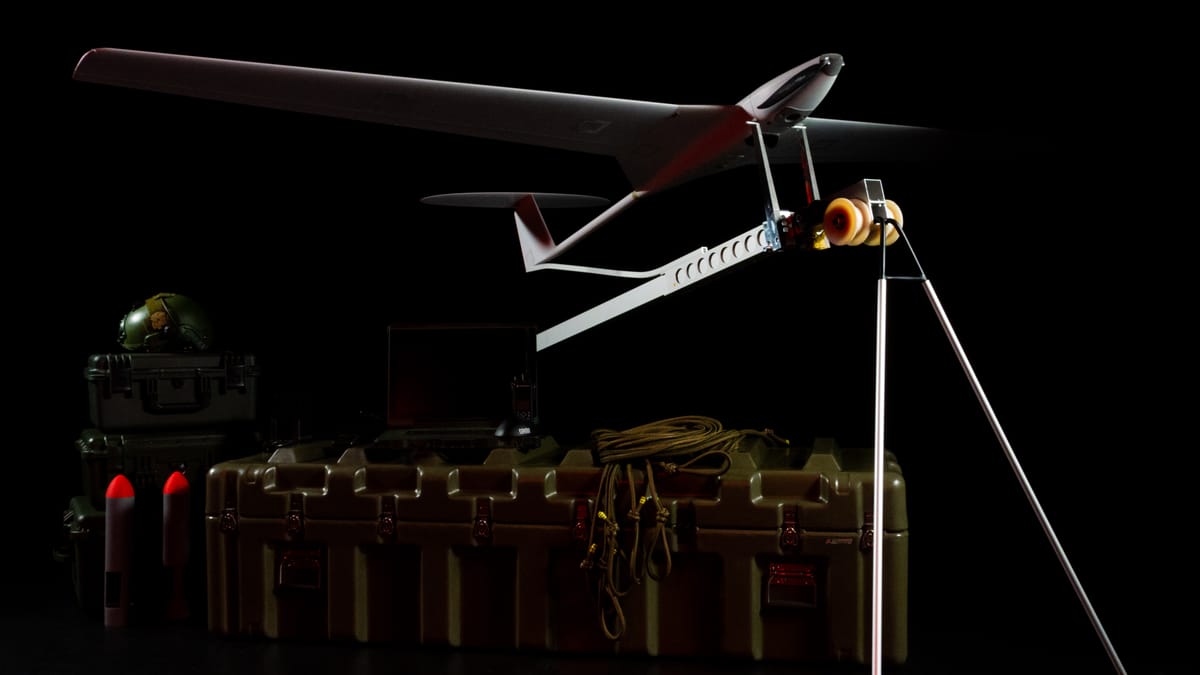
But one Ukrainian drone stands apart. Small, silent, and nearly invisible, the Punisher emerged as a weapon Russia simply wasn’t prepared for.
- Wingspan
- 7.5feet
- Cruising altitude
- 1,300feet
- Max speed
- ~44mph
- Strike range
- 30miles
- Cost per drone
- Just under $200,000
- Missions by early March
- 60+successful
The Bayraktar TB2: Ukraine’s Opening Act
Before the Punisher took center stage, the headline drone was the Turkish-made Bayraktar TB2. This medium-altitude long-endurance (MALE) drone, produced by Baykar, was the main offensive drone used by Ukrainian forces. In January, prior to the start of the invasion, the air force confirmed it had approximately 20 of these drones, with more on the way.
The TB2s proved effective, and clips of their successful missions were shared on social media by the Ukrainian government. According to Aaron Stein of the Foreign Policy Research Institute, “These TB2 strikes are, in comparison to ground combat, relatively small in number, but important for Ukrainian morale precisely because it shows Russia does not control the skies.” With NATO denying President Zelensky’s request for a no-fly zone, this public show of strength could not have been more important for the Ukrainian people.
As the months wore on, however, Ukraine stopped broadcasting the footage. Of the 20 Bayraktar TB2s Ukraine started with, five were confirmed shot down, with Russia claiming to have destroyed six more. It seemed as if Russia had found a way to neutralize Ukraine’s drone threat. But Ukraine had another weapon in development — one Russia didn’t see coming.
Enter the Punisher
In mid-February, Ukraine revealed a new drone from the weapons company UA Dynamics. The company was founded by Ukrainian veterans of the 2014 annexation of Crimea by Russian forces. Having familiarized themselves with Russian tactics on the battlefield, these veterans felt prepared to build a weapon that would be useful against future Russian aggression.
Over the course of six years, they developed, tested, and perfected their new drone, the Punisher. If you hadn’t heard of UA Dynamics before, that’s why: this is all they make, and they have a very clear mission statement. According to a statement from UA Dynamics Director Maksym Muzyka published on the company’s website: “We do not sell complexes. We do not produce for export. We do not profit from war. Everything we do is aimed solely at defeating the occupying forces.”
It’s a lovely sentiment — but what actually makes the Punisher so special compared to the myriad of alternatives? The key is in the drone’s size and stealth.
Small, Silent, and Nearly Invisible
These small combat drones have a wingspan of only 7.5 feet. Because of their small size and weight, they cannot be picked up by radar. That compact frame, combined with a cruising altitude of 1,300 feet, also makes them incredibly difficult to spot with the naked eye — especially against a backdrop of heavy cloud cover, the persistence of which has made traditional aerial combat more difficult.
A 1,300-foot altitude is low compared to other military drones that dodge radar by flying much higher, but for a craft this small it’s more than sufficient to avoid detection. Just as importantly, the Punisher is extremely quiet. Once it has launched, it is nearly impossible to hear, making detection even harder.
Unlike other small “kamikaze” drones, the Punisher is also reusable. After completing a mission, it can be reloaded and launched again in roughly five minutes.
As for raw performance, the Punisher is relatively slow, with a max speed of approximately 44 miles per hour. But it makes up for that with stealth and reach: a strike range of 30 miles into enemy territory, a remarkably long range for a drone of its size. Each Punisher carries a payload of three missiles, which can strike three targets simultaneously or focus a larger attack on a single area.
By early March, it was reported that Punisher drones had already completed over 60 successful missions. They have primarily targeted logistics and supply vehicles and other infrastructure, aiming to break the Russian supply chain and grind down Russian morale.
Another benefit of that small size: the Punisher can be quickly dismantled to fit into four boxes for transport. The 7.5-foot wingspan is nearly invisible at altitude, but a lot more noticeable on the ground. Disassembling the drones for transport prevents them from becoming obvious targets.
And by combat-drone standards, they are remarkably cheap. The Bayraktar TB2 carries a price tag of approximately $2 million; each Punisher comes in at just under $200,000.
The Punisher’s Weaknesses
The biggest weakness of the Punisher is that it cannot fly alone. Each one is accompanied by a Spectre drone, also from UA Dynamics. The Spectre acts as the Punisher’s guidance system, performing reconnaissance and painting targets. Once the targeting information is acquired, it is sent from Spectre to Punisher, which then carries out the strike.
Bifurcating the functions across two aircraft allows for smaller, lighter, harder-to-detect craft — but the obvious downside is that twice as many drones means twice as many targets. If either drone is destroyed, the other is rendered useless until its companion can be replaced.
The other issue — though not strictly a weakness — is that the Punisher is not a one-size-fits-all solution for Ukraine’s drone needs. Before it arrived, Ukraine relied primarily on two types of drone. First was the Bayraktar TB2: large drones capable of taking out Russian battle tanks and strategic locations, but limited in utility by their size.
The second category was much smaller drones used for reconnaissance and small strikes. The American-made Switchblade by AeroVironment is a small kamikaze drone, also known as a loitering drone — the name comes from its ability to remain airborne for hours while hunting for a target, seemingly loitering in the air. In practice, the Switchblades provided to Ukraine are generally able to stay aloft for only up to an hour while searching. These can be carried by soldiers in rucksacks and launched via a tube, with the entire setup weighing just 5.5 pounds.
Because Switchblades are essentially self-targeting bombs with wings, they are naturally single-use. For small, reusable drones, the cheapest option is to stop by your local big-box store: both Ukraine and Russia have made extensive use of consumer-grade drones as a cheap and effective means of reconnaissance.
The Punisher is crucial precisely because it fills the gap between those fleets. It is armed and reusable, but far smaller than the TB2. It may not be effective against heavily armored tanks, but it is easily transported, quickly deployed, and able to strike strategic targets from long range. These stealthy drones gave Ukrainian forces a serious tactical advantage.
The Future of the Punisher
What does the future hold for the Punisher? It’s genuinely hard to say. Very little has been publicized since the drone’s unveiling in February. There are obvious tactical reasons for this: the war is still ongoing, and most information about the Punisher and its missions is classified.
It’s also hard to say whether the Punisher will remain as effective in the coming months as it was in its early appearances. As they are used more heavily, Russian forces may learn to counter them. And there is the issue of supply: according to UA Dynamics’ website, the company’s production facilities appear to have been evacuated during Russia’s push to take Kyiv, and they were still trying to resume production.
What can be said for sure is that the emergence of the Punisher has been called a game-changer for Ukraine, and the drone has been described as the scourge of Russian forces. Most tellingly, at the time of writing there did not appear to be a single report or claim out of Russia that any Punisher had been captured or destroyed. Perhaps talk of the Punisher has died down because countermeasures grew more effective and the drones stopped seeing the same success — or perhaps it is because the virtually silent, virtually invisible drones have been so effective that Russian forces have literally not known what hit them.
Key Takeaways
- The Punisher is a small, reusable combat drone built by UA Dynamics, a Ukrainian company founded by veterans of the 2014 Crimea annexation, after six years of development.
- Its advantage is stealth: a 7.5-foot wingspan too small for radar, a quiet 1,300-foot cruising altitude, and a body that breaks down into four boxes for transport.
- It strikes up to 30 miles into enemy territory with a payload of three missiles, and can be reloaded and relaunched in about five minutes.
- At just under $200,000 each, it is roughly a tenth the cost of a $2 million Bayraktar TB2.
- Its main limitation is dependence on a companion Spectre reconnaissance drone — doubling the number of targets, with each useless if the other is lost.
- By early March it had logged 60+ successful missions, primarily against Russian logistics and supply lines, with no confirmed Russian claim of capturing or destroying one at the time of writing.

Simon Whistler
Simon Whistler hosts MegaProjects, bringing engineering, infrastructure, and military-machine stories into clear narrative focus for viewers who want the systems, tradeoffs, and human decisions behind the build.
Frequently Asked Questions
What is the Punisher drone?
The Punisher is a small, reusable combat drone developed by Ukrainian weapons company UA Dynamics. It was revealed in mid-February and is designed to slip past Russian defenses thanks to its small size, low altitude, and near-silent operation, striking strategic targets from long range.
Why is the Punisher so hard to detect?
Its 7.5-foot wingspan is too small to be picked up by radar, and its 1,300-foot cruising altitude plus heavy cloud cover make it very difficult to see with the naked eye. It is also nearly impossible to hear once launched, which makes detection even harder.
How does the Punisher compare to the Bayraktar TB2?
The Bayraktar TB2 is a large medium-altitude long-endurance drone able to destroy tanks and strategic sites, but its utility is limited by its size and roughly $2 million price tag. The Punisher is far smaller and cheaper at just under $200,000, and while it isn’t effective against heavily armored tanks, it is easily transported and quickly deployed for long-range strikes.
What is the Punisher’s biggest weakness?
It cannot operate alone. Each Punisher relies on a companion Spectre drone for reconnaissance and target painting, which doubles the number of aircraft in the air — and therefore the number of targets. If either drone is destroyed, the other is useless until its companion is replaced.
How effective has the Punisher been?
By early March, Punisher drones had reportedly completed over 60 successful missions, primarily targeting Russian logistics, supply vehicles, and infrastructure. At the time of writing, there was no Russian report or claim that any Punisher had been captured or destroyed.
Is the Punisher the same as a kamikaze drone like the Switchblade?
No. The American-made Switchblade is a single-use “kamikaze” or loitering munition — essentially a self-targeting bomb with wings. The Punisher is reusable, able to be reloaded and relaunched in roughly five minutes, and fills the role between Ukraine’s large TB2s and its small single-use drones.
Sources
-
Hero image source by Maxim Subotin / Wikimedia Commons (CC0), CC0 1.0.
Related Projects
Ukraine’s Robot Attack Dogs: When Science Fiction Met the Mud
Ukraine sent four-legged combat robots to the front. Then mud, batteries, and Russian jamming pushed back. What the robo-dogs really revealed
A-10 Warthog: Why the Close-Air-Support Icon Is Finally Leaving
The A-10 Thunderbolt II survived decades of retirement fights, but 2026 divestments show why the Air Force is finally moving past the Warthog.
The A-12 Avenger II: The Stealth Bomber That Could Have Changed Everything
How the A-12 Avenger II, the US Navy's triangular stealth attack jet nicknamed the Flying Dorito, collapsed before its first flight