
The USS Constellation was supposed to be the U.S. Navy finally doing the sensible thing.
After the expensive disappointments of the Littoral Combat Ship and the drastically reduced Zumwalt destroyer program, the frigate plan sounded refreshingly conservative. Do not invent a science project. Start with a proven European FREMM frigate. Add American sensors, weapons, survivability standards, and fleet integration. Build a multi-mission escort that could protect carriers, hunt submarines, fight surface ships, and add missile cells without costing destroyer money.
That was the promise. By 2026, it had become a cautionary tale.
The Navy still describes the Constellation-class guided-missile frigate as a multi-mission small surface combatant with air warfare, anti-submarine warfare, surface warfare, electromagnetic warfare, Aegis Baseline Ten, an Enterprise Air Surveillance Radar, and a Mk 41 vertical launch system. Those are real capabilities. The problem is that the acquisition strategy meant to make the ship faster and safer did not survive contact with the actual design work.
In late 2025, the Navy made a strategic shift away from the Constellation-class program. The first two ships, Constellation and Congress, remained the near-term work at Fincantieri Marinette Marine. The third through sixth ships were targeted for cancellation, and the service moved toward a different frigate effort, FF(X), based on the Legend-class National Security Cutter.
That does not make the USS Constellation useless. It does make it a strange kind of lead ship: a frigate designed to prove the Navy had learned from past procurement mistakes, then overtaken by the very risks it was supposed to avoid.
What the Navy Wanted
The United States had an obvious gap below its destroyers.
Arleigh Burke-class destroyers are powerful, but they are also expensive and in constant demand. They defend carriers, launch missiles, provide air defense, escort other ships, and do much of the work that a global Navy asks of surface combatants. The Littoral Combat Ships were meant to cover some lower-end missions, but their mission-module concept, survivability concerns, propulsion troubles, and early retirements damaged confidence in the idea that they could become the dependable frigate-like workhorse the fleet needed.
The Constellation program was intended to correct that. The Navy wanted a ship able to operate in blue water and littoral regions, work independently or with a carrier or expeditionary strike group, and fill the small-surface-combatant role without asking a destroyer to be everywhere at once.
The requirements were ambitious but not irrational. The Navy wanted air defense, anti-submarine warfare, surface warfare, electronic warfare, command-and-control integration, space for future growth, and enough endurance to keep up with larger formations. It wanted a ship that could escort high-value units, add sensors to a distributed fleet, and increase the number of hulls available for missions where a destroyer might be excessive.
On paper, a frigate based on an existing parent design was a logical way to get there.
The FREMM Bet
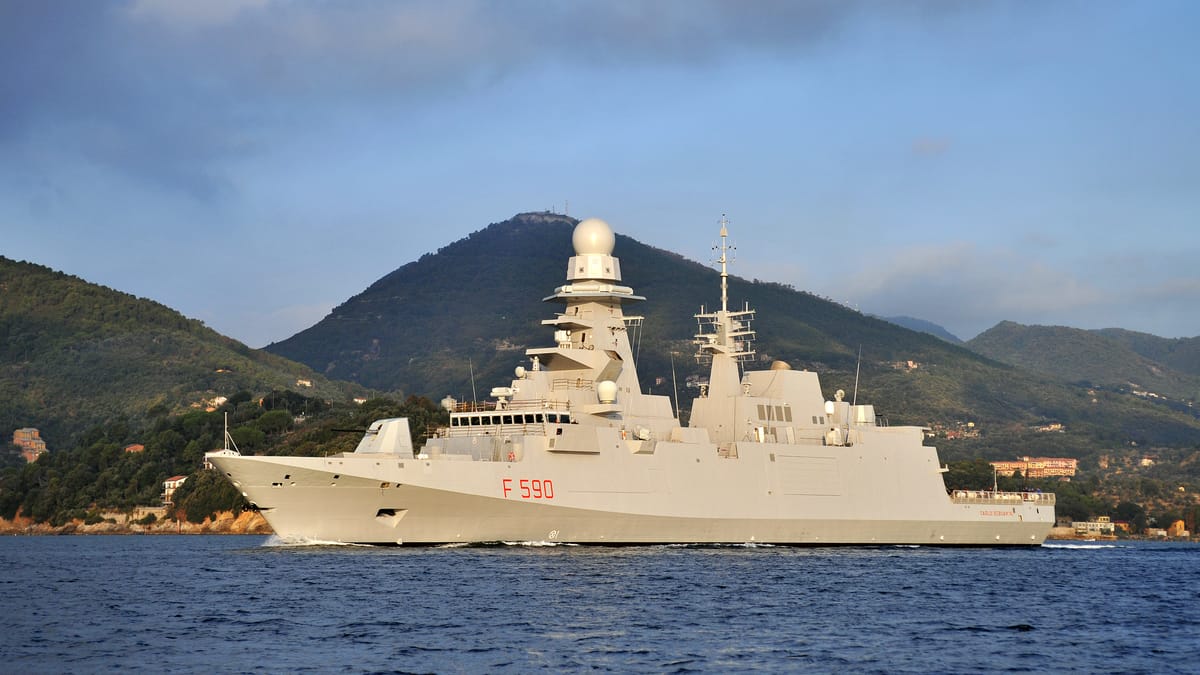
The winning design came from Fincantieri Marinette Marine and was based on the Italian-French FREMM family. That mattered because the parent design had already gone to sea. It was not a blank-sheet concept. Italian and French FREMM variants had already shown that the hull form could support a serious multi-mission frigate.
The American version, however, was never going to be a simple copy.
The Constellation design had to fit U.S. combat systems, U.S. survivability requirements, U.S. weapons, U.S. communications, and U.S. Navy support assumptions. The Navy fact file lists a 496.1-foot ship with a 64.6-foot beam, 18-foot draft, and 7,291 long tons of displacement. It also points to the major combat systems that made the ship American in practice: Aegis Baseline Ten, Enterprise Air Surveillance Radar, Mk 41 vertical launch cells, electronic warfare and information-operations capabilities, communications systems, and countermeasures.
That equipment made the frigate much more than a lightly armed patrol ship. It also changed the parent-design equation. The more the Navy modified the FREMM base, the less the program could rely on the parent design to reduce risk.
That is the central irony of Constellation. The project started as the anti-Zumwalt, anti-LCS lesson: pick something real, change only what you must, and get steel into the fleet. But the accumulated American requirements pushed it toward the same design-instability problem that has haunted other shipbuilding programs.
A Serious Warship, Not a Cheap One
The finished Constellation concept was never going to be a bargain-basement frigate.
Its planned weapons and sensors were closer to a compact high-end combatant than to a cheap patrol vessel. Aegis integration would allow the ship to share the fleet’s air and missile defense picture. Mk 41 launch cells would give it access to the Navy’s standard missile architecture. Naval Strike Missiles would add an over-the-horizon anti-ship punch.
Anti-submarine sensors and aviation facilities would let it contribute to submarine hunting, a mission that becomes more important as Russian and Chinese undersea forces improve.
That made the frigate attractive. It also made the cost comparison harsher.
If a frigate becomes large, heavily integrated, and expensive enough, the question stops being “Is this better than the Littoral Combat Ship?” and becomes “Why not build more destroyers, or a simpler frigate, instead?” Congressional Research Service reporting on the 2026 state of the program captured that oversight problem: the design was about three-quarters the displacement of a modern Arleigh Burke Flight III destroyer and carried many similar installed capabilities, while lawmakers were still being asked to believe the cost gap would remain large enough to justify the class.
The ship’s advocates could answer that destroyers are overworked and that a smaller combatant with Aegis and anti-submarine capability still has a useful role. But once the Constellation line became slow and expensive, that answer lost force.
The Schedule Broke First
The lead ship was procured in fiscal year 2020. Early budget plans pointed to delivery in 2026. That date is now gone.
The Navy’s fiscal year 2026 budget estimated delivery of the first ship in April 2029. CRS described that as a 33-month delay from the July 2026 date in the FY2020 budget submission. GAO put the problem more bluntly: the Navy started construction before completing enough design work, and the first ship was expected to deliver at least three years late.
That was not a minor slip. It cut directly against the reason for choosing a parent design in the first place.
GAO’s 2025 testimony said the Navy had not increased fleet size over the previous 20 years despite nearly doubling the shipbuilding budget, and it used the frigate as an example of the same acquisition habits that produced cost growth and delay elsewhere. Construction began before the design was stable. Basic design documents and structural components kept changing. Lead-ship work stalled. Follow-on ships inherited risk.
By November 2025, the first Constellation was reportedly only about 12 percent complete. That is a devastating number for a program sold on speed and lower risk.
Why the Program Was Truncated
On November 25, 2025, the Navy announced a strategic shift away from the Constellation-class frigate program. The public line was not that small surface combatants were unnecessary. It was that this version was no longer the way to get them fast enough.
That distinction matters.
The Navy did not stop wanting frigates. In December 2025, it announced a new FF(X) effort based on HII’s Legend-class National Security Cutter design, with a stated goal of getting the first hull in the water in 2028. In April 2026, HII said the Navy had awarded Ingalls Shipbuilding a $283 million lead-yard support contract for design work, long-lead material, and pre-construction activity.
In other words, the service did not abandon the small-combatant mission. It abandoned the idea that the Constellation program, as structured, was the fastest path to it.
CRS summarized the new approach as truncating FFG-62 to no more than two ships and initiating FF(X). The third through sixth Constellation-class hulls, which had not begun construction, were to be canceled. The first two ships continued for the moment, partly to keep work moving at Marinette while policymakers decided how to use the yard’s industrial capacity.
That leaves the USS Constellation in an odd position. It may still become a capable ship. It will not become the beginning of the 20-ship frigate fleet originally imagined.
The Lesson of Constellation
The easy story is that the Navy should never have modified a foreign design. That is too simple.
No serious U.S. Navy frigate was going to enter service without American combat systems, survivability standards, supply chains, weapons, and communications. The fleet needed a ship that could plug into U.S. doctrine, maintenance, training, and battle networks. Some modification was unavoidable.
The harder lesson is about discipline. A parent design only reduces risk if the parent remains a meaningful anchor. If the program starts with an existing ship but then changes enough of the arrangement, structure, systems, weight, and standards, it can drift into a “parent design in name only” problem. At that point, the Navy carries the complexity of a new design while still telling itself it has bought the certainty of an old one.
Constellation also shows why shipbuilding mistakes are so punishing. Software can be patched quickly. A bad contract structure or unstable ship design can eat years, billions of dollars, and scarce skilled labor. It can also create opportunity cost: every delayed frigate is a hull the fleet does not have while Chinese shipbuilding keeps moving.
The Navy’s new FF(X) push is an implicit admission that delivery speed has become a capability of its own.
What Comes Next
As of June 2026, the future USS Constellation is best understood as both a ship under construction and a warning.
The ship still represents the kind of capability the Navy wanted: a smaller surface combatant with serious sensors, missile capacity, anti-submarine relevance, and enough flexibility to work with larger fleet formations. But the program no longer represents the acquisition model the Navy wants to scale.
If Constellation and Congress are completed, they may still be useful ships. They may give the Navy experience with Aegis-equipped frigates, FREMM-derived design choices, and the industrial lessons of building complex small combatants in Wisconsin.
But the larger story has already shifted. The question is no longer whether the Constellation class will restore the Navy’s frigate fleet. It is whether the Navy can take the bruising Constellation experience, apply the right lessons to FF(X), and stop repeating the pattern where an urgent need becomes a delayed, redesigned, over-complicated program.
The USS Constellation was supposed to prove the Navy could buy a practical frigate without reinventing the wheel. Instead, it proved how difficult that discipline is to maintain once every requirement, integration point, and industrial constraint starts pulling on the design.
That may be its most important service.
Key Takeaways
-
The USS Constellation was intended as a lower-risk guided-missile frigate based on the proven Italian-French FREMM parent design.
-
The American version grew into a complex warship with Aegis Baseline Ten, Enterprise Air Surveillance Radar, Mk 41 launch cells, and U.S. survivability and integration requirements.
-
GAO and CRS reports tied the program’s delay to design instability and construction starting before the design was sufficiently complete.
-
The lead ship’s expected delivery slipped from the original 2026 timeframe to 2029, while the first hull was reportedly only about 12 percent complete in late 2025.
-
The Navy shifted away from the Constellation-class program in late 2025, keeping the first two ships in play while moving toward the National Security Cutter-based FF(X) frigate.

Simon Whistler
Simon Whistler hosts MegaProjects, bringing engineering, infrastructure, and military-machine stories into clear narrative focus for viewers who want the systems, tradeoffs, and human decisions behind the build.
Frequently Asked Questions
What is the USS Constellation?
The future USS Constellation, hull number FFG-62, is the lead ship of the U.S. Navy’s Constellation-class guided-missile frigate program.
Was the Constellation class canceled?
The program was truncated rather than cleanly erased. The Navy shifted away from the broader Constellation-class plan in late 2025, with the first two ships continuing for the moment and later planned hulls targeted for cancellation.
Why did the program run into trouble?
The central problem was design instability. Oversight reporting found that construction began before enough design work was complete, and continued design changes helped push the lead ship’s delivery years behind the original schedule.
What ship is the Constellation based on?
The design is derived from the Italian-French FREMM frigate family, especially the Italian version operated by the Italian Navy. The U.S. version added American combat systems, weapons, survivability requirements, and support assumptions.
What weapons and systems were planned for the Constellation class?
Public Navy descriptions include Aegis Baseline Ten, Enterprise Air Surveillance Radar, Mk 41 vertical launch cells, electronic-warfare capability, communications systems, countermeasures, and multi-mission roles including air, surface, and anti-submarine warfare.
What is FF(X)?
FF(X) is the Navy’s follow-on frigate effort announced after the Constellation-class shift. It is based on HII’s Legend-class National Security Cutter design and is intended to deliver a smaller surface combatant faster.
Sources
-
Original MegaProjects video: USS Constellation: The US Navy’s Immense $1.3B Superfrigate
-
NAVSEA: U.S. Navy awards Guided Missile Frigate (FFG(X)) contract
-
Congressional Research Service: Navy Constellation (FFG-62) and FF(X) Class Frigate Programs
-
GAO: Navy Shipbuilding - Enduring Challenges Call for Systemic Change
-
HII: Ingalls Shipbuilding is awarded frigate lead yard support contract
-
Hero image source by Fabius1975 / Wikimedia Commons, public domain. Image shows Carlo Bergamini, the Italian FREMM parent-design family used as the basis for the Constellation program.
Related Projects
Sea Hunter
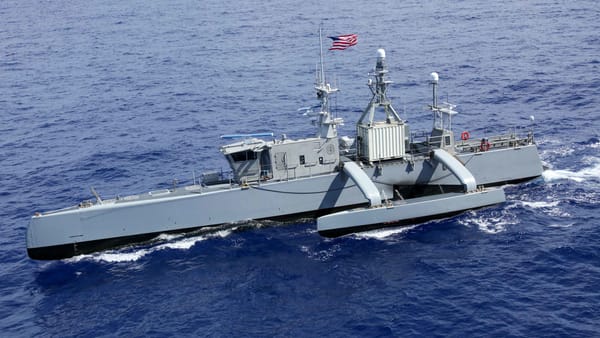
How Sea Hunter grew from a DARPA submarine-tracking prototype into a fleet-controlled unmanned surface vessel for the U.S. Navy.
LRASM
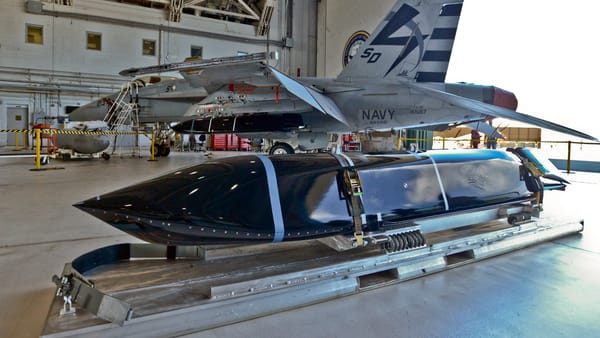
How LRASM restored America's long-range anti-ship strike capability with stealth, autonomy, and a missile built from the JASSM-ER family.
A-10 Warthog
The A-10 Thunderbolt II survived decades of retirement fights, but 2026 divestments show why the Air Force is finally moving past the Warthog.
MQ-28 Ghost Bat
Australia's MQ-28 Ghost Bat is a Boeing-built collaborative combat aircraft designed to team with crewed jets, fire missiles, and scale allied airpower.