
Talon-A2 sounds like the kind of machine that belongs in a breathless weapons briefing: an autonomous vehicle dropped from the world’s largest aircraft, accelerated past Mach 5, and recovered after runway landing.
That is impressive. It is also easy to describe badly.
Talon-A2 is not a combat aircraft in the normal sense. It is not a deployed missile force. It is not a magic answer to China and Russia’s hypersonic programs. The more useful way to understand it is as a reusable hypersonic flight testbed: a vehicle built to give the Pentagon repeated, instrumented access to the extreme speed, heat, vibration, pressure, guidance, and recovery problems that make hypersonic systems so hard to develop.
That distinction matters because the United States does not just need another dramatic test shot. It needs a way to test often enough to learn quickly.
In that sense, Talon-A2 may be important less because it went fast once, and more because it went fast, came back, and can be studied, repaired, modified, and flown again.
What Talon-A2 Actually Is
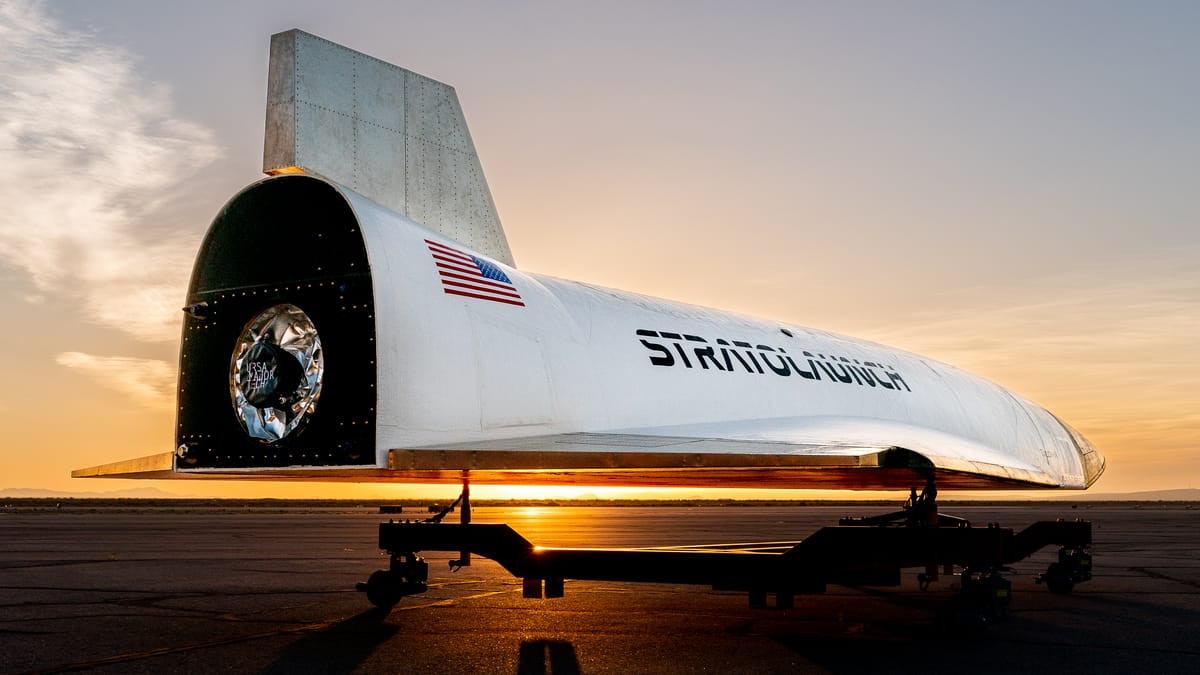
Talon-A is Stratolaunch’s reusable autonomous hypersonic test vehicle family. Talon-A2, often written TA-2, is the vehicle that put the program into the spotlight by completing two recoverable hypersonic flights: one in December 2024 and another in March 2025.
Stratolaunch says the vehicle exceeded Mach 5 during both flights and completed autonomous recovery. The Defense Department release described the March 2025 mission as the second successful flight of a fully recoverable uncrewed hypersonic test vehicle, launched from the Roc carrier aircraft over the Pacific and recovered at Vandenberg Space Force Base.
That makes Talon-A2 different from many hypersonic test articles. A conventional ballistic missile test or single-use glide vehicle can produce valuable data, but the test article is usually gone at the end. If something went wrong, engineers are left with telemetry, debris if they are lucky, and the cost of building another article.
A recoverable vehicle changes that cycle. The payloads, sensors, heat-worn surfaces, structural parts, and navigation hardware can be inspected directly. The testbed can be modified and flown again. That does not make hypersonic development easy, but it makes the learning loop shorter.
Why Reusability Is the Big Deal
Hypersonic flight is not merely “fast flight.” It is a destructive environment.
At Mach 5 and above, a vehicle flying through or near the atmosphere faces intense heating, difficult aerodynamics, high structural loads, and guidance problems that do not resemble normal aircraft development. Sensors can be shaken, heated, jammed, or blinded. Materials expand and erode. Small errors in control can become large errors in position.
For decades, that has made hypersonic testing expensive and infrequent. The United States has demonstrated hypersonic vehicles before, from the X-15 era to later experimental programs, but turning that into a routine test cadence has been a different problem.
That is where Talon-A2 fits into the Multi-Service Advanced Capability Hypersonic Test Bed program, or MACH-TB. The point of MACH-TB is not only to build one impressive vehicle. It is to increase the pace at which U.S. programs can test components, payloads, sensors, controls, and materials under realistic hypersonic conditions.
Defense News reported that the Pentagon has wanted to move toward a much higher hypersonic test cadence, and that Talon-A is one of several systems used to create realistic flight environments. Stratolaunch’s own framing is similar: Talon-A is meant to make high-Mach flight testing more accessible and repeatable.
The strategic value is obvious. A country that tests once every many months learns slowly. A country that can fly, recover, inspect, modify, and fly again learns faster.
The Roc and the Air-Launch Model
Talon-A2 does not take off under its own power from a runway.
Instead, it is carried aloft by Roc, Stratolaunch’s enormous twin-fuselage carrier aircraft. Roc was originally tied to air-launch-to-orbit ambitions, but after Stratolaunch changed direction, the aircraft became a launch platform for high-speed test vehicles.
That air-launch model solves several problems at once. Talon-A does not need to carry the mass and structure required for normal runway takeoff. It can begin its powered phase from altitude. The carrier aircraft can place the test vehicle over the correct range and release corridor. The testbed can then light its rocket engine, accelerate into the hypersonic regime, collect data, and return to a runway.
It is not the only way to run hypersonic tests. Rocket Lab’s HASTE and Kratos’ Erinyes are also part of the broader MACH-TB ecosystem. But Talon-A’s reusable runway recovery gives it a different role: it is closer to a reusable aircraft-style testbed than to a disposable booster or target.
Defense News also reported that Stratolaunch has been preparing a modified Boeing 747, Spirit of Mojave, as a second launch platform. If that path matures, the company could support more customers and avoid depending on Roc alone.
The Navigation Problem
Speed gets the headlines, but guidance may be the harder problem.
A hypersonic vehicle has to know where it is and where it is going while flying through conditions that can punish electronics and limit ordinary navigation options. GPS may be unavailable, jammed, spoofed, or simply inadequate for the stresses involved.
Northrop Grumman says its inertial measurement unit technology flew aboard Talon-A during the reusable hypersonic tests. The company describes the unit as a GPS-independent navigation technology designed to survive intense hypersonic environments and help guide vehicles at Mach 5 and above.
That is a quieter part of the story, but it may be one of the most important. Hypersonic weapons are not useful because they are fast in a straight line. They are useful if they can navigate, maneuver, survive, and arrive where intended.
The testbed is therefore valuable not only as a vehicle, but as a flying laboratory for everything inside it.
What It Is Not
The YouTube title calls Talon-A2 a missile that cannot be stopped. That is an understandable hook, but the real picture is more careful.
Talon-A2 is currently best understood as a test vehicle. It helps the United States test the physics, components, and operating concepts behind future hypersonic systems. It is not, by itself, an operational strike weapon sitting in a squadron ready for combat tasking.
That does not make it unimportant. In some ways, a reusable testbed is exactly what the United States needs before fielding more credible operational systems. Hypersonic programs have a long record of delays, failures, cancellations, and overpromising. A repeatable flight-test platform addresses one of the main bottlenecks.
But there is a difference between “this vehicle broke Mach 5 and landed” and “the Pentagon now has an unstoppable weapon.” The first claim is supported. The second is not yet proven.
Why Hypersonic Weapons Are So Hard to Stop
Hypersonic weapons are usually defined as systems that travel at Mach 5 or faster. That speed compresses warning time, strains sensors, and forces defenders to make decisions quickly.
Yet speed alone is not the entire story. Ballistic missiles have flown at hypersonic speeds for decades. What makes modern hypersonic glide vehicles and maneuvering systems so difficult is the combination of speed, lower or unusual flight profiles, maneuverability, and uncertainty about where the vehicle will go next.
A predictable ballistic arc can be tracked and modeled. A maneuvering glide vehicle in the upper atmosphere is a harder target. It may stay below some space-based sensor coverage, above some ground-based radar coverage, and change course enough to complicate an intercept.
That is why countries are investing both in hypersonic strike systems and in hypersonic defense. The race is not simply “fast missile versus slow defender.” It is a contest among sensors, networks, interceptors, control algorithms, materials, propulsion, command decisions, and industrial capacity.
The Defense Side Is Catching Up
The script is right to point out that “unstoppable” is often more a current-condition statement than a permanent law of physics.
The United States and its allies are building layered defenses intended to detect and defeat hypersonic threats earlier in their flight. Space-based tracking, ship-based Aegis systems, upgraded interceptors, and dedicated future weapons such as glide-phase interceptors are all part of that broader effort.
The challenge is timing. A mature hypersonic strike system can shrink the defender’s window from minutes to seconds. A mature hypersonic defense system has to find the vehicle, maintain track, pass targeting data, launch an interceptor, and hit a maneuvering target moving at extreme speed.
That is a brutal engineering problem. It is also exactly why reusable test vehicles matter. Defenders need realistic targets and realistic flight conditions. Developers of sensors, guidance packages, heat shields, seekers, and interceptors all need data. Talon-A2 can help generate that data without treating every test as a one-use event.
The International Context
Talon-A2 exists because hypersonics have become a prestige and deterrence race.
Russia has publicized systems such as Kinzhal, Zircon, and Avangard. Some of those systems are real and dangerous, but the war in Ukraine has also shown that public claims about invulnerability deserve skepticism. Kinzhal has been used in combat, and it has also been intercepted under some conditions.
China has made deep investments in systems such as the DF-17 and DF-ZF, and U.S. planners generally treat Chinese hypersonic capability as a serious problem. The details are not all public, but the strategic conclusion is clear enough: the United States does not want to be behind in either hypersonic strike or hypersonic defense.
Talon-A2 is not the whole answer to that competition. It is a tool for speeding up the answer.
So How Important Is Talon-A2?
Talon-A2 is important because it makes hypersonic testing look less like a rare spectacle and more like an engineering service.
If Stratolaunch can keep recovering and reusing vehicles, if the Pentagon can keep putting real payloads and sensors on board, and if the data actually shortens development cycles, then Talon-A could become a practical accelerator for American hypersonic programs.
That is a narrower claim than “unstoppable missile.” It is also a stronger one.
The hardest part of hypersonics is not convincing the public that Mach 5 sounds dramatic. It is building systems that survive repeated flight, produce useful data, guide accurately, and can be manufactured, maintained, and improved. Talon-A2 is one of the first recent American platforms that seems built around that reality.
It does not end the hypersonic race. It gives the United States a better way to run in it.
Key Takeaways
-
Talon-A2 is a reusable autonomous hypersonic test vehicle from Stratolaunch, not a fielded combat missile.
-
The vehicle exceeded Mach 5 during December 2024 and March 2025 flights and completed recoverable landings.
-
Its main value is shortening the hypersonic learning cycle by letting engineers recover, inspect, modify, and reuse the testbed.
-
The program supports the Pentagon’s MACH-TB effort to increase realistic hypersonic flight testing.
-
Talon-A2 matters most if it helps the United States test sensors, navigation systems, materials, controls, and payloads more often.

Simon Whistler
Simon Whistler hosts MegaProjects, bringing engineering, infrastructure, and military-machine stories into clear narrative focus for viewers who want the systems, tradeoffs, and human decisions behind the build.
Frequently Asked Questions
What is Talon-A2?
Talon-A2 is a Stratolaunch reusable autonomous hypersonic test vehicle. It is part of the Talon-A family and has been used in Pentagon-supported MACH-TB flight testing.
Did Talon-A2 really reach Mach 5?
Yes. Stratolaunch and the Defense Department reported that Talon-A2 exceeded Mach 5 during recoverable hypersonic test flights in December 2024 and March 2025.
Is Talon-A2 a missile?
Not in the ordinary deployed-weapon sense. It is best described as a reusable hypersonic testbed that can carry experiments and payloads through realistic high-Mach flight conditions.
Why does Talon-A2 launch from another aircraft?
Talon-A2 is air-launched so it can begin its powered flight from altitude and over the correct test range. That lets the vehicle focus its mass and propulsion around hypersonic flight rather than normal runway takeoff.
Why is reusability important for hypersonic testing?
Reusability lets engineers recover hardware, inspect it directly, analyze payloads and sensors, make modifications, and fly again. That can reduce cost and speed up development compared with one-use test articles.
Does Talon-A2 make hypersonic weapons unstoppable?
No. Talon-A2 shows progress in reusable hypersonic testing, but it does not prove that future weapons are impossible to defend against. Hypersonic defense programs are also advancing.
Sources
-
Original MegaProjects video: Talon-A2: The Pentagon’s Missile That Can’t Be Stopped
-
Stratolaunch: Talon-A2 reusable hypersonic flight and recovery
-
U.S. Department of Defense: Demonstrates reusability of hypersonic test vehicle
-
Defense News: Stratolaunch hits milestone with fully reusable hypersonic testbed
-
Hero image source by Eva Folsom / Wikimedia Commons, CC BY-SA 4.0.
Related Projects
MQ-28 Ghost Bat
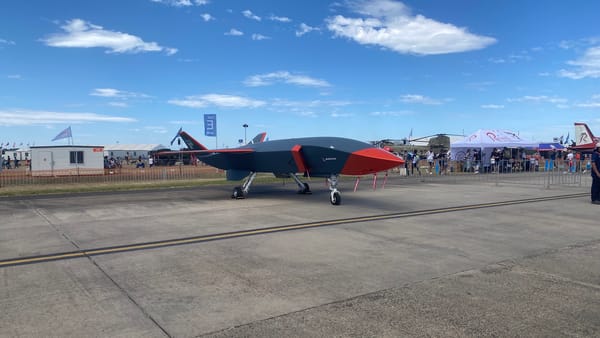
Australia's MQ-28 Ghost Bat is a Boeing-built collaborative combat aircraft designed to team with crewed jets, fire missiles, and scale allied airpower.
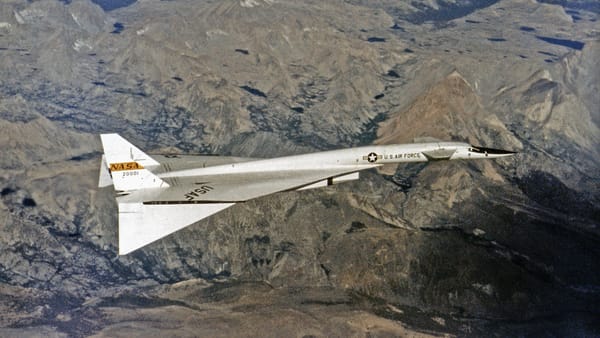
Aurora Spy Plane
The Aurora legend began with a black-budget line item, sonic booms, and triangular sightings. The evidence points to something murkier than one spy plane.
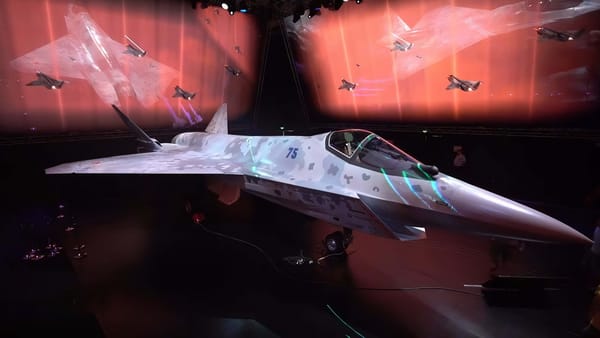
Su-75 Checkmate
Russia's Su-75 Checkmate was pitched as a cheap fifth-generation export fighter. Its real test is whether UAC can turn a mockup into a flying aircraft.
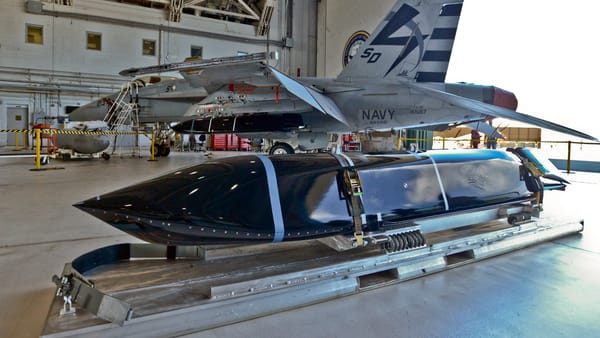
LRASM
How LRASM restored America's long-range anti-ship strike capability with stealth, autonomy, and a missile built from the JASSM-ER family.