
Aurora is one of the great Cold War aviation legends because it sits in the uncomfortable gap between proof and denial. There was a budget line. There were sightings. There were sonic booms. There were British officials worried enough to ask awkward questions. There was also a very direct explanation from Ben Rich, the former head of Lockheed Martin’s Skunk Works, that Aurora was not a hypersonic spy plane at all.
That makes the story more interesting, not less. The real question is not simply whether a secret aircraft called Aurora existed. The sharper question is what “existed” means when black budgets, experimental prototypes, classified test ranges, and eyewitness reports all overlap.
The most careful answer is also the least satisfying one. A named operational Aurora spy plane probably did not exist. Something strange may still have been flying.
What Aurora Was Supposed to Be
The Aurora was usually described as a fast, black, triangular reconnaissance aircraft, possibly built in the mid-1980s and active through the early 1990s. The aircraft in the legend was not just stealthy. It was supposed to be extremely fast, maybe well beyond the Mach 3 territory occupied by the SR-71 Blackbird.
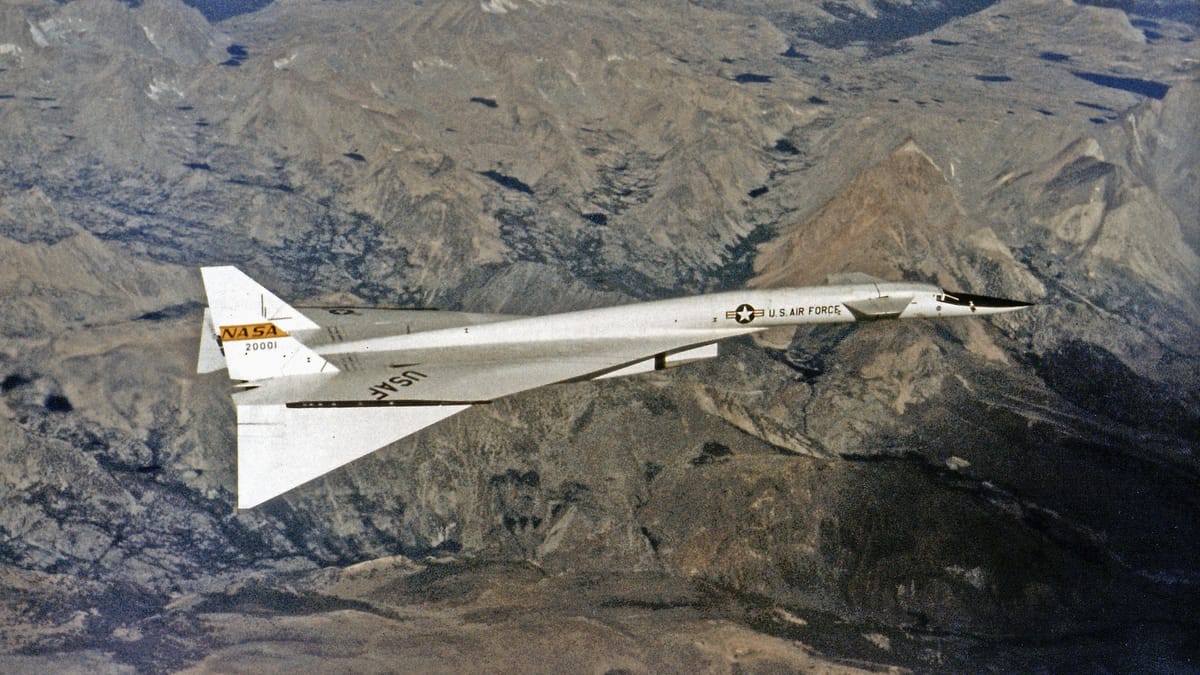
Some versions of the story imagined a shape vaguely reminiscent of the XB-70 Valkyrie, the huge experimental delta-wing aircraft built to test high-speed flight. The XB-70 was designed for Mach 3 performance, and NASA later used the aircraft as a research testbed. If a later black aircraft borrowed even a little from that kind of thinking, the rumor had enough technical plausibility to survive.
But plausibility is not proof. Most details attached to Aurora are secondhand, inconsistent, or speculative. Some witnesses described a quiet aircraft. Others associated the mystery plane with loud sonic booms. Some reports emphasized a nearly perfect triangle. Others described a platform closer to a high-speed delta aircraft. Those differences matter, because they suggest that Aurora may have become a label for several different things people could not identify.
How the Legend Started
The modern Aurora story took off in March 1990, when Aviation Week & Space Technology reported that a U.S. budget document appeared to include a large black aircraft allocation under the name Aurora. The figure most often repeated was roughly $80 million in fiscal year 1986, then about $2.2 billion in fiscal year 1987.
That was not small research money. It looked like production money. The line appeared near reconnaissance-aircraft funding, which encouraged the idea that Aurora might be a successor to the SR-71 Blackbird or a new class of aircraft meant to do similar work at far higher speeds.
The timing helped the rumor. If the money appeared in the mid-1980s, then sightings and sonic-boom reports in the late 1980s and early 1990s seemed to arrive exactly when a black aircraft might have been testing or entering service.
Then came the stories.
In 1989, Chris Gibson, a former member of Britain’s Royal Observer Corps, was working on a North Sea gas rig when he saw three aircraft refueling from a KC-135 tanker. Two looked like F-111s. The third did not look familiar. He later described a sharply triangular aircraft heading toward the British coast. Gibson was not a casual observer; the Royal Observer Corps existed to identify and report aircraft. That does not make his account conclusive, but it does make it harder to dismiss as ordinary confusion.
In Nevada and California, observers reported unusual aircraft and distinctive contrails. The most famous description was “donuts on a string”: rings or pulses along a straight contrail, often linked by enthusiasts to exotic propulsion. In 1991 and 1992, southern California residents also heard repeated sonic booms that seismologists concluded were coming from the air rather than the ground.
By July 1992, the Washington City Paper was able to frame the story as a mounting case for a Pentagon black program. Aurora had moved from specialist aviation rumor to public mystery.
The Sightings and Sonic Booms
The strongest part of the Aurora case is not a single report. It is the cluster: a budget mystery, a trained British observer, sightings near places associated with classified aviation, and repeated sonic events that appeared to follow patterns.
One of the more intriguing episodes involved seismologist Jim Mori, who studied sonic events in southern California. The events were not earthquakes. They looked more like air pressure waves. Some seemed to arrive with striking regularity, and reports placed their origin in a direction associated with inland test ranges rather than coastal exercises.
If a classified high-speed aircraft was being tested, sonic booms would be hard to hide. Stealth can reduce radar returns. Careful scheduling can reduce witnesses. But a large object breaking the sound barrier over populated areas still leaves evidence that ordinary people can hear and seismometers can record.
That is why the sonic-boom evidence kept Aurora alive. It did not prove the aircraft existed, but it showed that the public explanation was incomplete. Something was happening often enough to leave a pattern.
The British side also made the story harder to close. Documents released through freedom-of-information requests showed that UK officials took the possibility of U.S. classified aircraft activity seriously enough to raise sensitive questions. The United States denied operating Aurora, but the investigation itself suggests the reports were not treated as pure fantasy inside government.
The Case for Something Real
The affirmative case for Aurora rests on three ideas.
First, the United States was technically capable of advanced classified aircraft work. The SR-71, F-117, B-2, and later stealth programs all show that the public record can lag behind actual development. Lockheed’s Skunk Works had built real aircraft that sounded impossible before they were acknowledged. A black high-speed demonstrator or reconnaissance prototype in the late Cold War was not inherently absurd.
Second, the budget trail was real enough to need an explanation. The Aurora name appeared in public budget material, and the money associated with it was large. Even if the name was not attached to the aircraft of legend, it pointed toward a black program big enough to attract attention.
Third, the eyewitness and sonic-boom evidence does not disappear just because the name is disputed. Gibson’s North Sea sighting, the California booms, reports near Nevada, and British official concern all point toward some unusual aviation activity. A secret aircraft need not have been called Aurora to have helped create the Aurora legend.
That distinction matters. If “Aurora” means a codename on a production aircraft, the evidence is weak. If “Aurora” means a public nickname for an unknown black aircraft or a family of test vehicles, the evidence becomes harder to dismiss.
The Case Against a Plane Called Aurora
The case against Aurora is strong because it has one very direct answer: Ben Rich said the legend was built on a misunderstanding.
Rich, who ran Lockheed Martin’s Skunk Works, wrote that Aurora was a funding codename tied to the B-2 competition, not a Skunk Works hypersonic aircraft. In his telling, the name leaked through budget material, the media connected it to a speculative black aircraft, and the rumor took on a life of its own.
That explanation fits several awkward facts.
The money attached to Aurora looks strange if it was meant for one specific spy plane. An $80 million figure followed by $2.2 billion could make sense as part of a large classified funding package, but it is not clean evidence of a single aircraft entering production. Black budgets can hide many things under bland labels, and a codename can refer to funding, not hardware.
There is also the missing-proof problem. If Aurora was a major aircraft program that flew for years, it would have required engineers, pilots, maintainers, support crews, facilities, spares, and contractors. Decades later, there is still no confirmed photograph, no declassified aircraft, no authoritative program history, and no whistleblower account that settles the matter.
That does not make the story impossible. Classified programs can remain obscure for a long time. But the absence of hard evidence becomes more important as the years pass, especially if the aircraft supposedly stopped operating in the mid-1990s.
The eyewitness record is also thin. The most dramatic triangular-aircraft sightings are usually isolated. Descriptions vary. Many reports came from areas already associated with secrecy and rumor. Area 51, in particular, is a real classified test site that also attracts a large amount of speculation. A real location can still generate bad conclusions.
Why the Name Matters
The word Aurora is doing a lot of work. It gives the legend a shape, a label, and a story. But a label can mislead.
If the budget codename really belonged to B-2-related funding, then the public may have attached the right name to the wrong mystery. That would explain why officials could truthfully deny an Aurora spy plane while classified aviation work continued elsewhere.
It would also explain why the rumor became so durable. People had a real word from a real budget document. They had real black-aircraft history. They had real sightings and real sonic booms. What they may not have had was one real aircraft tying all of those clues together.
The most plausible version of the story is therefore not “Aurora was definitely real” or “nothing happened.” It is that Aurora became a container for several overlapping realities: secret funding, stealth-aircraft development, high-speed test activity, public sightings, and a need to explain events that official statements did not fully satisfy.
So Did Aurora Exist?
A spy plane named Aurora probably did not enter service, fly operational missions, and retire in the 1990s as a single coherent program. The budget-line explanation from Ben Rich is too specific to ignore, and the lack of later hard evidence is difficult for the legend to overcome.
But the broader claim is different. Was the United States testing high-speed classified aircraft or related systems in the late 1980s and early 1990s? That is much easier to believe. The sonic booms, sightings, test-range activity, and British concern all fit a world in which something real was being hidden, even if the public name was wrong.
That is the heart of Aurora. It may not have been a plane. It may have been a rumor wrapped around a real classified activity. It may have been a codename that escaped its original meaning. It may have been several unrelated black projects fused into one aircraft by people looking for a pattern.
The legend survives because each side has something. Skeptics have Rich, the missing evidence, and the simple fact that no confirmed Aurora aircraft has ever emerged. Believers have the budget line, the sightings, the booms, and the long history of aircraft the public did not learn about until later.
Aurora probably did not exist in the clean way the legend describes. But the legend probably did not appear from nothing either.
Key Takeaways
-
Aurora was rumored to be a secret U.S. reconnaissance aircraft funded through black-budget channels in the mid-1980s.
-
The legend drew strength from a reported budget line, Chris Gibson’s North Sea sighting, triangular-aircraft reports, and repeated sonic booms in the early 1990s.
-
Ben Rich, former head of Lockheed Martin’s Skunk Works, said Aurora was a B-2 funding codename rather than a hypersonic spy-plane program.
-
No confirmed photograph, declassified airframe, or authoritative program history has proved that an operational spy plane named Aurora existed.
-
The most plausible conclusion is that no aircraft named Aurora entered service, but classified high-speed aircraft testing may have helped create the legend.

Simon Whistler
Simon Whistler hosts MegaProjects, bringing engineering, infrastructure, and military-machine stories into clear narrative focus for viewers who want the systems, tradeoffs, and human decisions behind the build.
Frequently Asked Questions
What was the Aurora spy plane supposed to be?
Aurora was rumored to be a secret U.S. reconnaissance aircraft, possibly triangular, black, and extremely fast. Enthusiasts often described it as a successor to the SR-71 Blackbird or as a hypersonic black aircraft tested in the late 1980s and early 1990s.
Did the Aurora spy plane actually exist?
There is no confirmed public evidence that a spy plane named Aurora entered service. The stronger conclusion is that Aurora was probably not a real aircraft name, though some classified high-speed aircraft testing may have fed the rumor.
Where did the Aurora rumor come from?
The modern rumor grew after Aviation Week & Space Technology reported a large U.S. black-budget allocation under the name Aurora. Sightings, sonic booms, and reports of unusual aircraft then became attached to that name.
What did Ben Rich say about Aurora?
Ben Rich, who led Lockheed Martin’s Skunk Works, said Aurora was a funding codename related to the B-2 competition rather than a secret hypersonic aircraft. His explanation is one of the strongest arguments against a named Aurora spy plane.
What was Chris Gibson’s Aurora sighting?
Chris Gibson, a former Royal Observer Corps member, reported seeing a triangular aircraft refueling with two F-111s over the North Sea in 1989. His aviation-observer background made the sighting one of the more credible accounts tied to the Aurora legend.
What were the “donuts on a string” contrails?
“Donuts on a string” was a description of unusual contrails linked by some observers to exotic propulsion. The pattern became part of Aurora lore, but it has never been conclusively tied to a specific aircraft.
Why is the XB-70 Valkyrie relevant to Aurora?
The XB-70 Valkyrie proved that large, high-speed delta-wing aircraft were technically possible decades before the Aurora rumors. It is often used as a reference point for imagining what a later high-speed black aircraft might have looked like, but it was not Aurora.
Sources
-
Original MegaProjects video: The $2 Billion Spy Plane That Doesn’t Exist
-
The Guardian: Britain feared the U.S. was hiding a secret spy plane
-
Hero image source, NASA / Wikimedia Commons, public domain.
Related Projects
Su-75 Checkmate
Russia's Su-75 Checkmate was pitched as a cheap fifth-generation export fighter. Its real test is whether UAC can turn a mockup into a flying aircraft.
Boeing E-4
How the E-4 Nightwatch became America's airborne command center, built to keep national command authority alive through nuclear war, disasters, and crises.
National Ignition Facility
How Lawrence Livermore's National Ignition Facility turned 192 lasers, Cold War stockpile science, and decades of failed shots into laboratory fusion ignition.