
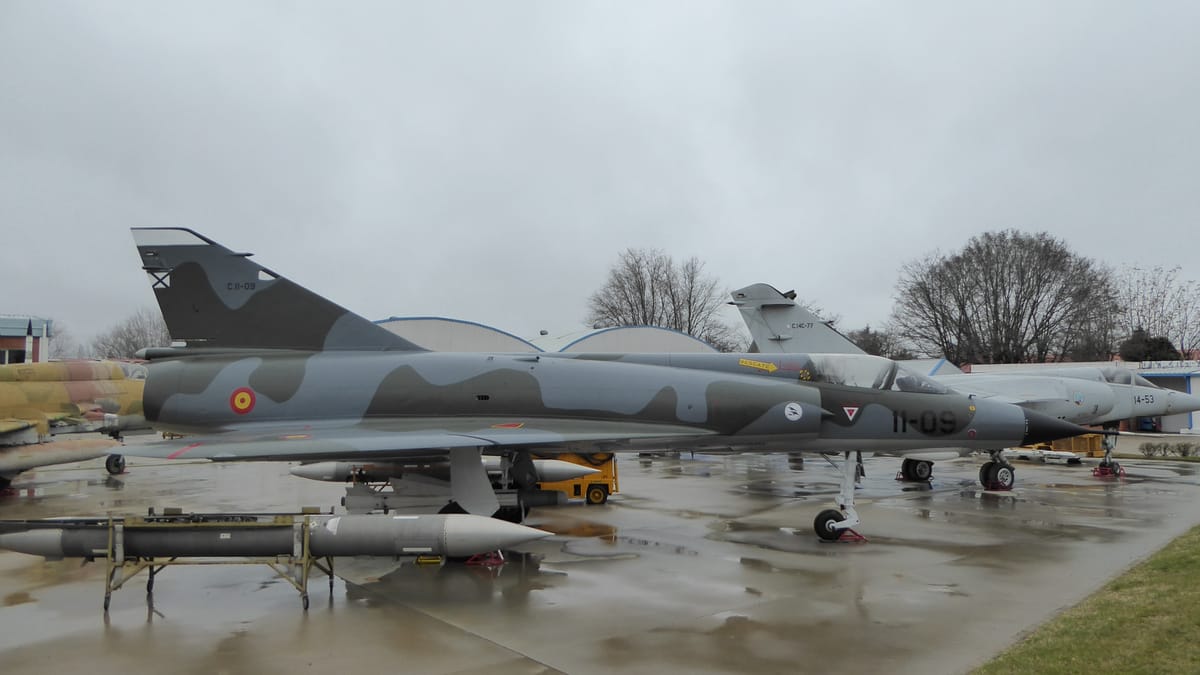
The Mirage family is one of those aircraft stories that looks simple from far away and gets more interesting the closer you stand to it.
At first glance, it is a French delta-wing fighter line: Mirage III, Mirage 5, Mirage F1, Mirage 2000, plus a gallery of prototypes that never made it into service. But the Mirage was more than a sequence of airplanes. It was the machine that rebuilt French combat aviation after the Second World War, gave Dassault a global export identity, and proved that a clever, adaptable fighter could become a national industrial strategy.
That is why the name still carries weight. The Mirage III made France a Mach 2 fighter power. The Mirage 5 turned a simplified derivative into Dassault’s most widely exported combat aircraft. The Mirage F1 broke with the delta formula and became its own export success. The Mirage 2000 returned to the delta wing with fly-by-wire controls and became the line’s mature expression.
The result was not one perfect aircraft. It was a family that kept solving different versions of the same problem: how to build a fast, affordable, exportable fighter without losing the French independence that made the program politically valuable in the first place.
France Needed a Fighter Reset
The Mirage story begins with an uncomfortable postwar problem. France had aviation talent, but its air force had been battered by the Second World War and then found itself trying to catch up in the jet age.
By the early 1950s, the threat picture was moving quickly. Soviet jets such as the MiG-15 had shown what a modern fighter could do. Western air forces wanted lightweight interceptors that could climb hard, fly fast, and meet bombers or fighters before they reached their targets. France’s own fleet included useful early jets, but the country needed a new aircraft that could restore credibility at home and sell abroad.
The French requirement called for a lightweight all-weather interceptor with serious climb performance and supersonic speed. Sud-Ouest answered with the rocket-assisted Trident. Sud-Est offered the Durandal. Dassault worked on the MD.550 Mystere Delta.
The Dassault answer mattered because it embraced the feature that would define the Mirage identity: the tailless delta wing.
The delta wing was not a magic shape. It was a trade. It could be structurally strong, efficient at high speed, and useful for storing fuel in a relatively thin aircraft. It also carried drawbacks. Delta-wing aircraft could need long runways, land fast, and bleed energy in hard turns. For a 1950s interceptor chasing speed and climb, though, the trade made sense.
Dassault took the gamble and kept refining it.
Mirage III Made the Name
The early MD.550 and Mirage I were promising but too small to be practical fighters. They could meet headline speed requirements, but carrying only a very limited weapons load was not enough.
The answer was to scale the concept up. The Mirage III became the aircraft that made the family real.
Dassault’s Mirage III official history records the aircraft entering operational service with the French Air Force in December 1961. The company also notes that the Mirage III C made European fighter pilots’ step into “bi-sonic” flight: the Mach 2 era.
The numbers explain the impact. France received hundreds of Mirage III variants, and Dassault says a total of 1,401 Mirage III/5/50 aircraft were built across 90 versions and served in 21 countries.
That kind of spread is the point. The Mirage III was not just a French interceptor. It became an export platform that could be adapted for air defense, strike, reconnaissance, training, and different national requirements. It was small enough and cheap enough compared with heavier fighters to attract buyers, but fast enough and modern enough to feel like a first-rank combat aircraft.
Its reputation was also shaped by combat. Israeli Mirage IIIs helped make the aircraft famous during the Six-Day War, and Dassault’s own company history describes the Mirage name becoming inseparable from the firm’s global identity after that period.
The Mirage III was not flawless. Its delta wing still imposed landing and handling compromises. Its electronics and weapons fit depended heavily on variant and customer. But it proved that France could build a modern fighter family on its own terms.
Mirage 5 Was the Practical Upgrade
The Mirage 5 is what happens when a successful fighter becomes an export product and customers start asking for a different kind of machine.
The aircraft began as a Mirage III derivative for low-altitude tactical support and patrol work. The key change was philosophical: remove or simplify what was not needed for the intended role, use the space for fuel and mission equipment, and turn the airframe into a hard-working strike aircraft.
Dassault says the Mirage 5 first flew in May 1967 and that 517 units were produced for 11 countries. The company also calls it Dassault’s most widely exported combat aircraft.
That is a revealing achievement. The Mirage 5 was not the most glamorous member of the family. It was not the most technologically dramatic. It succeeded because it was useful. It gave customers a fast, robust, relatively affordable aircraft that could carry a meaningful external load and operate in the tactical strike role.
The Mirage III had made the name. The Mirage 5 showed how far the name could travel.
Mirage F1 Broke the Pattern
Then Dassault did something odd: it built a Mirage that did not look like the archetypal Mirage.
The Mirage F1 abandoned the classic delta wing for a swept wing and conventional tail. That was not aesthetic drift. It was an engineering answer to a real operational problem.
The delta-wing Mirages were fast, but they landed fast too. The French Air Force wanted an interceptor that could replace early Mirage IIIs while improving slower-speed behavior and runway performance. Dassault’s Mirage F1 page describes the aircraft as a lighter single-seater that could fly at Mach 2 and land at 125 knots, thanks to lift-augmentation devices built into the wing.
The first Mirage F1 prototype flew in December 1966. The program suffered a fatal test accident in 1967, but it continued. Production aircraft followed, and the type entered French service in the 1970s.
The F1 became more than a domestic stopgap. Dassault records 473 Mirage F1 aircraft exported to countries including South Africa, Spain, Greece, Kuwait, Libya, Morocco, Ecuador, Iraq, Jordan, and Qatar. The Dassault historical timeline gives an even larger total of 725 built, with 473 exported.
That makes the F1 the odd man out in shape, but not in spirit. It still did the Mirage job: take a compact French fighter concept, adapt it to multiple missions, and sell it widely.
Mirage 2000 Brought the Delta Back
The Mirage 2000 is where the family comes full circle.
After the Mirage F1, Dassault returned to the delta wing, but not to the old version of the idea. By the late 1970s, flight controls, avionics, radar, materials, and computer-aided design had changed the limits of what a delta fighter could be.
The Mirage 2000 first flew in 1978 and entered French operational service in 1984 in its air-defense variant. Dassault’s current Mirage 2000 support page describes it as a multirole aircraft and says 600 were produced, half of them exported. It lists a maximum Mach number above Mach 2.2, an operational ceiling of 60,000 feet, and a climb rate of 60,000 feet per minute.
The aircraft’s deeper importance was not just performance. Dassault’s company history describes the Mirage 2000 as the first mass-produced Dassault aircraft with all-electric flight controls. That mattered because fly-by-wire could tame the instability and handling challenges that had limited earlier delta aircraft.
In practical terms, the Mirage 2000 was the Mirage idea made mature: fast, single-engine, delta-winged, exportable, and modern enough to remain useful well into the twenty-first century.
It also pointed toward the Rafale. The Mirage 2000 was not a Rafale with fewer engines, but the lessons of digital design, flight controls, systems integration, and delta-canard thinking all fed into the next generation.
The Mirages That Never Took Over
Not every Mirage became a production success. Some of the most fascinating members of the family were experiments, dead ends, or aircraft that arrived at the wrong moment.
The Balzac V and Mirage IIIV explored vertical takeoff and landing. They were part of a period when NATO and European air forces were seriously studying aircraft that could disperse away from vulnerable runways. The concept was bold, but the engineering was punishing: lift engines, weight penalties, complexity, fuel burn, safety, and cost all worked against the idea.
The Mirage G and Mirage G8 explored variable-sweep wings. Dassault’s timeline notes that the Mirage G8 reached Mach 2.34 in July 1973, an unmatched speed in Western Europe at the time. The swing-wing idea promised better low-speed and high-speed performance in one aircraft, but it also added mechanical complexity and cost.
Then came the Mirage 4000. This was the big one: a twin-engine, larger, more powerful aircraft developed alongside the Mirage 2000. Dassault says the Mirage 4000 first flew in March 1979 and reached 50,000 feet at Mach 2 in 3 minutes 50 seconds. It was impressive, but it did not become a production fighter.
Those aircraft were not wasted. Prototypes can lose the procurement contest and still win the engineering argument. The Mirage 4000 and other experimental work helped Dassault refine ideas that would later matter elsewhere, including flight controls, delta-canard layouts, and high-performance systems integration.
Why the Mirage Sold
The Mirage family succeeded because it sat in a useful middle ground.
It was not as massive as some American fighters. It was not dependent on the Soviet supply system. It was fast, adaptable, politically attractive, and usually more affordable than the heaviest front-line alternatives. For many countries, that was exactly the combination they needed.
Dassault also understood exports as a design requirement, not an afterthought. A fighter had to be adaptable to different radars, weapons, maintenance systems, climates, air forces, and budgets. The Mirage line was often good enough to be credible and flexible enough to be sellable.
There was also a national strategy behind it. The Mirage gave France an independent combat-aircraft industry at a time when buying everything from the United States or aligning fully with NATO systems would have carried political costs. Export success then reinforced that independence by funding longer production runs and a broader industrial base.
That is the larger lesson. The Mirage was not just an airplane family. It was a way for France to turn aerospace engineering into diplomatic and industrial leverage.
The Legacy
The Mirage family does not end with a single definitive aircraft. The III, 5, F1, 2000, and the prototypes all matter for different reasons.
The Mirage III proved that France could build and export a Mach 2 fighter. The Mirage 5 proved that a simplified derivative could become a huge commercial success. The Mirage F1 proved that the brand could survive a major aerodynamic departure. The Mirage 2000 proved that the delta-wing concept could return with digital flight controls and remain relevant for decades.
That is why the Mirage name still feels bigger than its individual models. It represents a design philosophy: compact, fast, adaptable, export-minded, and unapologetically French.
In the long arc from Mirage III to Rafale, the Mirage family was the bridge. It carried France from the urgent scramble of the early jet age into the modern era of integrated, computer-designed combat aircraft.
The name was fitting after all. A Mirage looked simple from a distance. Up close, it was a lot more substantial than it first appeared.
Key Takeaways
-
The Dassault Mirage family rebuilt France’s postwar fighter credibility and became one of the most successful export lines in European combat aviation.
-
The Mirage III made the family famous by giving France an operational Mach 2 fighter and a widely adaptable export platform.
-
The Mirage 5 simplified the Mirage III formula for tactical strike and became Dassault’s most widely exported combat aircraft.
-
The Mirage F1 broke from the delta-wing shape but kept the Mirage export philosophy alive with better low-speed and runway performance.
-
The Mirage 2000 returned to the delta wing with fly-by-wire controls, modern avionics, and a multirole future that helped bridge the line toward Rafale.

Simon Whistler
Simon Whistler hosts MegaProjects, bringing engineering, infrastructure, and military-machine stories into clear narrative focus for viewers who want the systems, tradeoffs, and human decisions behind the build.
Frequently Asked Questions
What was the first important Dassault Mirage fighter?
The Mirage III was the aircraft that made the Mirage name internationally important. It entered French operational service in 1961 and became a Mach 2 fighter family used in many roles and countries.
Why did Mirage fighters use delta wings?
Dassault used the delta wing because it worked well for high-speed flight, structural strength, fuel volume, and compact fighter design. The tradeoff was higher landing speed and some low-speed handling compromises.
How was the Mirage 5 different from the Mirage III?
The Mirage 5 was a simplified Mirage III derivative optimized for low-altitude tactical support and patrol work. Space and weight were shifted toward fuel, attack equipment, and external loads rather than the original interceptor emphasis.
Why does the Mirage F1 look different from other Mirages?
The Mirage F1 used a swept wing and conventional tail instead of the classic delta shape. Dassault used that layout to improve low-speed handling, landing behavior, and airfield practicality while retaining Mach 2 performance.
What made the Mirage 2000 important?
The Mirage 2000 brought the delta wing back with modern fly-by-wire controls and integrated systems. It entered French service in 1984, became a multirole export aircraft, and helped carry Mirage design lessons toward the Rafale era.
Did every Mirage project enter production?
No. Aircraft such as the Balzac V, Mirage IIIV, Mirage G, and Mirage 4000 explored VTOL, variable-sweep wings, or larger twin-engine concepts, but they remained prototypes or dead ends rather than mass-produced fighters.
Sources
-
Original MegaProjects video: The Entire History of the Glorious Dassault Mirage Family
-
Hero image source by Museo de Aeronáutica y Astronáutica / Wikimedia Commons, CC BY-SA 4.0.
Related Projects
MQ-28 Ghost Bat
Australia's MQ-28 Ghost Bat is a Boeing-built collaborative combat aircraft designed to team with crewed jets, fire missiles, and scale allied airpower.
Su-75 Checkmate
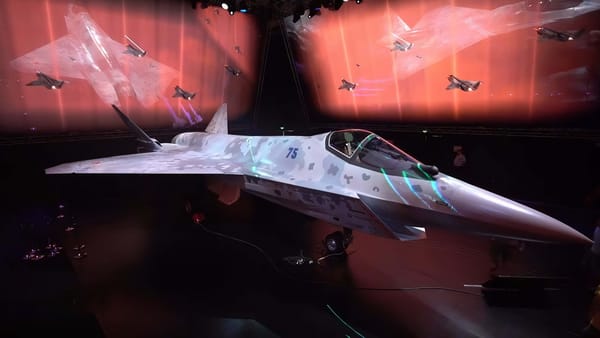
Russia's Su-75 Checkmate was pitched as a cheap fifth-generation export fighter. Its real test is whether UAC can turn a mockup into a flying aircraft.
Altay Tank
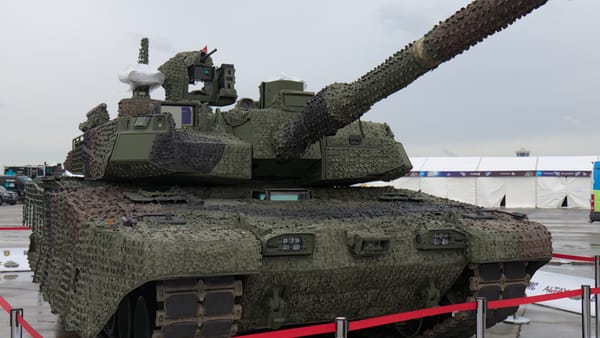
Turkey's Altay tank has modern firepower, protection, and mobility on paper. Its real test is production scale, powerpack maturity, and battlefield proof.
Aurora Spy Plane
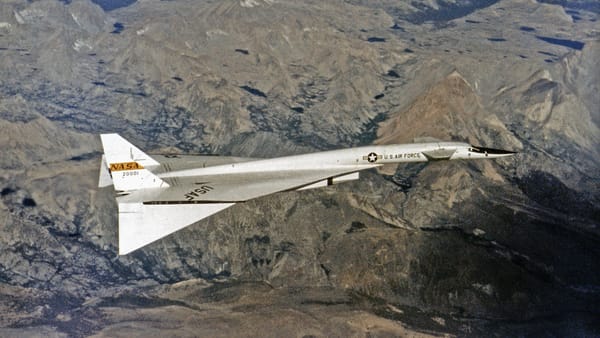
The Aurora legend began with a black-budget line item, sonic booms, and triangular sightings. The evidence points to something murkier than one spy plane.