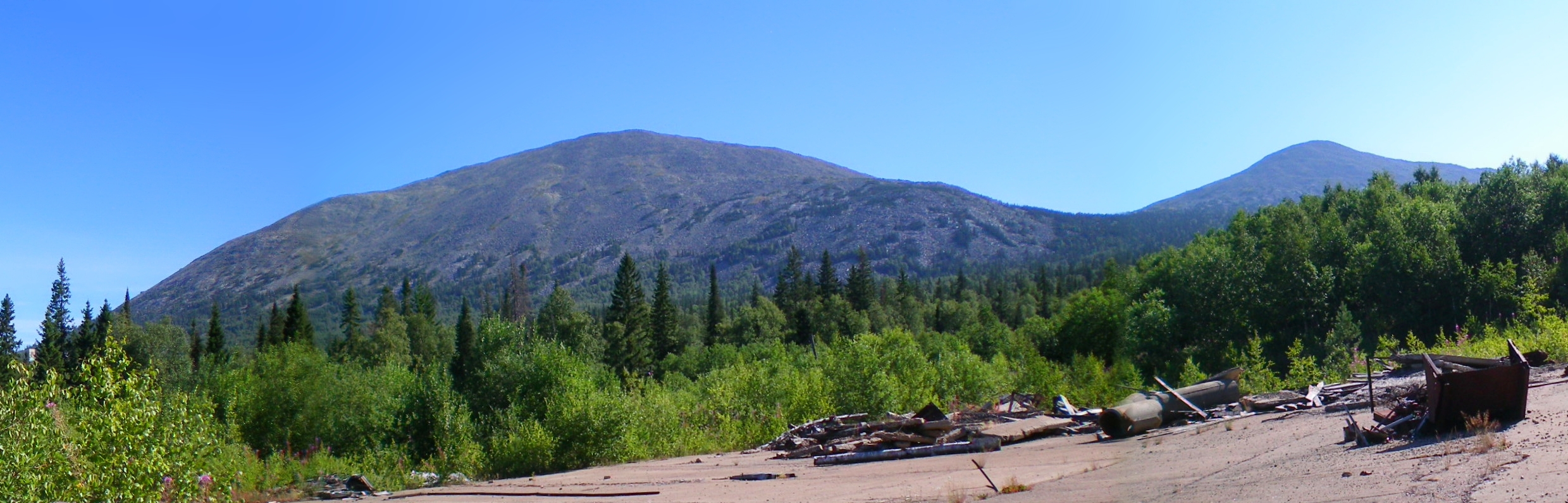
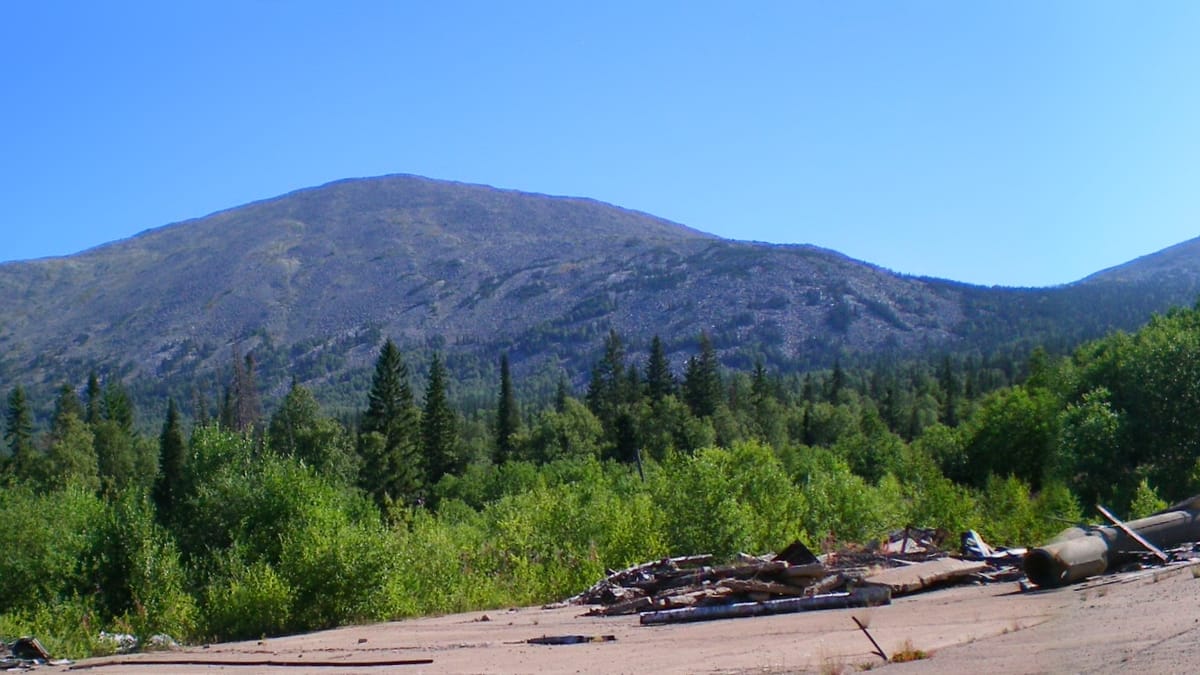
Deep in the southern Ural mountains, in an area completely inaccessible to Russian civilians, construction continues on and around Mount Yamantau, where rumor has it that a massive, underground bunker of some sort is being built. Some have said it’s a vast mining project, others say it’s for nuclear Armageddon, but, kept far from the prying eyes of the public, no one knows for sure, despite the project running for several decades now. Today we’re going to dive into the mysteries surrounding the Mount Yamantau Complex, give you everything we currently know about this elusive Russian facility, and see if we can get to the bottom of this Soviet-era secret.
A Mysterious Past
When Leonid Brezhnev took power in the Soviet Union in the 1960s, he was inheriting a tense geopolitical situation, as just a few years earlier, the Cuban Missile Crisis had shaken the world when we came as close as ever to nuclear war. Although that had fortunately been avoided, relations between the superpowers were still struggling, especially now that there was a new heated disagreement over US intervention in Vietnam.
And so, the threat of nuclear Armageddon remained as prevalent as ever, and Brezhnev was prepared to take the necessary steps to ensure that if push came to shove, the USSR would not lose the great atomic showdown.
Sometime in the 1970s, a massive construction project began in the south Ural mountains, centered around Mount Yamantau. Translating to ‘wicked mountain’ in the local Bashkir language, it is the tallest peak in the Southern Urals, standing 1,640 meters, or 5,400 feet at its highest point. When construction began, two military garrisons were stationed around the mountain, Beloretsk-15 and Beloretsk-16, along with a possible third, known as Alkino-2. These garrisons, totaling as many as 50,000 workers, excavated and constructed rail systems for transport for the first few years, until in 1979 they were all unified into a single city, known as Ufa-105, and later called Mezhgorye.
Mezhgorye is what is known as a closed, or secret city, meaning there is absolutely no access to the public, foreigners, or anyone that does not have proper clearance. Closed cities were constructed all across the Soviet republics, and were almost always home to highly classified research in weapons testing, nuclear engineering, space travel, and other advanced fields. They were so secretive that even the families of specialists lived in the towns, were rarely allowed to leave, and completely forbidden to discuss the city’s inner workings. Even if they wanted to tell an outsider about it, they would find it difficult as none of these cities were shown on any maps at the time.
Over the years, the workers continued to excavate inside of the mountain, digging through granite and quartz and shipping the stones out through the massive rail network, and the project stayed completely hidden. But as the 1980s rolled around, things were starting to get tough for the USSR. It’s no surprise in hindsight, but their war in Afghanistan had gone from what was supposed to be a quick invasion to a decade-long quagmire, and this was starting to take a heavy toll on the nation’s military budget.
Generally, when money gets tight, excess or experimental projects are the first to lose funding, but despite the economic turmoil setting in across the Soviet republics, construction at Mount Yamantau pressed forward unabated, and even more workers were sent to the site.
Even after the collapse of the Soviet Union, which would certainly put an end to any unnecessary spending, the workers at Mount Yamantau continued digging around the clock, and by the early 1990s, the population of Mezhgorye was 73,000.
In 1994, a daring Russian journalist named N. Starkov decided that he wanted to get a peek at the mysterious site, but knowing that he would be denied access on all available roads, he took the path less taken. After carefully hiking through the thick birch forests surrounding Mezhgorye, he got a glimpse of a massive hole in the ground, surrounded by a huge construction site and even a helicopter landing pad. Writing in the local newspaper, Beloretsky Rabochy, he said, “There was so much iron junk down there, from water mains to rail car wheels … Good Lord. How did it get there? The scale was enormous.”
But Starkov and his readers weren’t the only ones to take notice of such an enormous site, as US Satellites started watching the area around the same time, and they were just as confused as everyone else. At the time, the United States and Russia had an interesting relationship, as they both were taking mutual steps to increase transparency and deescalate tensions. This included the US giving Russian officials a tour of the Cheyenne Mountain Complex in Colorado, and each side disclosing exact numbers and types of nuclear weapons.
Along with this, Russia was in possession of thousands of old, Soviet nukes that needed to be disposed of, the United States agreed to send money to help with their dismantling since Russia had no spare money in their budget for such an undertaking. However, part of the agreement to receive US aid was that Russia would only spend the rest of their budget on purely defensive, minimal military expenditures, and the Mount Yamantau complex seemed to be in direct contradiction to this agreement.
As stated by a perplexed Pentagon official at the time, “The toughest question we can get from Congress when we ask them for funds to help disarm and dismantle the Russian strategic arsenal is why are they using their meager rubles to build such a thing as Yamantau mountain.”
And that is a great question. When their wallets were empty and their debt was as high as ever, why was the Russian military so intent on finishing what they started in the Ural Mountains? Let’s get into the theories.
Doomsday Prep
When the US first started taking notice of the construction around Mount Yamantau, they went directly to the Russian government for an explanation. But, in typical government fashion, they offered little in the form of an explanation, other than reassuring the United States that whatever was happening was of no threat to any other nation, and in the 1997 federal Russian budget, the project was simply listed under the Ministry of Defense.
Hoping to shed some light on the topic, one Russian official, Tsikurnov, stepped forward with some information, and, claiming to be the director the project, said that the whole thing was actually a business venture, and that he was the founder of an enterprise known as the Ural Mining and Ore Dressing Combine. This would make a lot of sense, as the Ural Mountains are home to plentiful reserves of copper, iron, and other metals, and, let’s be honest, it would be far from the first time Russian government funds were used for personal gain. But it leaves more questions than answers: if it was just an ore mining site, why the secrecy, and why not disclose it to the Americans earlier?
It gets even more confusing when he later took back what he said about mining, and said that it was actually an underground storehouse for military food and clothing. Safe to say, he was lying about something.
Russian media outlets began to speculate that this mining company was a front for a nuclear waste disposal site, albeit without any evidence, and pretty soon the locals were up in arms, sending in letters demanding an explanation and the removal of any dangerous material. And their fears weren’t unfounded, as this would also be far from the first time Russia stored nuclear waste material in a dangerous location next to a population center. For an example of this, look no further than Lake Karachay, which is so radioactive due to nuclear waste dumping that a human will receive a lethal dose of radiation if they stand near its shores for less than an hour.
Adding to the mess, another Russian official stepped forward, and confirmed everyone’s suspicions. He claimed that the site was indeed a bunker for Russian officials to escape to in the event of a nuclear war. According to globalsecurity.org, this official’s name was “MZ Shakiorov,” and he was a former communist figure in the local government. But because this is a topic with a ton of speculation and misinformation online, we decided to dig a bit deeper and see if this Shakiorov guy is actually legit.
It took a bit of digging, but it turns out that he does exist. He’s mentioned in a footnote in a 1987 economic journal article called “Gorbachev and the Reform of the Soviet System” and also in a 1983 report of the status of the USSR by the US Department of Commerce. So yes, he does exist, and according to both of these sources he was indeed the first secretary of the Bashkir region, though the mentions of him online do have his name slightly misspelled, with an extra ‘o’. And this lends some credibility to his explanation of Mount Yamantau.
According to him, when the US nuclear doctrine in the 1970s was largely aimed at taking out Soviet leadership, Brezhnev authorized the construction of a massive facility to avoid a total decapitation of the government. The plan was for Mount Yamantau to be a complete survival center that would allow the Soviet leadership to remain afloat even if the rest of the country had been annihilated. Mount Yamantau was selected specifically for two reasons: one, the distance from other major population centers minimalized risk of a direct nuclear attack, and two, even if the bunker was targeted the complex was designed to withstand the blast from any weapon in the US arsenal. This includes US bunker busting weapons, which were specifically designed to counter such facilities, but simply aren’t strong enough to pound through an entire mountain.
Perhaps this is what Vladimir Putin was alluding to in a 2020 press conference when he stated that Russian nuclear command and control will remain entirely functional even in the event of a nuclear attack.
According to one intelligence report, the facility has been constructed with 3,000 feet of mountain as a ceiling, though this did cause major issues with the bunker’s radio communications. To get around this, radio equipment has to be placed outside the mountain, with communication lines drilled through the rock. This rather fragile communication network indicates that the facility might not be intended as a complete command and control center, but rather a somewhat luxurious hideout for the Russian elite if everything goes south.
This all sounds highly believable, but it isn’t the only potential explanation. One fact that somewhat contradicts the idea of it being a big survival bunker for the rich is the facility’s incredible size: coming in at around 400 square miles, or a little over 1000 square kilometers, an area roughly equivalent to San Antonio, Texas. This seems really excessive, unless the invite sent to the Russian oligarchs has a plus one for all their super yachts.
Another explanation is that the site is home to Russia’s national treasures. Russia is home to loads of precious metals, so it’s possible that Mount Yamantau is nothing more than a safe place to store gold, silver, and other expensive investments.
The final possibility is that Mount Yamantau is a Russian version of Area 51, a place where experimental and highly classified technologies are developed and tested. After all, the Soviet Union was a leading producer of numerous biological and chemical weapons, and since many of those have since been banned, perhaps the mountain is a safe place for Russia to continue testing them away from the prying eyes of American satellites.
Whatever the case, this is just about everything we know about the complex, as the Russian government has been tight-lipped regarding it for decades now. So, unless another Russian official decides to step forward with some inside information, the megaproject at Mount Yamantau is likely to remain a mystery for years to come.
Key Takeaways
- Mount Yamantau is a highly secretive underground complex in Russia’s southern Ural mountains.
- The facility has been under construction since the 1970s, with various theories about its purpose.
- One prominent theory suggests it is a doomsday bunker for Russian officials in case of nuclear war.
- The Russian government has been vague about the project, listing it under the Ministry of Defense.
- The complex’s immense size and secrecy have led to speculations ranging from a nuclear waste site to a storage for national treasures.
Simon Whistler
Simon Whistler hosts MegaProjects, bringing engineering, infrastructure, and military-machine stories into clear narrative focus for viewers who want the systems, tradeoffs, and human decisions behind the build.
Frequently Asked Questions
Where is the Mount Yamantau Complex located?
The Mount Yamantau Complex is located in the southern Ural mountains, in an area inaccessible to Russian civilians.
What is the height of Mount Yamantau?
Mount Yamantau stands 1,640 meters, or 5,400 feet at its highest point.
When did construction begin on the Mount Yamantau Complex?
Construction began on the Mount Yamantau Complex sometime in the 1970s.
What is a closed city in the context of the Soviet Union?
A closed city in the Soviet Union is a secret city with no access to the public, foreigners, or anyone without proper clearance. These cities were home to highly classified research in various advanced fields.
What is the population of Mezhgorye?
By the early 1990s, the population of Mezhgorye was 73,000.
What did a Russian journalist observe at the Mount Yamantau site?
In 1994, journalist N. Starkov observed a massive hole in the ground surrounded by a huge construction site and a helicopter landing pad. He noted an enormous amount of iron junk, including water mains and rail car wheels.
What was the initial explanation given by a Russian official about the Mount Yamantau Complex?
One Russian official, Tsikurnov, initially claimed that the Mount Yamantau Complex was a business venture for the Ural Mining and Ore Dressing Combine, suggesting it was a mining site.
What is one of the theories about the purpose of the Mount Yamantau Complex?
One theory is that the Mount Yamantau Complex is a bunker for Russian officials to escape to in the event of a nuclear war, designed to withstand any weapon in the US arsenal.
What is the size of the Mount Yamantau Complex?
The Mount Yamantau Complex is approximately 400 square miles, or a little over 1000 square kilometers, roughly equivalent to the size of San Antonio, Texas.
What are some alternative theories about the purpose of the Mount Yamantau Complex?
Alternative theories suggest that the Mount Yamantau Complex could be a storage site for Russia’s national treasures or a facility for developing and testing experimental and highly classified technologies, similar to Area 51.
Sources
- Original MegaProjects video: The Mount Yamantau Complex: Russia’s Mysterious Underground Fortress
- Hero image source by Yamigos / openverse, by-sa.