
There’s something about steam locomotives. Whether it’s their inherent nostalgia-inducing qualities, or how ‘busy’ they look both inside and out, they simply have more personality and ‘soul’ than any other type of locomotive, and arguably, any other type of machine, period.
But despite this, and the deep love that many have for them, we don’t usually perceive them as high-energy adrenaline pumpers, do we? Instead, we tend to think of them as quite sedentary things, usually chugging away lazily in the background of a period drama or wizard movie to create warm, fuzzy feelings about how lovely everything was in the olden days.
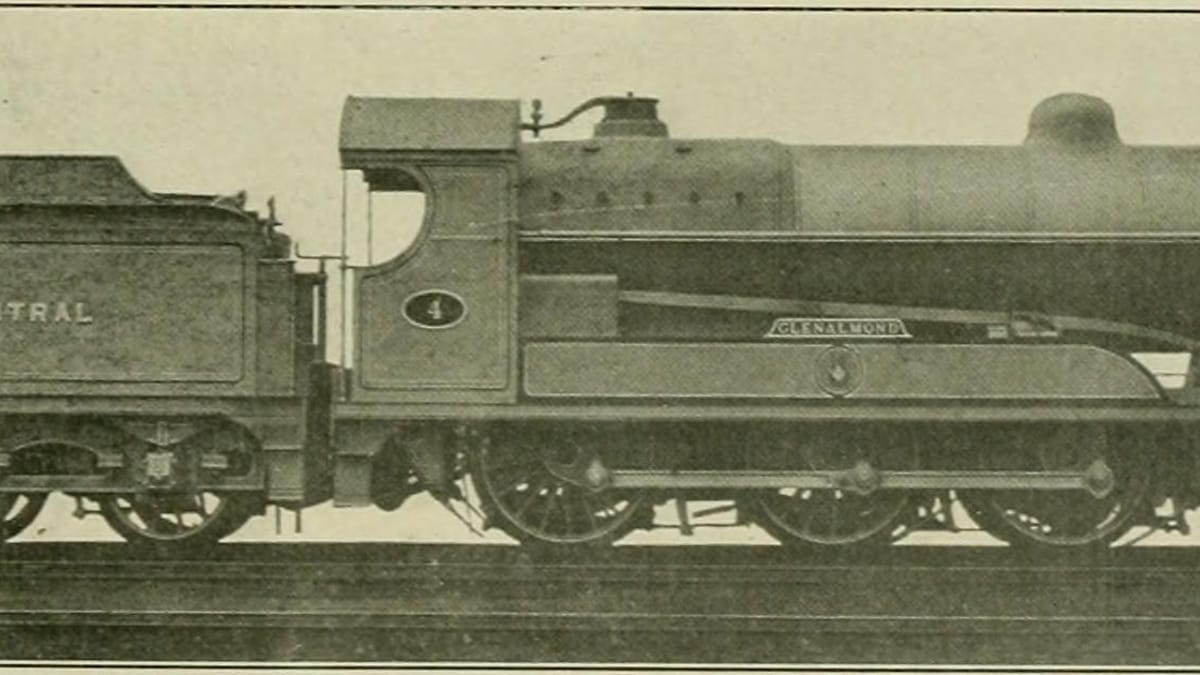
But such a perception does a disservice to steam locomotives, because when they had to, they could shift… like, really shift, as demonstrated no better than this beast: the LNER Class A4 – the single fastest steam locomotive that has ever been made.
It’s a mad looking thing, isn’t it? And no doubt you are wondering when it was built, why it was built, what it got up to, and above all else… how fast it was. Well, worry not, because those questions, and more, we shall answer for you.
The Man
The A4 was born from the mind of Sir Nigel Gresley, one of the UK’s most distinguished locomotive engineers. Born on the 19th of June 1876, in Edinburgh, Scotland, he began his career right at the very bottom of the ladder, serving as an apprentice at the Crewe Works of the London and North Western Railway.
Given his famous love for birds, he ironically took to his new trade like a duck to water, and soon shot up the ranks, eventually becoming Assistant Superintendent of the Carriage and Wagon Department of the Lancashire and Yorkshire Railway in 1904, Carriage and Wagon Superintendent of the Great Northern Railway (GNR) in 1905, and eventually their Chief Mechanical Engineer in 1911, a role that he retained when the company was amalgamated to become the London and North Eastern Railway (LNER) during the 1923 Grouping, which merged the UK’s many railway companies into four mega-companies.
Naturally, this career path saw him have a dabble at locomotive design, although ‘dabble’ might be underselling it somewhat, as he designed a total of 27 locomotives during his career, including some of the greatest ever to grace Britain’s tracks:
- The GNR Class A1 in 1922, which he would eventually refine further into the LNER Class A3 of Flying Scotsman fame in 1927.
- The LNER Class W1 in 1929, an experimental class consisting of a single, experimental locomotive that featured an ultra-high-pressure marine-derived boiler.
- The LNER Class P2 in 1934, a specialised express locomotive designed to tackle the hills of Scotland at high speed.
- The LNER Class K4 in 1937, a masterfully designed mountain goat of a locomotive designed to absolutely demolish hills while tugging absolutely ungodly amounts of weight.
All things must come to an end, however, and so Gresley, with a lifetime of near-unparalleled achievement under his belt, passed away on the 5th of April 1941 at the age of 64. He is still fondly remembered to this very day as one of the juggernauts of the golden age of British railways.
The Design
The A4 was about one thing and one thing alone: speed. Gresley was adamant from the offset that his A4 would be the fastest thing on rails, period – no ifs, no buts, and no compromises. But even for a man such as him, blessed as he was with a brain of many wrinkles and a lifetime of experience sat at the drawing board, achieving such a thing would be quite the tall order. Come the 1930s, steam locomotive technology had more or less peaked, which meant that to achieve his goal, he would have to combine every advanced innovation that had come before, and think outside the box a bit to squeeze just a bit more potential out of the technology.
The one big innovation that came out of that thought process is immediately apparent when you behold an A4 – streamlining. But despite the A4 going down as the streamlined locomotive in the minds of enthusiasts, it actually wasn’t the first; that would be the Commodore Vanderbilt over in the US, which first rolled out of the works back in 1934. The A4 was the first British streamlined locomotive, however, a fact that LNER was very keen to shout about at the time.
It was damned good streamlining too. At 60mph an A4 used 41 horsepower less than an A3 to maintain speed, 97 horsepower at 80mph, 190 at 100mph, and 253 at 110mph.
And speaking of the A3, that is a great segue to start discussing the A4’s internal design, because it was, to simplify quite a bit, a streamlined A3 that Gresley went back over and modified ever so to improve it here and there.
Key differences include a smokebox – the bit on the front with the door on it – that was chopped down in height to accommodate the streamlining, a higher-pressure boiler that could contain a greater quantity of steam to ‘push’ on the pistons while generating motion, and an extended firebox – the bit in the cab that you chuck coal into. This allowed both for a ‘bigger’ fire to be laid, and thus generate more steam more quickly, and also a larger firebrick arch, a device that is literally what it sounds like, and aids combustion by, to simplify a bit, ‘forcing’ visible smoke, which contains unburnt carbon particles which would normally be sucked straight through the firetubes and out the chimney, to ‘stay’ in the fire for longer, and thus get fully combusted, thereby making full use of the coal being burnt.
Then there was its valve gear; valve gear being the machinery that takes steam from the boiler and puts it into the cylinder, where under pressure it then pushes on the ‘motion’ – the big system of rods you see on the side of steam trains – which, because they are attached to the wheels, then turn them and move it along.
When it comes to valve gear, the A4 uses Gresley’s famous ‘Conjugated Valve Gear’ system, which allows a locomotive to have three cylinders, but only two ‘motions.’ To simplify quite a bit, it uses a series of levers and linkages to apply the movement of the third cylinder’s piston to both the left- and right-hand side motions. It’s a genius bit of kit, as it vastly cuts down on the weight, cost, and complexity of having to incorporate a ‘traditional’ third cylinder, but still allows for all the same advantages in power. The weight point is particularly pertinent for the A4 too, because more lightness equals more fastness.
Note, however, that Gresley’s Conjugated Valve Gear system was not unique to the A4, not by a long stretch, as he actually patented it all the way back in 1915, and used it on many of his other locomotives, such as the K4, W1 (after its 1936 rebuild anyway), and the A1 and A3.
To increase their speed over distance, Gresley also made use of ‘corridor tenders’ for the A4, these being exactly what they sound like – tenders that have a very small corridor running through them. A genius innovation that allowed for crews to be swapped out while a train was underway, and thus saved time on having to stop to swap out crews. Like the conjugated valve gear, this was not an innovation unique to the A4, and it was something that Gresley incorporated on many of his locomotives intended for fast long-distance express services, such as the A3.
Later, from 1938, the A4s would also begin to be upgraded with a ‘Kylchap’ double-chimney, a particular setup that, again simplifying here, enhances a locomotive’s efficiency by accelerating the exhaust steam through two separate chimneys, which improves the draft through the firebox and thus the combustion process, enabling the locomotive to generate more power with the same amount of fuel.
As a result of all of this, the A4 was, and still is, the pinnacle of steam locomotive design, combining efficiency, reliability, and above all else, speed, in a platform that has never been surpassed.
The History
Come the 1930s, steam had ruled supreme for well over a century, but its position was beginning to look ever so shaky. The railways themselves were beginning to see increasing competition from both cars and aeroplanes, and even among trains, steam couldn’t consider its position safe, because diesel locomotives were just beginning to enter their earliest nascent stages… and what they promised threatened to blow steam out of the water.
In Germany, for example, the futuristic-looking DR 877 entered service in May 1933, and it managed to happily sit at 85mph for long stretches of its initial Berlin to Hamburg route, a speed that all but the very, very best of steam locomotives simply couldn’t match even when they absolutely went for it, never mind maintain for long periods.
Gresley himself rode on it while out on a jolly in Germany, and to say it made him furious would be a gross understatement. He was a patriotic Briton, one who was deeply proud of the UK’s long-since-lost industrial might, and to him, the idea that Germany would be able to lay claim to having the greatest locomotives in the world was an insult equivalent to Hitler personally booting his door open and squeezing one out in his morning cornflakes.
But he was also a frightfully intelligent man, and so he made note of the streamlined design of the 877, and when he got back to Blighty, began giving thought to how he could make a steam locomotive with such a design.
A lot of research, and even more maths, soon followed, after which he had a reasonable certainty that he could take his earlier A3 design, then the fastest locomotive on British railways, streamline it, tinker with its internals a bit, and so long as all of that was done properly, it would happily be able to pull up to nine carriages at the same speeds as the 877 – a big deal indeed given that the German upstart only operated in a two-car unit.
He then took his musings to the directors of the LNER and tried to sell them on his dream. It wasn’t a pitch that took terribly long; fuelled by a dash of the same patriotic zeal that had set Gresley off back in Germany, and a big dollop of wanting to outcompete rival operator London, Midland and Scottish Railway (LMS) for passengers on the highly profitable London to Edinburgh East Coast Mainline route, they were immediately for it. And the fact that it was being pitched by Gresley – well, if anyone could pull it off, it’d be him.
And pull it off he did, as on the 7th of September 1935, Silver Link, the first of the A4s, rolled out of Doncaster Works and entered service. Contrary to how you might imagine, the new locomotive actually received quite a mixed reaction. Many saw it as a thing of awe pulled straight from science fiction, the objectively correct response to have when you see an A4, but many others weren’t so keen, seeing it as LNER simply bowing to the ‘streamlined’ craze, or insisting that they had made a right pig’s ear of the streamlining and got it all wrong.
Such pessimism was short-lived, however, as only 20 days after Silver Link entered service, she would undertake a highly publicised demonstration run from London King’s Cross to Grantham, during which she set a new speed record of 112.5mph. Safe to say, no one was whinging after that!
A further 34 A4s would join Silver Link by the time production ended in 1938, by which time A4s were reliably sitting at 90mph during routine operation, had slashed the London to Edinburgh journey time considerably, and had connected much of the rest of the country up with what many say is the world’s first ever true high-speed rail network.
LMS were none too happy about all of that and were adamant that they would snatch the top speed crown for themselves, which led to them producing their own streamlined locomotive, the Coronation Class, in 1937… which then just grabbed the record in a demonstration run on the 28th of June, setting a new record of 114mph. This began an exchange of tit for tat between LNER and LMS, in which they both ran further demonstration runs which made the record pass between them for a time.
The final shot of this speed war would be taken by LNER on the 3rd of July 1938, when Mallard would set a steam record so high that it remains unbroken to this day. It took place on a section of the East Coast Mainline between Peterborough and Grantham by the name of Stoke Bank – and LNER weren’t stupid, they chose this stretch of track for very specific reasons: it was long, it was straight, and it had an ever so slight downhill grade… everything a locomotive needed to really put in a good performance.
It also wasn’t done with a normal passenger load. Instead, Mallard was pulling a light test train made up of six cars and a dynamotor measuring car, something which had become something of a standard in speed attempts for it ‘to count.’
And just how fast did it go on that attempt? 126mph – an absolutely insane speed for a steam locomotive, a bit of technology that, lest we forget, ultimately has its roots in the very early 19th century.
The intensity of the speed was also shown in Mallard’s condition when she finally came to a halt. She had taken quite a battering for her efforts, having overheated her middle cylinder bearing to the point that she had to be towed by another engine, and when the press had done their cooing, be immediately sent back to the shed for nine days to have said bearing re-metalled.
But such quibbles mattered not, either to LNER, the public, nor the history books – the A4s had done it and earned their place as the fastest steam locomotives ever.
Despite the gravity of this achievement, Gresley himself still wasn’t satisfied, and was convinced that his locomotive still had more speed to give. And so, he lobbied successfully to have another crack at it. One problem: that run ended up being penned in for September 1939, and so, yeah, that run didn’t happen for obvious reasons.
Instead, the A4s would be called up to do their part in the war effort, and sadly, the war wasn’t terribly kind to them. Cosmetically they were absolutely desecrated: their beautiful array of silver, green, and blue liveries were all caked over in a thick rushed coating of black to make them less visible during night attacks; their flush side skirts were removed to make maintenance easier and quicker; and just to really rub salt into the wound, they even had their whistles stripped out due to fears that they would be mistaken for air raid sirens.
As for their actual service during the war, they found themselves pushed into all manner of roles and routes for which they were never designed; business demand for express inner-city routes, the A4s’ bread and butter, not really being a thing during a total war after all. These irregular services could be everything from running urban evacuees out to remote rural stations in the middle of nowhere down branch lines that would never have seen an A4 normally, and that often could barely fit them down their tight turns without them popping off their tracks, all the way to even being used to run heavy freight traffic.
Bizarrely, contrary to what you might think thanks to their raw unbridled power, the A4s were actually pretty crap at pulling freight, at least compared to other engines their size. This is because dedicated freight engines, such as the LNER Q6, were usually designed to have lots of small wheels to maximise track contact, and thus how much power they could put down to pull their often 1,000-ton-plus loads, rather than passenger or mixed freight locomotives, which used larger wheels that reduced the rotational speed of the wheel for a given train speed, and thus allow for more efficient operation at high speeds.
One A4 was even destroyed during the war, specifically Sir Ralph Wedgwood, which was blown up during an air raid in June 1942.
Come the end of the war, and the beginning of nationalisation in 1948, the surviving A4s would all be given much-needed overhauls and be returned to the duties they were originally intended for: fast inner-city express passenger services.
In a bizarre twist of irony, however, the very war which had put them through so many ordeals would be the very thing that bought them a few more years of service. As we have already discussed, before the war diesel was the future, and everyone knew it – and locomotives such as the A4 and the Coronation class were meant to be the ‘last hurrahs’ of steam; one final crack of the whip to show what the increasingly obsolete technology could do at its very best.
The war saw such thoughts put on hold, however, and come its conclusion, when big, sweeping thoughts of modernisation could once again be entertained, everyone still knew that diesel was the future… but now there was bugger all money to achieve that future with. And so, the A4s remained in service until 1966, when they were finally replaced by the Class 55, a diesel locomotive that is ‘better’ by every metric, and yet, tragically, is so soulless that it inspires few of the passions of its forerunner.
Preservation and Legacy
Fortunately, however, their withdrawal from service didn’t quite close the book on the A4s’ story, as six of the 35 built survived the wrath of the scrapman and survive to this very day, with some of them even being kept in working order.
Bittern was restored to full working order in 2007, until she once again found herself confined to the shed when her mainline ticket expired in 2015 – although plans are afoot to return her to steam in the next few years.
Mallard was similarly restored in 1986 so that she could be in full working order for the 50th anniversary of her record-breaking run, after which she was confined to the National Railway Museum and left to sit around looking pretty to the current day.
Union of South Africa had a good run of it in preservation and was in and out of steam pretty much since the day she left mainline service. That changed, however, when her boiler cracked big style in 2021, and she now seems fated to spend the rest of time confined to museums.
Dominion of Canada has never really run since being withdrawn but remains in good cosmetic condition after being gifted to her namesake country in 1966.
Dwight D. Eisenhower was gifted to the US after being withdrawn from service in 1963. She has never run on the mainline since, but remains in great condition inside and out, and if rumours are to be believed, remains in a ‘near steam-able’ condition.
Then there is Sir Nigel Gresley, which, perhaps befittingly given its namesake, has been very busy in preservation, having been mainline running pretty much since the day she was pulled from service. She remains in full working order to this day and can often be found either at heritage railways across the UK or pulling special mainline charter services.
All six of these locomotives were reunited at the National Railway Museum in York for an event dubbed ‘The Great Gathering’ in 2013 – and from the fact that you could barely move for people crammed shoulder to shoulder during it, it appears safe to say that the love for history’s fastest steam locomotive is here to stay.
Key Takeaways
- The LNER Class A4, designed by Sir Nigel Gresley, is the fastest steam locomotive ever built.
- Gresley’s innovative streamlining and internal modifications made the A4 highly efficient and fast.
- The A4 set a speed record of 126 mph in 1938, a record that still stands today.
- During World War II, the A4 locomotives were repurposed for various roles, including evacuations and freight.
- Six of the original 35 A4 locomotives have been preserved, with some still in working order.

Simon Whistler
Simon Whistler hosts MegaProjects, bringing engineering, infrastructure, and military-machine stories into clear narrative focus for viewers who want the systems, tradeoffs, and human decisions behind the build.
Frequently Asked Questions
Who designed the LNER Class A4 steam locomotive?
The LNER Class A4 was designed by Sir Nigel Gresley.
What was the primary goal in designing the LNER Class A4?
The primary goal in designing the LNER Class A4 was to create the fastest steam locomotive ever.
What was the top speed achieved by the LNER Class A4?
The LNER Class A4 achieved a top speed of 126mph.
What innovations did the LNER Class A4 incorporate to achieve high speeds?
The LNER Class A4 incorporated streamlining, a higher-pressure boiler, an extended firebox, Gresley’s Conjugated Valve Gear system, and corridor tenders to achieve high speeds.
How many LNER Class A4 locomotives were built?
A total of 35 LNER Class A4 locomotives were built.
What was the impact of World War II on the LNER Class A4 locomotives?
During World War II, the LNER Class A4 locomotives were used in various roles and routes for which they were not designed, and one was destroyed in an air raid. They were also cosmetically altered for the war effort.
How many LNER Class A4 locomotives survive to this day?
Six of the 35 LNER Class A4 locomotives built survive to this day.
What was the significance of the ‘Great Gathering’ event in 2013?
The ‘Great Gathering’ event in 2013 reunited all six surviving LNER Class A4 locomotives at the National Railway Museum in York, showcasing the enduring love for these historic locomotives.
What was the role of the LNER Class A4 locomotives after World War II?
After World War II, the surviving LNER Class A4 locomotives were overhauled and returned to their original duties of fast inner-city express passenger services.
What was the impact of the war on the future of steam locomotives like the LNER Class A4?
The war delayed the transition to diesel locomotives due to a lack of funds, allowing the LNER Class A4 to remain in service until 1966.
Sources
- Original MegaProjects video: The LNER Class A4: The Fastest Steam Locomotive Ever
- Hero image source by Internet Archive Book Images / openverse, cc0.