

Night falls over the Kazakhstan steppe. In a Soviet control room, voices crackle through radio static, counting down in Russian. The concrete walls vibrate slightly with each number.
“Tree, dvah, odin.”
Somewhere in the darkness, a missile streaks upward, its exhaust trail glowing. It arcs into the upper atmosphere, higher, higher, until—
FLASH.
This isn’t just any flash. A massive second sun blooms at altitude, an artificial dawn that turns night into day across hundreds of miles of empty desert. For a moment, the entire steppe is illuminated.
This wasn’t a failed launch though. This was a live nuclear warhead detonation in the upper atmosphere – part of the Soviet Union’s high-altitude EMP tests. And that blast? Well, it would fry telephone lines across an area the size of France.
Today we’re venturing into one of the most secretive military installations on Earth – a place where the Soviet Union learned to split atoms and reach for space, where dogs became the first Earth creatures to touch the edge of the cosmos.
This is Kapustin Yar – a name that probably means nothing to you, but should. Because this patch of Russian steppe has shaped the modern world more than almost any other military facility you’ve never heard of.
It’s where Soviet rocketry took its first baby steps with captured Nazi technology. Where the first Soviet V-2s flew – and exploded, crashed, and occasionally worked. And where, even today, Russia tests air defense systems designed to swat hypersonic missiles from the sky.
A closed world whose secrecy has fed decades of conspiracy theories about aliens and UFOs, earning it the nickname “Russia’s Roswell.” But here’s the thing: the real story is far stranger than any alien tale.
Stalin’s Rocket Range
Our story begins in the rubble of the Third Reich.
- Berlin has fallen, and American and Soviet “collection teams” – that’s a polite way of saying “organized looters with PhDs” – are racing through Germany grabbing everything that isn’t nailed down. V-2 rockets were a big get, the “wonder weapons” that had rained down on London, turning entire city blocks into rubble.
But they weren’t just after the hardware. They wanted humans too… German rocket engineers, the men who’d built Hitler’s vengeance weapons. The Americans got Wernher von Braun, who would later put men on the moon. The Soviets? They got everyone else they could grab, including Helmut Gröttrup, von Braun’s former assistant.
Stalin wasn’t subtle about his intentions. By decree on May 13, 1946 – less than a year after the war ended – he ordered the creation of a central rocket range. The chosen site? A patch of absolutely nothing, 100 kilometers east of what had been Stalingrad, now Volgograd.
To understand just how remote this place was, imagine driving from London to Edinburgh, but instead of passing through cities and towns, you see nothing but grass. For eight hours. That’s the Astrakhan steppe – an ocean of grass stretching to every horizon, broken only by the occasional lonely tree.
They called it the 4th State Central Range, because Soviet bureaucrats were oh so creative. The world, though, we’d come to know it as Kapustin Yar.
On October 18, 1947, something remarkable happened. At 10:47 AM Moscow time, the ground shook, a pillar of fire erupted from the steppe, and the Soviet Union’s first V-2 – or A-4 as they called it, because they couldn’t even admit they were using German designs – lifted off from Launch Pad Number 1.
The rocket made it exactly 206 kilometers before crashing into the desert. By Nazi Germany’s standards, this was a failure. By Soviet standards? This was the beginning of everything.
Leading this operation was a man whose name deserves to be better known: Lieutenant General Vasily Voznyuk. He’s exactly as you’d imagine a Soviet officer – stern face, iron will, and an absolute devotion to rockets that bordered on the religious. Voznyuk would command Kapustin Yar from 1946 to 1973 – twenty-seven years.
Under Voznyuk’s iron hand, the facility grew from a collection of tents and launch pads to something resembling a small city. Which brings us to one of the strangest aspects of Kapustin Yar.
Building a Secret Town – and Erasing Another
You can’t just build a massive rocket testing facility in the middle of nowhere without somewhere for the workers to live. Not unless you want your rocket scientists camping in tents through Russian winters where the temperature drops to minus 30 Celsius – that’s minus 22 Fahrenheit for our American friends, or “really fucking miserable” if you prefer.
What started as a tent city gradually hardened into something more permanent. Concrete apartment blocks rose from the steppe. Schools appeared. Shops. A cinema. Even a park with actual trees – well, la-de-dah.
They called this new town Znamensk, and it was unlike any other Soviet settlement. For starters, it didn’t exist. Officially. You wouldn’t find it on any map. Mail addressed to Znamensk would be returned as “no such place.” To live there, you needed special permission. To leave, you needed special permission. To breathe, you needed special permission (not really, but also, maybe?)
The town had one purpose: to house the men and women who were building the future of Soviet rocketry. These weren’t just any workers – they were the cream of Soviet science and engineering, lured by good salaries, better food than most Soviets could dream of, and the chance to be part of something revolutionary. The catch? Once you entered Znamensk, you essentially disappeared from the normal world.
But here’s where our story takes a darker turn. The site chosen for this secret city wasn’t entirely empty. The village of Zhitkur had the misfortune of being exactly where the Soviets wanted to expand their range.
The solution was typically Soviet in its brutal efficiency. In 1953, the entire village was given notice: pack up, you’re moving. No discussion. No compensation worth mentioning. Just “the motherland needs your land, goodbye comrade. Or you prefer bullet?”
They’d just wake up one morning with military trucks outside, soldiers telling you that your village – the place your grandparents were born, where you were married, where your children took their first steps – no longer exists. By afternoon, Zhitkur was a ghost town. By the next week, it was bulldozed flat.
This forced relocation would later fuel some of the more outlandish conspiracy theories about Kapustin Yar. “Why would they need to hide an entire village?” the UFO enthusiasts would ask. “What did those villagers see that required their silence?”
The boring truth? They just wanted the land to blow shit up in the middle of nowhere. Hey ho.
From V-2s to Nuclear Missiles
Now, copying German rockets was just the start. Next was something far more ambitious – and terrifying.
The progression went like this: First came the R-1, essentially a Soviet-built copy of the V-2. It could throw a one-ton warhead about 270 kilometers – roughly the distance from London to Paris. Not bad, but not world-changing either.
Then came the R-2, which doubled that range.
But then was the R-5, which first flew at Kapustin Yar in 1953. This beast could hurl a nuclear warhead 1,200 kilometers. That’s London to Rome. London to Warsaw. Moscow to Berlin.
And then, on February 2, 1956, something happened that should have made headlines around the world, except it was so secret that most people didn’t learn about it for decades.
At precisely 10:00 AM Moscow time, an R-5M lifted off from Launch Complex 4 at Kapustin Yar. This wasn’t a test flight. This wasn’t a dummy warhead. This was the real thing – a live nuclear weapon sitting atop a ballistic missile.
The rocket climbed into the crystal-clear winter sky, its exhaust trail drawing a perfect white line against the blue. In the command bunker, men who’d fought in the most devastating war in human history watched instruments that showed them how to make the next one even worse… or maybe prevent it… Nukes are complicated.
1,200 kilometers away, in the empty steppe near Aralsk in Kazakhstan, monitoring equipment waited. The missile’s nuclear warhead – estimated at around 80 kilotons, about four times the power of Hiroshima – detonated precisely on target.
This was a world first. The atomic age and the missile age had just merged into something new and terrifying. For the first time in human history, a nuclear weapon had been delivered by ballistic missile. No bomber needed. No warning. Just death, delivered at the speed of a rocket.
To put this in perspective, imagine sitting in London, having your morning tea, when someone presses a button. Twenty minutes later, London doesn’t exist anymore. That’s the world that was born at Kapustin Yar on that February morning.
Dogs in Space – The Unwilling Pioneers
But Kapustin Yar wasn’t just about weapons of war. It was also where the Soviet Union took its first tentative steps toward conquering space.
On July 22, 1951, at 4:00 AM – because apparently all historic moments in Soviet rocketry happened at ungodly hours – two dogs were loaded into a sealed capsule atop an R-1 rocket. Their names were Dezik and Tsygan, and they were about to become the first living creatures to reach space and return alive.
Picture the scene: Soviet scientists in white coats, gently (one hopes) strapping two tail-wagging dogs into what was essentially a metal coffin with life support. The dogs had been specially selected – not too big, not too small, calm temperament, and presumably no strong opinions about being fired into the void.
The rocket ignited with a roar that could be heard 10 kilometers away. It climbed to 110 kilometers – officially crossing the boundary into space – before the capsule separated and began its descent. Twenty minutes after launch, the capsule thumped back to Earth, and when the recovery team opened it, two very confused but very alive dogs emerged.
Dezik and Tsygan had just become the first Earthlings to see the curvature of their home planet. Though I doubt they appreciated the view.
Now, here’s the heartbreaking part. Dezik’s triumph was short-lived. Just a week later, he was sent up again with another dog named Lisa. This time, the parachute failed. Both dogs died on impact. The Soviet space program had claimed its first victims.
These flights paved the way for Laika, the famous space dog who would orbit the Earth in 1957. Though unlike Dezik and Tsygan, Laika was never intended to return. Her spacecraft was a one-way ticket, a flying tomb that would orbit Earth for months with her body inside. Progress, it seems, demanded sacrifice – and in the Soviet Union, they started with man’s best friend.
Becoming a Cosmodrome
By the early 1960s, Kapustin Yar had evolved from a simple missile range into something more sophisticated – a full-fledged cosmodrome, a gateway to the stars.
The transformation was marked by a special moment on March 16, 1962. At Launch Complex 86/1 – catchy name again – a small rocket sat on the pad. Atop it was Kosmos-1, the first in what would become an endless series of Soviet satellites.
The Kosmos program was the Soviet Union’s catch-all designation for satellites they didn’t want to talk about. Weather satellite? Kosmos. Spy satellite? Kosmos. Failed Venus probe that never left Earth orbit? Kosmos. By the time the Soviet Union fell, they’d launched over 2,500 Kosmos satellites, and nobody outside the program knew what half of them actually did.
Kapustin Yar became the workhorse launch site for these smaller, mysterious payloads. While Baikonur got the glory launches – Yuri Gagarin, Sputnik, the Luna probes – Kapustin Yar did the dirty work, launching satellite after satellite into orbit with all the fanfare of a city bus leaving its stop.
Sary-Shagan and Project K
Here’s where things get properly terrifying. Kapustin Yar wasn’t just launching things into space – it was launching missiles 2,000 kilometers across the Soviet Union toward another test range called Sary-Shagan in Kazakhstan.
It was kinda the world’s longest (and most dangerous) shooting range. Kapustin Yar would fire missiles carrying dummy warheads, and Sary-Shagan would try to shoot them down with anti-ballistic missiles. It was like trying to hit a bullet with another bullet.
But the real nightmare fuel came with Project K, conducted between 1961 and 1962. These weren’t tests of conventional weapons. These were high-altitude nuclear detonations, designed to understand what happens when you set off a nuclear bomb in space. Because apparently that’s just something they needed to know.
On October 22, 1962 – right in the middle of the Cuban Missile Crisis, when the world was already seconds from midnight – the Soviets launched a missile from Kapustin Yar carrying a 300-kiloton nuclear warhead. That’s about 15 times more powerful than Hiroshima.
The warhead detonated 290 kilometers above the Earth, solidly in space.
The results were spectacular and terrifying. The explosion created an electromagnetic pulse that swept across the steppe like an invisible tsunami. In the city of Karaganda, 1,000 kilometers away, the lights went out. A 570-kilometer telephone line – that’s longer than the entire length of England – had all its fuses blown. The power grid across an area the size of France was disrupted.
One witness described seeing the lights flicker in his apartment, then die. Then the radio went silent. Then he looked outside and saw the northern horizon glowing with an aurora that shouldn’t exist at that latitude.
The Soviets had instrumented the region to measure these effects. They wanted to know what would happen. They found out: you could cripple an entire nation’s infrastructure without directly destroying a single building. It was a perfect Cold War weapon – maximum disruption, minimum (immediate) casualties.
Submarines on the Steppe
Of all the bizarre things that happened at Kapustin Yar, this might be the strangest. In the middle of the bone-dry steppe, thousands of kilometers from the nearest ocean, the Soviets built… a submarine simulator.
The SM-49 “rocking simulator” was exactly what it sounds like – a massive mechanical system that could replicate the rolling and pitching of a submarine at sea. A full-scale submarine hull mounted on hydraulic actuators, lurching back and forth in the middle of a desert.
Why? Because the Soviet Navy needed to test submarine-launched ballistic missiles, but they weren’t about to risk an actual submarine – or its crew – on unproven weapons. So they brought the submarine to the desert.
Engineers would load missiles into the simulator’s launch tubes, the whole apparatus would start rocking to simulate rough seas, and then they’d try to launch. Early tests were… educational. Missiles designed to fly straight up had an alarming tendency to fly sideways when launched from a moving platform. Who knew?
The absurdity wasn’t lost on the workers. One engineer later recalled: “We used to joke that we were the Soviet Navy’s desert fleet. The only submarines in history that needed to worry about sandstorms instead of depth charges.”
The Mach-3 Monster – Burya
In the late 1950s, before intercontinental ballistic missiles became reliable, the Soviets explored another option for delivering nuclear death across the globe – the Lavochkin La-350 “Burya,” which translates to “Storm” by the way.
The Burya was a cruise missile the size of a fighter jet, powered by ramjet engines that could push it to Mach 3.2 – over 2,400 miles per hour.
The tests were spectacular. A Burya flew approximately 6,500 kilometers – that’s Moscow to New York with fuel to spare – and hit within 10 kilometers of its target. For a weapon designed to carry a multi-megaton nuclear warhead, being 10 kilometers off target was… enough.
But the Burya had a fatal flaw: ICBMs were getting better and cheaper. Why build a complex cruise missile that took 2 hours to reach its target when an ICBM could do it in 30 minutes? The program was cancelled, and the Storm never flew in anger.
Eyes in the Sky
A facility this important couldn’t stay secret forever. The West had heard rumors – refugee reports, intercepted communications, the occasional defector’s tale. But they needed proof. They needed pictures.
Enter the spies in the sky.
There are stories – never officially confirmed by the British government, because that’s not the British way – of an RAF Canberra reconnaissance aircraft overflying Kapustin Yar in 1953. The Canberra was a jet bomber converted for high-altitude photo reconnaissance.
According to the legend, the aircraft took off from West Germany, flew deep into Soviet airspace, photographed Kapustin Yar, and landed in Iran (friendly at the time) despite being intercepted by MiG fighters. The photos allegedly showed launch pads, assembly buildings, and most importantly, rockets. Big rockets. The kind of big rockets that could carry nuclear warheads.
Soon after, the Americans got serious about watching Kapustin Yar. U-2 spy planes – those impossibly delicate aircraft that flew so high they were almost in space – made the range a priority target.
Today, of course, anyone with Google Earth can look at Kapustin Yar. You can see the launch pads, the roads, even individual buildings. The secret base isn’t secret anymore. But that doesn’t mean it’s not dangerous.
The Modern Range – Still Deadly
Fast forward to today, and Kapustin Yar is still very much in business. If anything, it’s busier than ever.
Between 2012 and 2015, Russia fired a series of Topol, RS-26, and RS-24 missiles from Kapustin Yar to Sary-Shagan. These weren’t Cold War relics – these were modern ICBMs testing new warheads designed specifically to defeat American missile defense systems.
In 2021, the Russian Ministry of Defense released video of S-500 air defense system tests at Kapustin Yar. The S-500 is Russia’s answer to hypersonic missiles – a system supposedly capable of intercepting targets traveling at Mach 20. The video showed a missile streaking into the sky, then a distant flash as it destroyed its target. Russia wanted the world to see this. It was a message: “We’re still here. We’re still dangerous.”
But the range’s continuing importance was dramatically illustrated in July 2024. Ukrainian long-range drones – basically remote-controlled aircraft packed with explosives – struck Kapustin Yar. Satellite imagery showed scorch marks at several facilities. Storage buildings damaged. Launch infrastructure possibly compromised.
Just three months earlier, in April 2024, Russia had announced an ICBM test from the site – a not-so-subtle reminder to the world that despite the war in Ukraine, despite sanctions, despite everything, Russia’s nuclear arsenal was still operational.
After nearly 80 years, Kapustin Yar remains what it always was: a place where humanity’s most destructive impulses take physical form.
Myth vs. Reality – “Russia’s Roswell”
Now, we can’t talk about Kapustin Yar without addressing the aliens… because of course. Get your tinfoil hats out.
For decades, UFO enthusiasts have called this place “Russia’s Area 51” or “Russia’s Roswell.” The stories are wild. Underground alien laboratories stretching for miles beneath the steppe. Crashed UFOs being reverse-engineered in hidden hangars. Alien bodies in cryogenic storage. Even alleged battles between Soviet forces and hostile extraterrestrials… Sounds so real!
The conspiracy theorists point to the evidence: the forced relocation of Zhitkur village (what were they hiding?). The extreme secrecy (why so paranoid?). The strange lights in the sky (surely not all rockets?). The fact that even today, large areas around Kapustin Yar are strictly off-limits (what don’t they want us to see?). Oh I don’t know, maybe military secrets?
One popular story claims that in 1948, a silver disc crashed near Kapustin Yar and was recovered by the Soviet military. Another tale describes underground tunnels where alien technology was studied and copied, explaining the Soviet Union’s rapid advancement in rocketry.
Here’s what we actually have: zero verifiable evidence of any alien connection. No credible witnesses. No leaked documents. No physical evidence. Niet.
What we do have is a thoroughly documented history of very human achievements. Thousands of declassified documents. Satellite imagery. Defector testimonies. Even Russian sources that openly discuss much of what happened there – the missiles, the satellites, the nuclear tests.
The truth is, reality is more incredible than any alien conspiracy. This is where humans learned to throw nuclear weapons across continents at speeds that would have seemed like magic just a generation earlier. Where nuclear explosions in space fried power grids hundreds of kilometers away. Where cruise missiles flew at three times the speed of sound with deadly accuracy.
Who needs aliens when humans are perfectly capable of building such magnificent and terrifying things all by themselves?
The Human Cost
But let’s pull back from the grand narrative for a moment and talk about the people. Because behind every rocket launch, every nuclear test, every secret project, there were human beings paying the price.
The engineers and scientists who worked at Kapustin Yar lived in a strange bubble. They had better food than most Soviets – fresh vegetables in a country where millions subsisted on cabbage and potatoes. They had cinema showing the latest films. Their children went to schools with the best teachers the Soviet Union could provide.
But they also lived in a prison without bars. Letters were censored. Phone calls monitored. Travel restricted. Many couldn’t tell their own families exactly what they did for a living. “I work with rockets” was about as specific as they could get (granted, pretty cool though).
They missed weddings, funerals, birthdays, because leaving Znamensk required permission that might not come.
One engineer’s widow later recalled: “He would leave for months at a time. I knew he was at Kapustin Yar, but that’s all. When he came home, he couldn’t talk about his work. He’d have nightmares sometimes, calling out numbers and coordinates. But when I asked, he’d say it was nothing.”
Then there were the soldiers – young conscripts mostly, stationed at this remote base to guard secrets they didn’t understand. They stood watch in temperatures that ranged from minus 30 in winter to plus 40 in summer. They cleaned up after failed launches, sometimes handling toxic rocket fuel with minimal protection. How many developed cancer years later? How many died young? The Soviet Union didn’t keep those statistics, or if they did, they aren’t telling.
And what about the civilians affected by those nuclear tests? The people of Karaganda who lost power when the EMP struck? The telephone operators whose equipment was fried? They were unwitting participants in an experiment they never agreed to, collateral damage in a war that never quite happened.
Why Kapustin Yar Matters
So why should we care about a Soviet missile range in the middle of nowhere? Why does this place matter to anyone who isn’t a Cold War historian or a weapons nerd?
Because Kapustin Yar is where the modern world was born.
This is where humanity learned to touch space. Before Kapustin Yar, rockets were essentially very large fireworks. After Kapustin Yar, they were vehicles that could carry life beyond Earth.
This is where the nuclear age merged with the missile age to create the doctrine of Mutually Assured Destruction. The balance of terror that kept the Cold War cold was tested and proven here.
And perhaps most importantly, Kapustin Yar reminds us that the most significant places in history aren’t always the ones we remember. While the world watched Cape Canaveral and cheered for Apollo, Kapustin Yar was quietly reshaping the balance of global power.
The Eternal Steppe
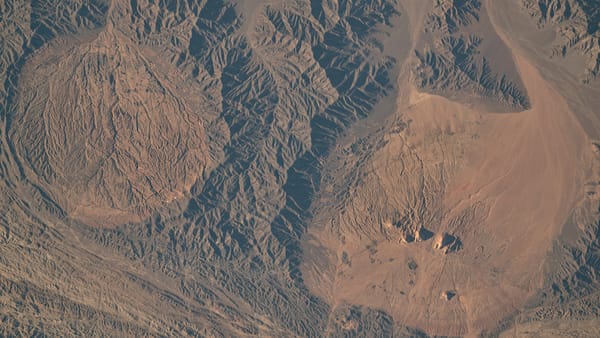
Stand on the steppe around Kapustin Yar today, and you might not immediately realize you’re at one of the most important sites in human history. The grass stretches endlessly in every direction, broken only by the occasional launch tower or radar dome.
But look closer, and you can read the history of the last 80 years in this landscape. Those scorched concrete pads? They held the rockets that started the space age. Those craters in the distance? Failed launches that almost certainly killed their operators.
In the end, Kapustin Yar was never really about aliens or even just about rockets. It was about the extraordinary and terrible things humans can achieve when driven by fear, ambition, and the vast pressure of history.
Today, as new powers rise and old tensions resurface, as space becomes militarized once again, as hypersonic weapons and satellite killers join the arsenal of nations, Kapustin Yar stands as both warning and inspiration.
Key Takeaways
- Kapustin Yar was a Soviet military installation where the Soviet Union developed and tested rockets and nuclear weapons.
- The site was used for high-altitude nuclear tests, which created electromagnetic pulses that disrupted infrastructure over large areas.
- Kapustin Yar played a crucial role in the Soviet space program, including launching the first dogs into space.
- The facility remains active today, used for testing modern ICBMs and air defense systems.
- The secrecy and remote location of Kapustin Yar have fueled conspiracy theories, but its significance lies in its military and space achievements.

Simon Whistler
Simon Whistler hosts MegaProjects, bringing engineering, infrastructure, and military-machine stories into clear narrative focus for viewers who want the systems, tradeoffs, and human decisions behind the build.
Frequently Asked Questions
What is Kapustin Yar?
Kapustin Yar is a highly secretive military installation in Russia, often referred to as ‘Russia’s Area 51.’ It is where the Soviet Union conducted significant rocket and nuclear tests, including high-altitude EMP tests and the first Soviet V-2 launches.
What was the significance of the nuclear test conducted on February 2, 1956?
On February 2, 1956, the Soviet Union successfully launched a live nuclear weapon atop a ballistic missile from Kapustin Yar. This was the first time a nuclear weapon had been delivered by a ballistic missile, marking a significant advancement in nuclear and missile technology.
What role did Kapustin Yar play in the Soviet space program?
Kapustin Yar was crucial in the early Soviet space program. It was the site of the first Soviet V-2 launches and the launch of the first living creatures, dogs Dezik and Tsygan, into space and back in 1951. It also served as a launch site for early Soviet satellites.
What was the purpose of Project K conducted at Kapustin Yar?
Project K involved high-altitude nuclear detonations to study the effects of nuclear explosions in space. These tests created electromagnetic pulses that disrupted power grids and communication lines over vast areas, demonstrating the potential for nuclear EMP weapons.
How did the Soviet Union handle the relocation of the village of Zhitkur for Kapustin Yar?
The Soviet Union forcibly relocated the entire village of Zhitkur in 1953 to expand the Kapustin Yar range. The villagers were given short notice and minimal compensation, leading to the village being bulldozed and erased from existence.
What was the Lavochkin La-350 ‘Burya’ and why was it significant?
The Lavochkin La-350 ‘Burya’ was a cruise missile the size of a fighter jet, capable of reaching speeds of Mach 3.2. It was significant because it demonstrated the Soviet Union’s capability to deliver nuclear warheads over long distances, although the program was eventually canceled in favor of ICBMs.
What is the current status of Kapustin Yar?
Kapustin Yar remains an active military installation. It continues to be used for testing modern ICBMs and air defense systems, such as the S-500, which is designed to intercept hypersonic missiles. It has also been targeted by Ukrainian drones during the conflict.
What was the human cost associated with working at Kapustin Yar?
Workers at Kapustin Yar lived in a highly restricted environment with limited contact with the outside world. They faced health risks from handling toxic materials and were often unable to discuss their work with family. Soldiers stationed there endured harsh conditions and potential exposure to dangerous substances.
Why is Kapustin Yar important in the context of global history?
Kapustin Yar is important because it was a key site for the development of rocket and nuclear technology during the Cold War. It played a significant role in the space race and the arms race, contributing to the doctrine of Mutually Assured Destruction and the militarization of space.
Sources
- Original MegaProjects video: Kapustin Yar: Russia’s Area 51
- Hero image source by Arnur.sarybai / openverse, by-sa.