
There’s a saying in some air force circles which goes, “Fighter pilots make movies, bomber pilots make history.” Clearly, this is in those circles which fly bombers. And while this saying isn’t 100% fair, as fighters have been pivotal in many major air battles throughout aviation history, there is some truth to the idea that fighters are by far the preferred Hollywood fodder. From the classic Battle of Britain to the modern blockbuster Top Gun: Maverick, cinema goers have always been fascinated by the twisting, rolling, and stunningly fast spectacle of fighters jockeying for the kill shot.
As generations of fighter technology progress, however, it seems this form of aerial combat is rapidly going the same way as musket drills and broadsides. The newest crop of planes flying today have not been designed with dogfighting in mind, and future fighters may lose both the need and the capacity to do it at all. Given this, how will the fighters of the future operate, and what will they look like?
Well, that does depend slightly on which development program we’re talking about, as there are a few competing visions of what the future of air dominance will look like. What all the major fighter plane producers of the world agree on, however, is that the next generation of aircraft will redefine what aerial combat means and potentially end the era of the dogfight.
The Problem: From Air/Land/Sea to Multidomain Warfare
In the immediate aftermath of the Vietnam War, US military strategists reviewed their posture and discovered the worrying fact that two decades of jungle warfare and counterinsurgency had left them with a military which was unsuited to combat with their greatest existing threat – the near peer Soviet Union. In military terms, a peer or near peer adversary is one who can field roughly equivalent amounts of force with a near parity of technology and training. To address this problem, a new concept was developed known as the Air/Land/Sea concept.
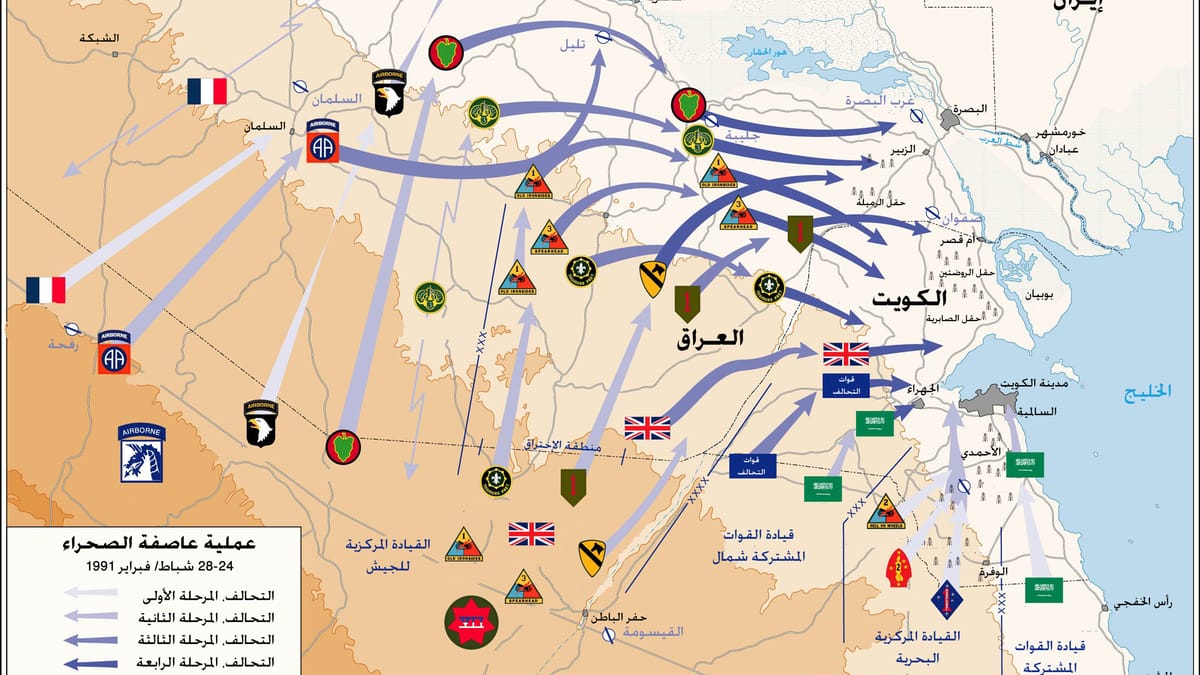
This took advantage of innovations in communications technology to enable synchronisation between platforms and units which were not designed to be synchronised – like bombers and warships, for example. This Air/Land/Sea concept got its first outing in Operation Desert Storm and had a devastating effect.
As time moved on various countries around the world developed their own versions of Air/Land/Sea or, alternatively, adopted A2AD, meaning Anti-Access Area Denial, as a way of countering America’s rapid manoeuvre warfare. US military planners saw they needed a new concept if they were to maintain their strategic edge, and this was the birth of multidomain warfare, which is basically an evolution of Air/Land/Sea. There are five ‘domains’ of warfare: air, land, sea, subsurface – as in underwater – and information.
The information domain includes psychological warfare, signals and communications, and cyber warfare. The multidomain concept aims to make operations not just synchronised, but simultaneous and potentially spontaneous, fused across all five domains. This concept is important as it has shaped the evolution of weapons and units within the US military for a couple of decades now and, naturally, this has also shaped those of US allies and adversaries.
6th Gen or Vapourware?
People who actually know their warplanes are often a little uncomfortable with the idea of a sixth generation fighter jet. The issue really began with the fifth gen fighters, where according to veteran defence and aerospace journalist Andrew McLaughlin, business development managers called their new fighters ‘fifth generation’ in order to showcase their stealth, supercruise, and data fusion capabilities. Basically, it’s becoming increasingly difficult to neatly divide warplanes into generations, as evidenced by the existence of multiple messy designations like the 4.5 or 4++ generation Sukhoi 35 or F/A-18 Block III.
Given how shaky the fifth generation tag arguably is, there’s an obvious issue with the idea of building a generation on top of that. But proponents of the sixth generation idea say that it’s quite simple – what defines this new generation is its unconventional systems and its relationship with information. For many, the fact that the vast majority of systems being imagined and prototyped right now are very far distant from the traditional idea of a fighter aircraft means that we’re clearly looking at a new generation of warplanes. Set against this, however, is the fact that Russia’s program has already fallen awkwardly into a 5++ categorisation – an indication that the sixth generation concept may also be a little shaky.
Whatever the formal category issues, there’s no denying that the new fighters being developed around the world are going to be revolutionary disruptors of air combat, assuming they look anything like their concept art and coy, drip-fed media announcements. As far as programs around the world go, they’re all remarkably similar, so let’s have a look at the broad range of proposed specifications for a sixth generation fighter aircraft.
The Aircraft: Radical New Designs
First up is the aeroplane itself. Traditionally, fighters have been small, extremely fast, and highly nimble. With fifth generation fighters like the F-35, however, this agility has already begun to be less of a priority, with over the horizon sensors and long range weapons taking the place of dogfighting capability. All the countries currently developing sixth gen fighters agree that this process needs to be taken a step further.
The US Navy’s F/A-XX program, for example, has released concept art of a carrier borne fighter without a tail, representing a significant reduction in certain types of manoeuvrability. The US Air Force’s Next Generation Air Dominance, or NGAD program has mooted a fighter which might be the size of the B-21 Raider – slightly smaller than a jumbo jet. Improvements in design and simulation technology means that the classic shape of a stealth fighter might alter radically, with digital testing and design allowing more radical sensor evading profiles without the need for stabilisers and flaps – post test flight additions which significantly increase an aircraft’s radar signature. This means that the age of the catastrophically ugly F-117A Nighthawk is well and truly over.
There are also propositions for self-healing hulls. Vulnerable sections of fuselage would be underpinned by cavities filled with epoxy and other materials, so a hull breach would trigger an instant and automatic patch, allowing the aircraft to shrug off minor damage. Very Low Observable technology, or VLO, is also ubiquitous in all the literature generated by sixth generation programs around the world. This involves not only sensor evading contours, but also innovative and highly classified radar absorbent materials.
Next-Generation Weaponry
Weaponry is also undergoing a shift, with larger yield and longer range missiles being prioritised, given that there’s a reduced need to keep the aircraft small. Additionally, improvements in miniaturisation and energy efficiency means that higher power weapons can be carried by next gen fighters, with long range stand off air to air and ground attack missiles being developed for use by fighters instead of bombers. Hypersonic weapons engines could also be carried by larger fighters.
There’s also a lot of talk about directed energy weapons – the real vapourware of combat aviation. Significant improvements in technology, however, have made these feasible for the first time. A recent Israeli test saw a Cessna light aircraft shoot down a small drone with a directed energy weapon, meaning that finally, a weapons system which has been breathlessly proposed since the release of Star Wars Episode IV, might finally come to fruition.
Propulsion: Variable Cycle and Scramjet Engines
Variable cycle propulsion systems are almost certainly going to be a feature, with some programs also mooting the option of a scramjet. A variable cycle propulsion system is, in very basic terms, a jet engine array which can re-use its exhaust for creating combustion and thrust, and which has an independent but connected engine for vertical take off and landing. It’s also responsive to power needs and the environment, with adjustable internal geometry which allows for finely detailed adjustments in fuel burn through in-flight reconfiguration of the engine’s internals.
Scramjets are a sort of hybrid rocket and jet engine which uses airflow, rather than tank oxygen, to fuel combustion. The first successful test of a scramjet was conducted by the University of Queensland, in Australia, in 2002, reaching a speed of Mach 7, or seven times the speed of sound. Both of these engine types are significantly more fuel efficient, meaning longer range and lower environmental impact.
Information Technology: The Real Revolution
But probably the most unique features of the sixth generation jets being proposed around the world have to do with information technology. Every program is looking at optional manning at the very least, which means that the aircraft can be flown either manned or unmanned. It’s rumoured that the Russian next gen program is looking seriously at a fully unmanned fighter jet. Manned and Unmanned Teaming, or MUM-T, is also a feature of every single sixth generation proposal.
What this means is that instead of just building a single aircraft, each fighter would come with complementary unmanned aircraft. These might be expendable drone swarms, more complex fighter sized systems like the Loyal Wingman, or a combination of both.
This means that there will need to be a revolution in the sensor and data sharing arrays fighters will be fitted with. At present, a fifth generation fighter can share information with other aircraft of the same type – basically between identical systems frameworks. The sixth generation fighter will have systems which are fully integrated with space and ground based systems, allowing for secure network information sharing and, potentially, remote control and decision making assistance. What’s being envisioned here is the very first cloud-based, AI assisted, fully shared battlespace picture, allowing fighter pilots to take a more fluid and immediate role in multidomain warfare, as well as acting as a command and control node for a diverse range of platforms, both manned and unmanned.
The implications of this are potentially revolutionary, not just for air combat, but for warfare in general. Highly specialised, high value units like fighter jets have long been a significant resource drain for formations in combat, with huge amounts of manpower and technology being required to sustain a single warplane for a very limited number of strikes. With MUM-T, however, each fighter unit could be force multiplied such that a single aircraft could be a self-contained and automated equivalent of what today is a huge array of sensors, ground teams, and warplanes. One congressional report breathlessly speculated that one sixth gen fighter could replace an entire present day squadron, and while this is almost certainly hyperbole, it’s not 100% false.
Also persistent within the literature of Western governments and their allies, is the idea of cyber capabilities. These are obviously highly classified, and all parties involved have been extremely tight-lipped about what this would actually look like. We can take as a given, however, that some kind of integrated defence from cyberattack, potentially involving third-party units, is highly likely to be included. When it comes to offensive cyber, governments tend to be even more secretive, but suffice it to say that there are some capabilities which it would be feasible to fit in a fighter sized platform.
The End of the Dogfight
However much of all this actually manifests in reality, one thing is certain – the old vision of a sleek, nimble fighter aircraft dogfighting in visual contact with the enemy is dead and gone. Every single aspect of every single program points to a very different kind of warplane. The fighter of the near future will probably be a large, fast, and long range aircraft, carrying a formidable arsenal of stand-off weapons.
It will be fully networked across all five domains and will likely be accompanied by a swarm of unmanned aircraft. Its systems will make heavy use of AI to identify and prioritise targets, assisting operators and overall command with decision-making by rapidly providing option sets rather than just raw battlespace data. And its primary function will be to sit well over the horizon, out of sight, and lob long range weapons at the enemy before it’s even been detected.
How Long Until We See One?
At the moment, the only sixth generation aircraft in existence is the B-21 Raider, a long range bomber which only exists as two unarmed aircraft – one for ground testing and the other for flight testing. Apart from the Raider, which is far from finished, there are no sixth generation aircraft either on the ground or in the sky. Both the US and Japan have announced test flights for their sixth generation programs, but so little is known about these that it’s actually impossible for aviation experts to say what, if anything, was actually put in the air.
As of the beginning of 2023, most of the major developed nations of the world are developing sixth generation fighters. In terms of the programs from China and India, these are so nascent as to have almost no information associated with them. China announced the commencement of preliminary research in 2019, and India isn’t scheduled to have its first fifth generation fighter out until 2029.
Having said that, India has already announced its intentions to create “niche sixth generation capabilities,” and we can speculate that this may have something to do with its role in The Quad alliance between Australia, India, Japan, and the USA. Otherwise, as many observers have noted, India lacks the organic technical expertise and industrial base to produce sixth generation technology, so it’s difficult to imagine them developing anything outside the framework of The Quad.
Russia’s program was announced in 2013 but has been described as a 5++ or sixth generation program, which means that it may not be aiming to produce a purely sixth generation fighter. The two main pillars of this program, from what we know, are the development of an unmanned fighter aircraft, as well as an interceptor to replace the MiG-31. Insiders and analysts have said that this program is likely going to suffer from a lack of prioritisation for as long as the Sukhoi-57 fifth generation fighter is still in development.
France, Germany, and Spain are developing the Future Combat Air System, a program which includes drones and a sixth generation fighter to replace the Rafale, Typhoon, and EF-18 Hornet respectively. And finally, a consortium consisting of Japan, the UK, Italy, and Sweden are working on a combined program, based in part upon advanced sixth gen fighter development completed by Japan, called the Global Combat Air Program.
The EU and Japan/UK programs are likely to be heavily intermingled with the USA’s development. While the US is understandably cagey about sharing its advanced weapons and avionics systems, the fact that all these planes will likely need to interoperate means that there’s a strong chance that they’ll end up with broadly similar aircraft, as evidenced by current fifth generation fighters. The programs run by US adversaries Russia and China are either not pure sixth generation programs or are so young as to have very little in them as yet.
Broadly speaking, however, all these programs are expecting to have their new fighters in the air by the 2030s, with China being notionally the last off the mark, with a target of entering full scale production by 2035. Of course, the most telling factor isn’t these announcements, but how far each program is from its start point, and so far the USA’s two sixth gen programs are leading, with production expected to commence by 2030.
Faster Development Through Digital Design
Significant improvements in digital design technology have also made the development of US warplanes significantly more rapid. The B-21 Raider took a mere seven years from the contract being awarded to the production of the first aircraft – a process which ordinarily takes decades. As we mentioned earlier, the NGAD program’s first test, whether it was an X-frame, a simulation, or an actual flight, took only a year to get to – whatever it might have been, this time frame would have been impossibly short just a few years ago. What this means is that there’s actually a high probability that we’ll see the unveiling of the first sixth gen fighter by the scheduled 2030 date, or perhaps even earlier.
A Revolution in Procurement
The US Air Force is also undergoing a radical change in the way it procures and sustains high end fighter aircraft. For the past few decades, a sort of eggs in one basket approach has been pursued, with the Air Force sinking all of its resources into a single fighter, sustaining it until about halfway through its operational life, and then rinsing and repeating. This approach has been hugely expensive – sustainment costs increase significantly as warplanes age – and has also seen the USA’s industrial base shrink significantly since the sixties when this approach began. Where there used to be 10 companies capable of creating high end fighters, there are now only three – Boeing, Lockheed Martin, and Northrop Grumman.
This has created a situation where contracts for new aircraft are essentially an existential struggle between the only three players in the field. Massive sunk costs are associated with winning each bid, as the long development and production timelines mean that each contract only becomes profitable late in life. As well as this, the relative lack of competition can lead to poorer outcomes for the customer – in this case, the US military and its allies.
As a procurement model, this basically guaranteed there’d be no more than two main fighter types, distributed in what’s known as a Hi-Lo configuration. What this means is that there would be a smaller number of one kind of warplane, and a much higher number of the other, each with slightly different mission capabilities and a large degree of overlap. This is highly vulnerable, however, to delays and problems – the most recent example being the sizeable shortfall in F-22 production – the aircraft which was meant to be the ‘Hi’ to the F-35’s ‘Lo’.
The US Air Force recently announced that it was no longer going to pursue fighter procurement in this way. Instead of one bid for one fighter every thirty or forty years, with the resultant problems and a development timeline measured in decades, the NGAD program is keeping its options very much open. This means that multiple companies can pitch multiple airframes, as well as a greater variety of unmanned aircraft and weapons and sensor systems, with a reasonable expectation of being asked to develop them.
This multipolar system of systems approach hopes to provide greater diversity in types and numbers of warplanes, creating greater robustness in both the procurement chain and the USA’s ability to project force into the battlespace. The EU program, as well as the British and Japanese consortium, have modelled their programs along similar lines, so it seems that the development of the sixth generation fighter isn’t just revolutionising aviation, but also how Western governments do business.
Conclusion
Beyond all the hype and sci-fi fantasy elements of the various sixth generation fighter announcements, there exists a core of truth which, even shorn of all the usual media sensationalism and industry hyperbole, is truly awesome. The most sober and conservative estimate of just how much of what’s being talked about will actually be made still represents a mind-boggling revolution in warplane technology. At this point, we’d normally say something about looking forward to seeing these amazing aircraft screaming through the skies some time soon, but that’s not what the future probably looks like.
It’s more likely that in the near future, we won’t see these supersonic dealers of distant death at all – we’ll just know they’re somewhere over the horizon. And more importantly, so will our adversaries.
Key Takeaways
- Future fighter jets will prioritize long-range weapons and stealth over dogfighting capabilities.
- Sixth-generation fighters will integrate advanced AI and cyber capabilities for multidomain warfare.
- New fighter designs will feature variable cycle engines and potentially scramjets for efficiency.
- The US and its allies are developing sixth-generation fighters with expected deployment by the 2030s.
- Next-gen fighters will likely operate with swarms of unmanned aircraft for enhanced combat effectiveness.

Simon Whistler
Simon Whistler hosts MegaProjects, bringing engineering, infrastructure, and military-machine stories into clear narrative focus for viewers who want the systems, tradeoffs, and human decisions behind the build.
Frequently Asked Questions
What is the primary focus of 6th generation fighter jets?
The primary focus of 6th generation fighter jets is on long-range weapons, advanced networking, and unmanned teaming, rather than traditional dogfighting.
How do 6th generation fighters differ from 5th generation fighters?
6th generation fighters prioritize long-range weapons and advanced networking over the agility and dogfighting capabilities of 5th generation fighters.
What are some of the proposed specifications for 6th generation fighter aircraft?
Proposed specifications include larger sizes, self-healing hulls, Very Low Observable (VLO) technology, advanced weaponry, variable cycle propulsion systems, and extensive use of information technology.
What is Manned and Unmanned Teaming (MUM-T)?
MUM-T involves each fighter being accompanied by complementary unmanned aircraft, such as drone swarms or more complex systems like the Loyal Wingman.
What is the expected timeline for the development of 6th generation fighters?
Most major developed nations expect to have their 6th generation fighters in the air by the 2030s, with the USA leading the development.
How are 6th generation fighter programs changing the procurement process?
The procurement process is shifting towards a multipolar system of systems approach, allowing multiple companies to pitch various airframes, unmanned aircraft, and weapons systems.
What is the significance of the multidomain warfare concept?
The multidomain warfare concept aims to make operations synchronized, simultaneous, and potentially spontaneous across all five domains of warfare: air, land, sea, subsurface, and information.
What are some of the unique features of 6th generation jets related to information technology?
Unique features include optional manning, Manned and Unmanned Teaming (MUM-T), and fully integrated sensor and data sharing arrays for a cloud-based, AI-assisted battlespace picture.
What is the expected role of 6th generation fighters in future combat?
6th generation fighters are expected to operate over the horizon, out of sight, lobbing long-range weapons at the enemy before being detected.
What is the current status of 6th generation fighter development?
As of early 2023, most major developed nations are in the process of developing 6th generation fighters, with the USA leading the development and expecting production to commence by 2030.
Sources
- Original MegaProjects video: The Future of Air Combat: 6th Generation Fighter Jets of the 2030s
- Hero image source by Operation Desert Storm.jpg : W.wolny derivative work: Freedom’s Falcon / openverse, by-sa.