
Boeing. Airbus. Lockheed Martin. Mikoyan Gurevich.
Rolls Royce, SpaceX, China Aerospace, Dassault. If you’re going to get a truly cutting-edge aircraft in the twenty-first century, you’re probably going to expect it to arrive from one of those sources, or from a company like it. Modern aerospace corporations have a proven track record of putting some truly incredible craft in the sky, and with histories that stretch back for decades upon decades, they have accumulated so much expertise and practical knowledge that their work is basically untouchable.
So imagine their surprise when Mark Zuckerberg, of all people, announced that he was getting in on the action—and imagine how that surprise must have multiplied when his prototype, with a wingspan as large as that of the Boeing 737, took flight just a short couple of years later. Its name was the Facebook Aquila, an Internet-relay drone that could have provided connectivity to over a billion people around the world. From a harebrained idea that nearly rivals a Twitter acquisition, to a real, functioning prototype, to a quick and rather disappointing goodbye, this is the story of the Aquila, that one time when Facebook decided to build a plane.
The Vision
In 2014, Facebook was coming into the height of its power. Long before the name Meta was even a twinkle in Mark Zuckerberg’s eye, his company was rapidly expanding outward, and recent acquisitions of Instagram and WhatsApp, worth a combined twenty billion dollars when they were each purchased, were making it clear that Facebook’s business conglomerate was only just getting started. But amidst flashy headlines and upward-trending market graphs, Facebook made a purchase that went mostly under-the-radar: an acquisition of less than $20 million in value, of a team of engineers working for the company Ascenta.
At the time, Ascenta was one of a few companies working to build solar-powered drones, and while they hadn’t made much global impact yet, their five-person engineering team apparently had something pretty good going. Their most major contribution, thus far, was in the early work for a series of aircraft known as the Zephyr, a light, solar-powered aircraft that can fly at altitudes above 75,000 feet for months at a time. In exchange for slightly less money than what sprays out every time Mark Zuckerberg sneezes, that small team of British engineers was incorporated into Facebook’s Connectivity Lab. Announcing the acquisition on his personal Facebook page, Zuckerberg appeared to already have a clear idea of what he wanted to achieve: “We’ve been working on ways to beam Internet to people from the sky.”
But while the public mostly ignored this announcement, close observers knew just what Zuckerberg was getting at with his acquisition. In a separate white-paper published through his nonprofit, Internet.org, Zuckerberg had explained his desire to build a fleet of drones that could broadcast powerful Internet signals to parts of the world that currently don’t receive significant Internet coverage. This technology is known as a High-Altitude, Long-Endurance drone, or HALE, constructed of super-light materials and expected to only carry a very light payload.
Operating via solar power, at an altitude where clouds aren’t really a concern, a HALE-style aircraft could conceivably fly for months or even years at a time, longer than helium balloons, while also being able to steer and receive controls on the ground. They could be landed, repaired, and sent back up again if needed, and could, according to Zuckerberg, be maintained and operated cheaply from very rural areas. This made a drone a far better option than a satellite, which can only support so much traffic at a given time with a relatively weak signal, or cell towers, which are far too expensive to build across rural parts of the globe.
As for why, exactly, Zuckerberg wanted to do this…well, at the time, it depended on who you asked. On the one hand, over four billion people around the world lacked Internet access at that time—a number that’s gone down since then, but still runs into the multiple billions today. Obviously, having Internet access makes a lot of things much better and easier: health-care, education, freedom of information, emergency response, employment, and many more, especially in underdeveloped areas around the world.
So, bringing the Internet to these places would have massive potential to save and enrich lives, and incorporate nearly half the world’s population into a currently inaccessible system. On the other hand, more people connected to the Internet means more people who can get a Facebook account, so…make of that what you will.
But regardless, Zuckerberg had made up his mind to go all-in on a HALE of its own, and the Connectivity Lab got to work on making it happen. The project to build a prototype was not a slow one; operating with none of the budgetary constraints, shifting requirements, or bells and whistles required for a manned aircraft, the Facebook team was able to produce multiple scale models in short order. First, the models were run through testing on the ground, then flight-tested, and once they’d proven that they worked decently in practice, they were scaled up to a prototype. Because the drone would fly at altitudes so high that things like inclement weather would largely be a non-issue, the engineering team’s directives were fairly simple: make sure it can fly, make sure somebody on the ground can steer it, make sure it can power itself, and make sure it can beam Internet service down to Earth.
Building the Aquila
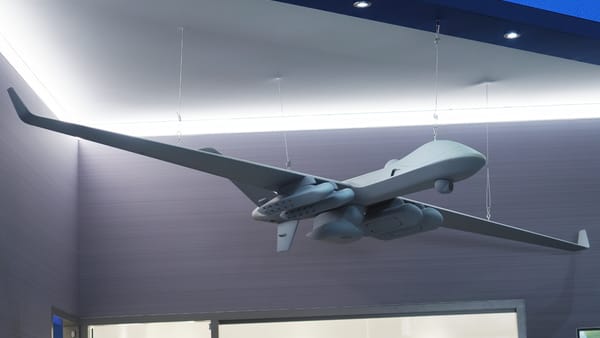
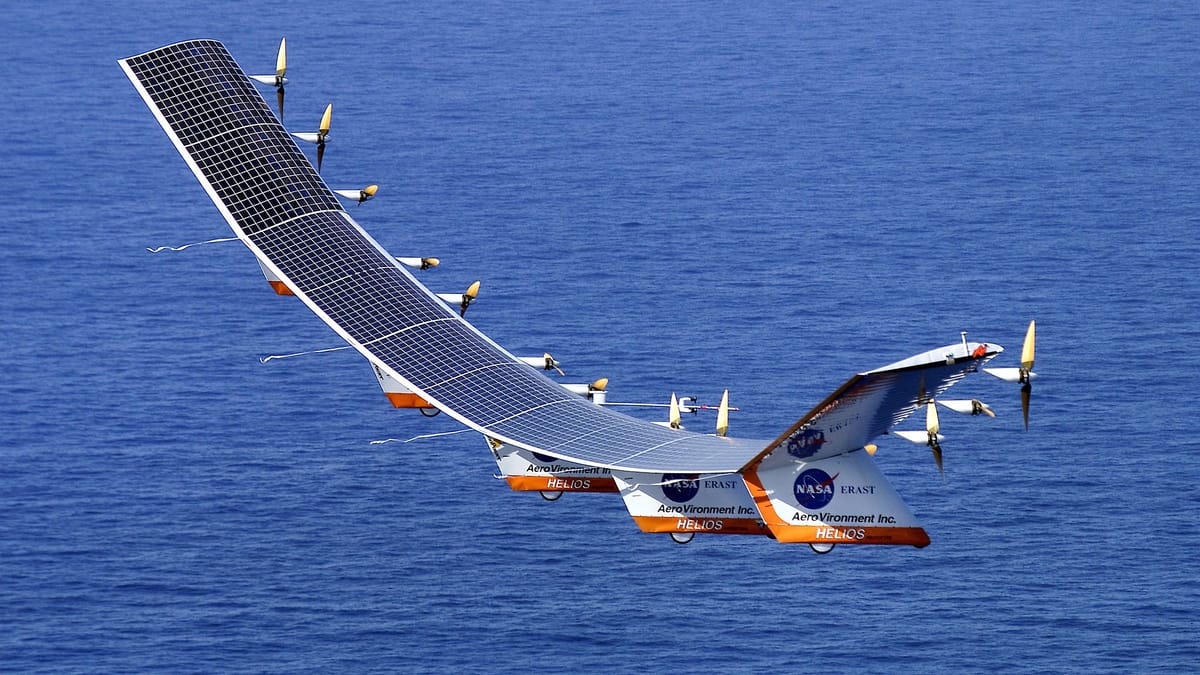
When it was first unveiled in 2016, Facebook’s drone, named the Aquila, immediately stood out. At a wingspan of 140 feet, or 43 meters, the drone itself was massive, larger in size than the general profile of a Boeing 737 commercial aircraft. But lacking any need for passengers or payload, the drone was basically a giant flying wing, allowing the design to be extremely lightweight.
Those 140 feet of wing came in at a gross weight of just 880 pounds, 399 kilograms, meaning that although it couldn’t glide forever, its propulsion mechanism wouldn’t actually have too much work to do in order to keep it airborne. Taking advantage of the drone’s long wing, its upper surface was coated in solar cells to capture energy, while batteries, accounting for half of the aircraft’s entire weight, ensured that the drone could continue to fly around the clock. The rest of the plane is made with super-light carbon fiber, which was cured to give it up to three times the strength of steel.
The Aquila was powered by four small electric motors—so small, in fact, that Facebook claimed that it could fly using the same amount of power that it takes to run three blow-dryers. Tragically, that means nothing to Simon, so instead, we’ll say that it uses about the same amount of energy that you’d need to dry two loads of laundry. The Aquila was built to fly with a service ceiling of 90,000 feet, although it would drop down to about 60,000 feet during the night in order to conserve some energy by gliding.
As long as all systems were functioning normally, the Aquila was built to fly for up to three months at a time, and although the option for manned control did exist, it was intended mostly for use on autopilot. At any given time, the Aquila could offer Internet coverage to a fifty-mile radius below its flight path, enough that just a small fleet of drones could offer coverage to tens of millions of people. While the prototype was built to be accelerated at ground level by a special truck until it lifted off, the eventual goal was for the Aquila to be brought up to altitude by a helium balloon, dropped at ninety thousand feet, and allowed to do its thing while that balloon falls back to the ground.
When it did land, the Aquila was intended to be able to rest on grassy, open fields, with no need for runways or even a significant amount of cushioning over the ground.
And just as important as how the Aquila worked, was how it was supposed to be used. The nonprofit organization we mentioned before, Internet.org, had begun to garner criticism by the time the Aquila’s prototype was getting ready for its first test flight, mostly because of how Internet.org was offering only limited services to the areas it served at the time. But the Aquila was intended to provide full broadband internet, with Facebook giving up responsibility for their operation.
Instead, the drones were expected to be provided to national governments or even local villages, with drone operators receiving training that would help them secure control over their own Internet access. According to Facebook’s then-Vice President Jay Parikh, Facebook becoming its own Internet provider was not on the agenda.
The Aquila’s first flight took place on June 28, 2016, at a flight-testing facility in Yuma, Arizona. In an event attended by Zuckerberg himself, plus the Aquila team, the prototype was expected to take off safely, stabilize once it reached the air, complete at least thirty minutes of flight, and land safely. The first stage of the flight was successful; the Aquila lifted off without issue, and settled at its intended altitude, just over two thousand feet.
It stabilized, and began to fly slowly over the Yuma testing grounds, maintaining a speed that was just enough to keep it in the air while using as little as 2,000 watts of energy. Because of how light it is, that speed was as low as ten to fifteen miles per hour while moving upwind. The first thirty minutes of flight passed easily, so the Aquila team bumped it up to ninety minutes before preparing it to land.
Unfortunately, it wasn’t all smooth sailing during the inaugural flight; as it reached the ground, the Aquila prototype suffered a structural failure, and the Aquila undershot its landing site and touched down too early, suffering significant damage. News broke later that the Aquila’s wing had snapped, due to wind and turbulence—a sobering reminder that while carbon-fiber is stronger than steel when it’s stressed in some ways, there are other sorts of crushing force that it’s not equipped to deal with.
For Facebook, this was a temporary setback, but not a devastating one. Before long, the prototype had been reassembled, with a few key changes: it was given spoilers on the wings, its propellers were modified, and its exterior surface was made to be smoother and more streamlined. Within a year, it was sent up again, and this time, the flight went seamlessly; the Aquila touched down after one hour and forty-six minutes, with no issues reported. The second flight was lauded by Facebook as a resounding success, and in November 2017, Facebook signed a partnership with Airbus in order to further enhance the project’s potential.
A Quick and Quiet Demise
But just as the Aquila program was really taking off, it was brought back to Earth once and for all, in the form of a blog post by Facebook engineer Yael Maguire. According to Maguire, the advent of other, similar aircraft from some of the global leaders in aerospace technology, all trying to put their own drones into high-altitude flight, led Facebook to re-evaluate its priorities. In the early days of the project, the Aquila had been just one of a few concepts of its kind, but in a market that was looking more and more competitive, Facebook was likely to be left behind—probably, because of its limited manufacturing capabilities relative to some of the world’s aerospace giants.
Rather than trying to turn the tables, Facebook would instead focus on evolving its connectivity technology in partnership with Airbus—that is, its millimeter-wave technology, its flight control computers, and its high-density batteries, all of which had come about because of the Aquila project. A competitor aircraft from Google had recently been cancelled for the same reasons, while the Airbus-made Zephyr drone, which Facebook’s Aquila engineers had been working on long before Facebook acquired their team, was looking more and more promising by the day. With all signs saying stop, Facebook made a quick pivot away from the Aquila, and took their business elsewhere.
According to some sources, trouble had already been brewing with the Aquila; a month prior to the shutdown, Business Insider had reported that the project head and the chief engineer had left. Allegedly, the issue that pushed them out was an attempt to redesign the Aquila, and secure a private hangar. But even despite any internal turmoil, Facebook’s decision was most likely based on their clear inability to stop, say, a Lockheed Martin or a Dassault Aviation from putting their production lines completely to shame.
And that…well, that was the end of it. The Aquila’s facility in Bridgewater, in Somerset, England, was shut down, part of the team were let go, and Facebook moved on to bigger and better things. As for the future of global internet connectivity, it turns out that Mark Zuckerberg was perhaps not its only guardian; the aforementioned Zephyr, by Airbus, is nearing completion. But when the Zephyr takes to the stratosphere, it won’t find the Aquila; instead, Facebook’s first, last, and only aircraft will be condemned to the same graveyard as so many fascinating, experimental craft that never quite secured their place in history.
Key Takeaways
- Facebook’s Aquila was a solar-powered drone designed to provide internet connectivity to remote areas.
- The Aquila project was initiated by Facebook in 2014, acquiring a team from Ascenta.
- The drone had a wingspan of 140 feet and could fly for up to three months at high altitudes.
- Despite successful test flights, Facebook ended the Aquila program due to competitive pressures.
- Facebook shifted focus to connectivity technology partnerships, notably with Airbus.
Simon Whistler
Simon Whistler hosts MegaProjects, bringing engineering, infrastructure, and military-machine stories into clear narrative focus for viewers who want the systems, tradeoffs, and human decisions behind the build.
Frequently Asked Questions
What was the Facebook Aquila?
The Facebook Aquila was an experimental Internet-relay drone designed to provide connectivity to over a billion people around the world. It was a High-Altitude, Long-Endurance (HALE) drone with a wingspan as large as that of the Boeing 737.
Who was involved in the development of the Aquila?
The development of the Aquila involved a team of engineers from Ascenta, a company working on solar-powered drones, which was acquired by Facebook. The project was led by Facebook’s Connectivity Lab.
What was the purpose of the Aquila project?
The purpose of the Aquila project was to build a fleet of drones that could broadcast powerful Internet signals to parts of the world that currently don’t receive significant Internet coverage. This technology aimed to provide connectivity to areas lacking Internet access, thereby improving access to healthcare, education, and other essential services.
What were the key features of the Aquila drone?
The Aquila drone had a wingspan of 140 feet and weighed just 880 pounds. It was powered by four small electric motors and could fly using the same amount of power required to run three blow-dryers. It was designed to fly at altitudes up to 90,000 feet and could provide Internet coverage to a fifty-mile radius.
What happened during the Aquila’s first flight?
During its first flight on June 28, 2016, the Aquila prototype successfully took off and stabilized at an altitude of over two thousand feet. However, it suffered a structural failure upon landing, causing significant damage when its wing snapped due to wind and turbulence.
What was the outcome of the Aquila’s second flight?
The second flight of the Aquila, which took place within a year of the first, was a success. The drone flew for one hour and forty-six minutes without issues and landed safely.
Why did Facebook end the Aquila project?
Facebook ended the Aquila project due to increasing competition from global aerospace leaders and the realization that Facebook’s manufacturing capabilities were limited compared to these giants. The company decided to focus on evolving its connectivity technology in partnership with Airbus.
What was the intended use of the Aquila drone?
The Aquila drone was intended to provide full broadband internet to areas lacking connectivity. Facebook planned to give up responsibility for their operation, instead providing the drones to national governments or local villages, with operators receiving training to secure control over their own Internet access.
What was the significance of the Aquila’s design?
The Aquila’s design was significant because it was a giant flying wing made of super-light carbon fiber, which was cured to give it up to three times the strength of steel. This allowed the drone to be extremely lightweight and efficient, capable of flying for up to three months at a time.
What was the role of Internet.org in the Aquila project?
Internet.org, a nonprofit organization, was involved in the Aquila project as it aimed to provide full broadband internet to areas lacking connectivity. The project faced criticism for offering limited services initially, but the Aquila was intended to provide full internet access.
Sources
- Original MegaProjects video: Facebook Once Made an Incredible Experimental Plane…
- https://www.space.com/airbus-zephyr-drone-long-endurance-flight-record
- https://www.roboticsbusinessreview.com/rbr/facebook_acquires_solarpowered_drone_maker_ascenta/
- https://money.cnn.com/2015/07/30/technology/facebook-drone-aquila/index.html
- https://www.bbc.com/news/technology-36855168
- https://www.businessinsider.com/facebook-aquila-internet-drone-second-test-flight-2017-6
- https://www.theguardian.com/technology/2016/nov/22/facebook-solar-powered-aquila-drone-under-investigation
- https://www.theverge.com/a/mark-zuckerberg-future-of-facebook/aquila-drone-internet
- https://engineering.fb.com/2017/10/26/connectivity/aquila-what-s-next-for-high-altitude-connectivity/
- https://www.theguardian.com/technology/2017/jul/02/facebook-drone-aquila-internet-test-flight-arizona
- https://engineering.fb.com/2018/06/27/connectivity/high-altitude-connectivity-the-next-chapter/
- https://arstechnica.com/information-technology/2018/06/facebook-drops-solar-powered-internet-drone-business-cans-aquila/
- https://www.fiercewireless.com/wireless/facebook-ends-ambitious-aquila-program-will-pursue-partnerships-instead
- https://www.vox.com/2016/12/18/13998900/facebooks-drone-crash-aquila-arizona-structural-failure
- https://techcrunch.com/2018/06/26/facebook-permanently-grounds-its-aquila-solar-powered-internet-plane/
- https://techcrunch.com/2017/06/29/facebooks-aquila-drone-completes-it-second-testflight-lands-well-this-time/
- https://www.nytimes.com/2018/06/27/technology/facebook-drone-internet.html
- https://spectrum.ieee.org/facebook-pulls-out-of-secret-spaceport-internet-drone-tests
- https://www.usatoday.com/story/tech/talkingtech/2018/06/26/facebook-grounds-aquila-its-solar-powered-internet-drone-project/736681002/