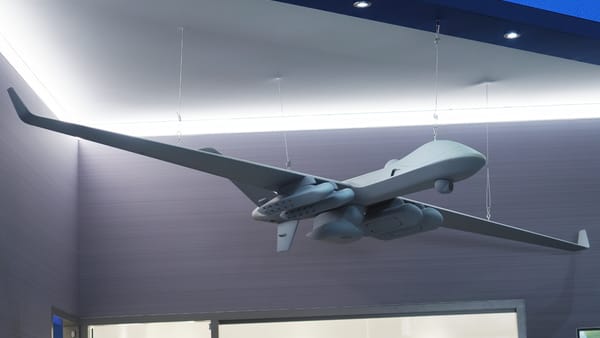

Death from above. The greatest military revolution of the 2020s has no doubt been from the growth of drone warfare. Sure, drones, or “unmanned aerial vehicles” as they’re known, feel like they’ve been around forever. But the 2020s are when they’ve truly come into their own. As the technology has become more widely commercially available and shrunk in size, we now see more drones on modern battlefields than we do any other kind of aerial vehicle.
And that got us thinking. Drones seem to have totally taken over, dooming pilots to an extended supporting role from the bench… or have they? Can drones really do everything that manned aircraft can do and more? Let’s find out who’s really the king of the skies.
The Drone Zone
So, how can drones be more beneficial to use on a battlefield than standard aircraft like helicopters or fighter jets? Well, a common phrase in the US military is that it’s important to use “the right tool for the right job”, and because drones have such a high variance in design, they can be the right tool for a lot of jobs.
Firstly, you have a variance in size. Drones can go from the size of something that fits in the palm of your hand, to the size of a commercial jet. The Black Hornet is a tiny, helicopter-like reconnaissance drone that weighs just 70 grams.
It’s equipped with a 12-megapixel camera with thermal capability, it’s so small and quiet that on a noisy and chaotic battlefield it’s basically invisible from a few dozen metres away. Its newest variant has a flight time of over 30 minutes, it can fly in 22 mile per hour winds at 10 metres per second, it has an effective range of over two kilometres and it can be launched in under 20 seconds.
Then compare that with the behemoth known as the RQ-4 Global Hawk, with a weight of 6,781 kilograms before a single thing is even put inside it, and a wingspan of 40 metres, it is absolutely enormous. It can travel at 18,000 metres in the sky, for more than 34 hours without refuelling at 357 miles per hour. You need three people to control the thing remotely and it probably takes a liiiitle longer than 20 seconds to get off the ground.
So, the variance is pretty staggering, and you just can’t have the same range of sizes in manned aircraft because of the “man” part. But that’s the point, because drones can be the size of a bird or a bus, there are many kinds to choose from when picking “the right tool for the right job” that manned aircraft can’t give you.
But it’s the miniaturisation of drone technology that is boosting its capability on the battlefield. In modern conflict, anti-aircraft systems have become advanced enough to shoot down helicopters and fighter jets with great efficiency. Russia has lost hundreds of fixed wing and rotary aircraft in Ukraine, many of which can be contributed to anti-aircraft systems like the PATRIOT.
Small drones are much harder to shoot down and are not tracked as easily by this kind of technology unless you have man-portable air defence systems or MANPADS. But drones are a dime a dozen and those missiles don’t grow on trees. So, it makes sense that drones are able to be utilised to a greater extent for missions that large aircraft simply can’t get close to.
Especially the smallest suicide drones are incredibly hard to shoot down with conventional firearms owing to their speed, which is why we’ve seen the growth of so-called “cope cages” around tanks to minimise these impacts. Until anti-air technology can be developed cheaply enough on a wide scale to deal with swarms of drones, they will be more effective than aircraft when AA systems are on the battlefield. AA guns like the Rheinmetall Skyranger show that they’re starting to gain that kind of capability, but they’re sparse and highly expensive.
Drones obviously pose an enormous risk to those they’re targeting, but arguably their biggest upside is how risk is minimised for their operators. Drones are able to be put in places that humans simply cannot go, whether that’s due to environmental factors or the presence of the enemy. Say what you like about the morality of a 19-year-old college kid using an MQ-9 Reaper drone to target Taliban villages with an Xbox controller, but the chance of any US personnel getting injured in that exchange is zero. Even on the battlefield itself, soldiers are able to use drones from bunkers with ranges of multiple kilometres to drop grenades on enemies in trenches, or fly into military equipment all without ever being seen.
What’s more is that drones are capable of loitering for longer than traditional aircraft can. Aircraft tend to weigh more so they run out of fuel quicker, they’re also piloted by people who need to go to the bathroom, and who get fatigued in combat environments. Drones have no such limitations.
You can set a standard drone to loiter in the sky for hours before targets appear underneath. Small-scale drones can loiter at lower altitudes to provide real-time battlefield intel whilst larger ones can loiter miles in the sky for hours on end. Just look at the Global Hawk and its 34+ hours without needing to refuel for an example.
Some gliders and other loitering munitions like the ULTRA can stay in the sky for days before spotting their targets. One army drone that was solar powered and tailored for endurance stayed in the air for 64 days straight. No matter how dedicated, regular pilots and aircraft simply can’t match that.
And the loitering brings us to another element of drone warfare that might give it an edge over traditional aircraft: fear. The psychological effects of always having drones loitering above you as a foot soldier is devastating for morale. Knowing at any moment when you’re out in the open that something that you can’t see until it’s too late might try to kill you is… to put it mildly… highly distressing.
The constant buzzing unnerves an enemy constantly struggling to spot threats around them, it’s draining. At least with most helicopters or jets you can hear them coming, but because drones tend to loiter you can never really know where they are until you see them or they’re loud enough to be close, by which point it’s too late. Granted, it might not have the same effect as playing Fortunate Son from a helicopter over the jungle, but it’s a much cheaper way to psych out your enemy.
And that brings us onto an important point: after all of that, you simply cannot ignore the cost of unmanned aircraft.
Generally, drones are cheaper to manufacture than standard military aircraft because they don’t need things like life support systems or a cockpit. This makes them lighter, and therefore less costly. A lot of drones are also deemed expendable by their nature, it’s why they’re flown into things.
They can be made out of much cheaper materials if they’re going to blow up or get shot anyway. Good militaries tend to not have the same laissez-faire attitude when it comes to pilots and aircraft. The commercial-sized drones like we’re seeing in the Ukraine conflict can range from in the hundreds to thousands of dollars in price.
That’s pennies compared to missiles and reconnaissance planes worth millions while providing a similar tactical utility. And when you consider the cost differential for what they can target, it’s a no brainer. You can throw tens of suicide drones at a tank and not even have it rack up to a tenth of the cost of a missile that could do the same job.
It’s hard to deny that kind of use-case from an economic standpoint.
And even if unmanned aircraft cannot do everything that a manned one can, the cost difference makes it a harder value judgement to make. An F-22 Raptor fighter jet costs 350 million dollars to build, let alone the maintenance; an Apache chopper is roughly 50 million; a Reaper is 30. Would you rather have one F-22, seven Apache choppers, 12 Reaper drones or hundreds of little quadcopters with cameras that can drop grenades?
A lot of militaries might lean towards the Reapers and little drones for the extended capability they give you. Quantity has a quality all its own in warfare, and whilst it’s by no means a guarantee of victory, it appears the more drones you have, the better your chances.
Well, that’s all well and good then! Soon we’ll leave the war and death to the machines and we can all get on with our lives, right? Drones are clearly superior, aren’t they?
Well, you might be surprised. Because as much as we’ve made out that drones are far superior, they have their drawbacks, and manned aircraft are far from useless.
The Downside to Drones
Ultimately, while drones do have aerial dominance at the moment, there are quite a lot of reasons why they may not be overtaking traditional manned aircraft any time soon.
Firstly, and most importantly, is the human element. Unmanned vehicles have a lot of utility in being able to be put in places that for manned ones would be considered suicide, but the downside of having no pilot or crew in the vehicle itself is you don’t have a pilot and crew who can interpret what they’re witnessing with their own eyes in real time. When a mission may hang in the balance if not for some quick thinking from a pilot, you’d prefer a manned aircraft every time.
Another important element of having manned aircraft is for their use in both special operations and transport. Pilots, especially helicopter pilots, are able to take off and land very quickly. They can drop off or pick up troops while under fire and are able to do so in poor conditions and visibility. Drones simply can’t do that.
It’s important to remember war is fought with logistics and certain special operations can make a big difference strategically. For example, it’s just not possible for a drone to get a SEAL team into and out of a building in the dead of night with the present technology. What would have happened if you had left the raid on Bin Laden’s compound to drones alone? It would have been a whole lot messier from the get go.
Even in that very mission, one of the choppers carrying one of the SEAL teams crashed due to technical malfunctions and the mission was still completed with zero friendly casualties, showing that humans on the ground have the ability to adapt to situations where drones cannot.
In fact, drones cannot easily defend themselves at all, with many relying on being hard to hit and hard to see in order to stay untargeted. Drones however could become extremely vulnerable to electronic warfare like hacking, jamming, and EMPs in the future. If a drone can be successfully hacked, or retrofitted to be controlled by the enemy, it could do all kinds of damage towards its operators or friendly soldiers.
EMPs present even more danger. Whilst a strong enough EMP could take down the complex electronics of any drone, what happens after could be a problem. Some larger UAVs have internal navigation systems and fail safes that will return them to their operating bases when they lose GPS signal.
It’s a good way to recover drones that have their navigation systems knocked out, but if those drones can be successfully tracked back to base it could open avenues for attack or reveal important information. Drones being able to be hacked, rerouted or knocked out of the sky entirely show a major vulnerability in that they rely heavily on their communications to function. And the US military has experimented with EMP-related weapons since the early 2000s, but drone warfare may push electronic warfare to the forefront.
Similarly, sabotage becomes an issue for drones. If somebody was able to hack or take out the communication hub itself, you could grind an army’s entire reconnaissance apparatus to a halt. These kinds of issues don’t exist in the same way with traditional aircraft with pilots. Take out the comms hub and now you just have a pissed off gunnery crew.
For better or worse, you can’t hack a person, and manned aircraft can still fly in a limited capacity if an EMP or another electronic weapon does hit them, they can’t shut off an engine after all, and pilots are trained to fly manually even when their systems might fail. So as electronic warfare grows, some aircraft may regain an advantage on the battlefield.
On top of that, as drones become more autonomous, they will develop vulnerabilities that standard aircraft won’t have. As more autonomy gets built into drones, they will become more predictable. Software will ensure that drones operate with certain patterns of behaviour, and these patterns could be exploitable by an enemy. Humans, even with regimented training, are inherently unpredictable; we are not machines, we do not always choose the logical solution like an autonomous drone might for any number of reasons.
And these things may make drones’ predictability quite an important weapon against them.
Mother nature is also in play here. Many drones, especially small-scale ones, struggle in adverse weather conditions for visibility, navigation, or flight. Just in late December of 2024, it was reported that winter conditions on Ukraine’s Southern front were slowing down the use of kamikaze and surveillance drones from the Russian side.
And any number of weather conditions can affect them, with rain, fog, or snow all making it difficult to fly. In certain scenarios the weather could severely limit the scope of what you’re able to see and do on any given battlefield. Modern manned aircraft are generally big and robust enough to fly in bad weather and so can be used all year round and at any time of day, where cheap drones might not have night vision or infra-red cameras.
More commercial drones like we see in Ukraine will also be affected by the temperature, with already short-lived batteries draining faster in the cold. Drones are great, but in some climates, they may be seriously inhibited for months out of the year, meaning you just can’t rely on them all the time.
And the final, and arguably most important issue to remember when considering drones and how they stack up versus aircraft, is that drones gaining the prevalence they have is a really recent development, more or less unseen until the war in Ukraine. What this means is we still may well be on the curve of “measure and countermeasure” as is present in all military technology. Just because there has not been an effective way to reduce the importance of drones on the modern battlefield yet, does not mean that one day there won’t be.
One of the current most important countermeasures to drones is staying out of sight, and stealth technology for individual soldiers may improve, rendering drones less effective. Soldiers are already finding their way underground more often in order to remain undetected, and it showcases that weapons don’t develop in a vacuum, warfare itself will continue to develop alongside them.
Manned aircraft for now appear to still have an important role to play on the battlefield when it comes to transport, fire support, destroying critical targets, and certain specialised missions, but drones have yet to see attempts to counter them beyond cope cages and heavy blankets in front of bunker doors. Eventually countermeasure technology like radiation weapons, EMPs, improved small arms anti-aircraft fire and more will catch up and become commonplace. It will then be the goal of those who utilise drones to get around those fixes to keep them effective as a force multiplier.
It is the ever-escalating cycle of warfare and technology. A long time ago, the spear was the most effective weapon in the world. We’ve moved past it for a reason, but one day it could be the same for drones.
Conclusion
Ultimately crowning a “king of the sky” is a bit like a bad pencil, it’s pointless. Drones and aircraft are lumped together and compared because they both fly and blow stuff up. In reality, whilst their roles overlap a lot, they are diversifying as warfare continues to change.
Logic would tell you that an aircraft can’t do everything a drone can do. But it’ll also tell you that a drone can’t do everything an aircraft can do either. And so, a mix of the two is required to make sure that in every situation, militaries are capable of picking the right tool for the right job. In some situations, you may well need both.
Developments of concepts around fighter jets having “drone wingmen” to accompany them on sorties hit the news in 2024 and so soon we might see a future where the two kinds of systems are used together in certain missions. A perfect harmony of man and machine.
And this example also illustrates an important point: that in military technology nothing is ever static, everything we’ve said today may well be subject to change. Some military boffin could come up with some new technology tomorrow that appears to make drones useless for six months, and then something else could come along later to undo it. We can’t know what the future will hold. Drones may appear on top right now, but the reality for the title of “King of the Skies” is that nobody seems to sit on the throne for very long.
Key Takeaways
- Drones offer a wide range of sizes and capabilities, from tiny reconnaissance drones to large, long-endurance models.
- Drones are more cost-effective and expendable, making them ideal for missions where manned aircraft are vulnerable.
- Manned aircraft excel in special operations, transport, and adapting to unexpected situations on the battlefield.
- Drones face vulnerabilities to electronic warfare and adverse weather conditions, limiting their effectiveness in certain scenarios.
- The future of aerial warfare likely involves a mix of drones and manned aircraft, each used for their unique strengths.

Simon Whistler
Simon Whistler hosts MegaProjects, bringing engineering, infrastructure, and military-machine stories into clear narrative focus for viewers who want the systems, tradeoffs, and human decisions behind the build.
Frequently Asked Questions
What is the main advantage of drones over traditional aircraft?
Drones can be the right tool for a lot of jobs due to their high variance in design and size, ranging from palm-sized to the size of a commercial jet. They are also harder to shoot down and can loiter for longer periods, providing real-time battlefield intel and psychological pressure on enemies.
How do drones minimize risk for their operators?
Drones can be put in places that humans cannot go, whether due to environmental factors or the presence of the enemy. This minimizes the risk of injury to operators, as they can control drones remotely from safe locations.
What are some examples of drones mentioned in the article?
Examples include the Black Hornet, a tiny reconnaissance drone, and the RQ-4 Global Hawk, a large, long-endurance drone. The article also mentions suicide drones and solar-powered drones tailored for endurance.
How do drones affect enemy morale?
The constant presence of drones loitering above can be highly distressing for enemy soldiers, as they never know when or where an attack might come from. This psychological effect can be draining and demoralizing.
What are the cost advantages of drones over traditional aircraft?
Drones are generally cheaper to manufacture because they don’t need life support systems or cockpits. They can be made from cheaper materials since many are deemed expendable. This makes them a cost-effective option for various military operations.
What are some drawbacks of drones compared to manned aircraft?
Drones lack the human element for quick decision-making and adaptability in critical situations. They also struggle with special operations and transport, and are vulnerable to electronic warfare and adverse weather conditions.
How do manned aircraft still hold an advantage over drones?
Manned aircraft can operate in adverse weather conditions, perform special operations, and transport troops quickly and safely. They are also less vulnerable to electronic warfare and can adapt to situations where drones cannot.
What is the future of drone and manned aircraft integration?
The future may see a harmony of man and machine, with concepts like fighter jets having ‘drone wingmen’ to accompany them on sorties. This integration could provide a mix of capabilities for various military situations.
What is the current status of drones in modern warfare?
Drones have gained significant prevalence in modern warfare, especially seen in the war in Ukraine. However, countermeasures are being developed, and the effectiveness of drones may change as technology advances.
Sources
- Original MegaProjects video: Choppers vs. Drones: The Sky’s New Kings
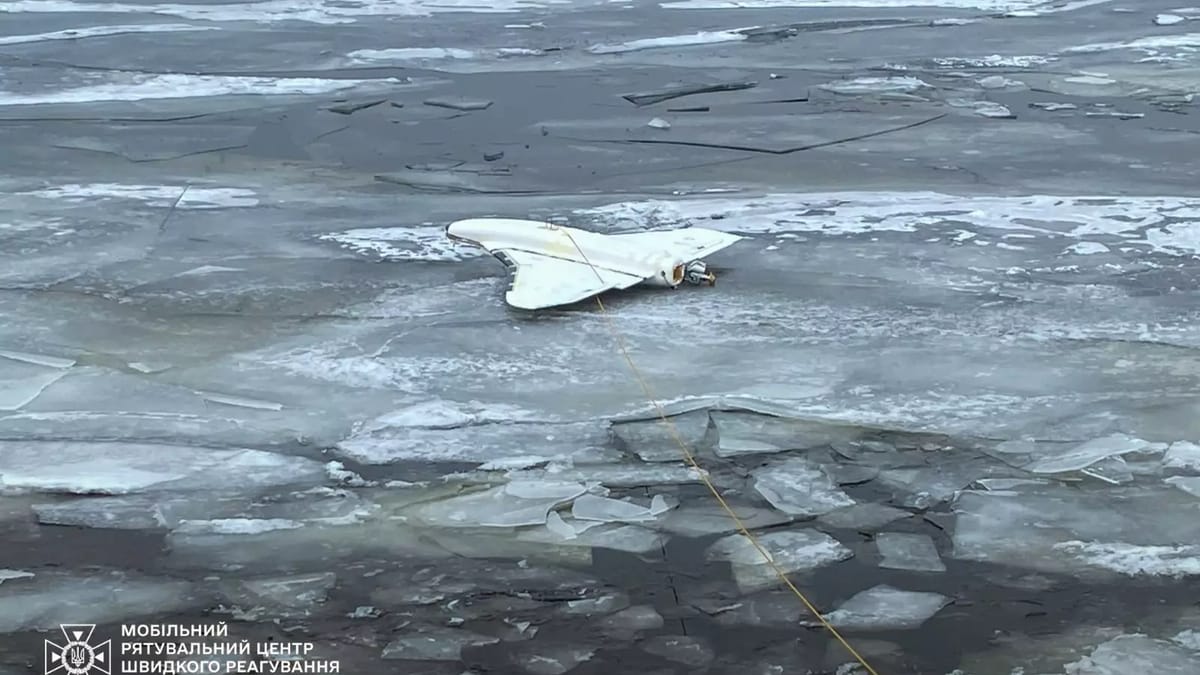
- Hero image source by State Emergency Service of Ukraine / openverse, by.