
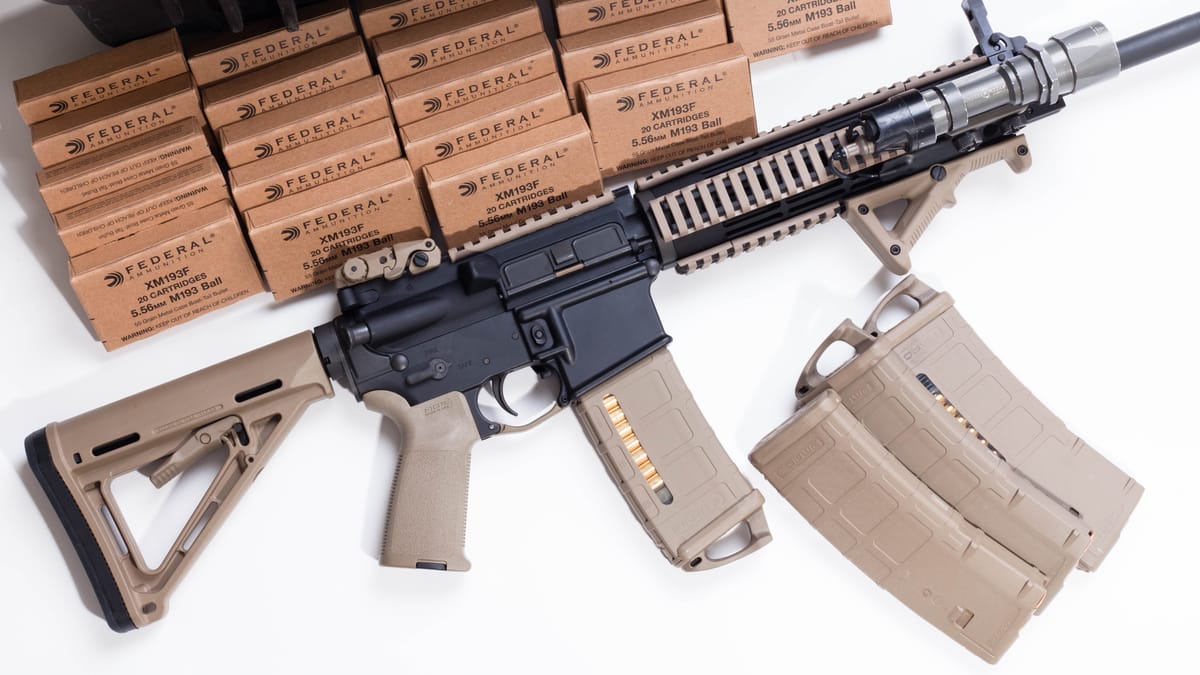
On this channel we have explored a myriad of megaprojects, some of them righteous and others wicked. Today’s subject, however, is altogether greyer. The AR-15, often dubbed “America’s Rifle,” is hailed by some as the last line of defence for freedom in an ever more authoritarian world, and decried by others as a hateful implement fit only for the mass murder of children. It is nothing if not controversial.
So today we are going to filter fact from fiction and take an unbiased look at the reality of the rifle: its history, its popularity with both civilians and militaries, and, tragically, its use in mass shootings.
A Revolution in Rifle Design
Before the AR-15 was invented in 1957, firearm technology was in the middle of a revolution. Militaries the world over had noticed that their WWII-era service rifles simply did not cut the mustard anymore: their large, full-sized rifle rounds were overkill for the modern battlefield.
- Designed by Eugene Stoner
- 1957
- Adopted as the M16
- March 1964
- M16s built for the US military
- 10,000,000+
- Estimated AR-15s in US circulation
- 20-30million
- Militaries that have fielded the M16
- 80+
- Share of US firearms manufactured (projected)
- 23.4%
The Germans had found a solution during the war with their StG44, a rifle that combined a shortened round with the ability to fire in both semi-automatic and fully-automatic modes. This “select-fire” configuration would later become known as the assault rifle, and it was revolutionary, combining the range and power of a rifle with the versatility of a submachine gun.
Understandably, the militaries of the world looked on with envy, and it was not long before they all wanted something similar. The Soviet bloc’s answer was the venerable AK-47. For the British it was the EM-2. As for the Americans, they disregarded the lessons of the StG44 completely and adopted the M14 in 1957: a select-fire rifle that still fired the old full-sized rifle round, a configuration known as a battle rifle.
This baffling choice was the result of a conservative faction within the American military-industrial complex. Big bullets had worked great since the 19th century, the thinking went, and they did not need any of this newfangled nonsense. The faction used its political capital to impose its will, and so America was shackled with the M14: a rifle that was big, heavy, and uncontrollable in fully-automatic fire. Worse still, through NATO this choice was forced on America’s allies.
The British were made to abandon the EM-2 in favour of the FN FAL, the West Germans adopted the G3, the Italians the BM59, and so on. All of them battle rifles.
Needless to say, the choice came back to bite America. The M14’s service in Vietnam was disastrous, to put it lightly, and it quickly found itself on the chopping block, beginning to be replaced in frontline service from 1964, a mere five years after it was adopted.
Eugene Stoner and the AR-15
Enter the AR-15, which had been gathering dust since its creation in 1957, waiting for this exact moment.
It was the brainchild of Eugene Stoner, a trailblazing, self-taught firearms designer in the employ of the ArmaLite Company. ArmaLite is, incidentally, where the “AR” in AR-15 comes from, not “assault rifle.” Stoner’s work was driven by two principles, efficiency and sophistication, and so when he designed the AR-15 he envisioned a rifle that combined cutting-edge design cues with simple manufacturing techniques.
He had a head start. In 1956 he had designed the AR-10, a battle rifle he had hoped would win the contract that went to the M14. It was characterised by heavy use of lightweight aluminium and phenolic composite to cut weight, and by a distinctive direct-impingement gas system, which forwent a traditional piston in favour of directing propellant gases straight back into the bolt carrier, reducing parts and lightening the weapon further.
It was exemplary of Stoner’s principles of efficient sophistication. But despite its merits, and in part because of some bribery and other funny business, the AR-10 was a commercial flop, failing to win the M14 contract and selling barely 10,000 units to a handful of militaries. Now, though, with Stoner eager to build a rifle chambered in the intermediate 5.56x45mm cartridge, that earlier work gave him a serious leg up.
If you look at the AR-10 and AR-15 side by side and notice how alike they are, you might assume Stoner simply shrunk his earlier work. You would be totally correct. The AR-15 retained the direct-impingement gas system and the heavy use of aluminium and phenolic composites. It also kept the same charging handle, magazine release, safety selector, carry handle, rear-sight aperture, pistol grip, and select-fire configuration as the AR-10. It really was just a shrunken-down version.
The finished AR-15 was a thing to behold, all of Stoner’s principles coming together to create the very rifle the world seemed to be clamouring for. All that was left was to announce it and wait for the orders to flow in. Unfortunately, that did not happen, because what Stoner had actually built was the rifle the world would need later. The US military had adopted the M14 the same year the AR-15 was finished, and its replacement was seven long years away.
In the meantime, ArmaLite had bills to pay, and the AR-15, having sold just a handful of units to private citizens and the odd police force, was not earning them any money. So, in what has to be one of the worst business decisions in history, they sold the rights to Colt in 1959.
Colt, aware of the absolute gold mine they had acquired, wasted no time tinkering with the design to optimise its saleability. Their main modification was relocating the charging handle from underneath the carry handle, a location they deemed clumsy and unergonomic, to the rear of the receiver. Then it was marketed to the world.
From AR-15 to M16
To say Colt’s advertising drive went well would be a bit of an understatement. Their first sale came in September 1959, when Malaya purchased 4,000 examples for its military, with orders from Panama and Sudan soon following. But these were drops in the ocean of the AR-15’s full potential, which would come five years later when the M14 got the axe and the AR-15 was chosen to replace it.
The road to that deal was long and hard, with much machinating and schmoozing on Colt’s part to secure it. They had their first taste of success in July 1960, when, following a stirring demonstration, they won the favour of General Curtis LeMay, Vice Chief of Staff of the United States Air Force. LeMay ordered 8,500 units to conduct his own extensive testing, pitting the rifle against the M14 in a number of trials. Those trials showed that, thanks to its smaller-calibre cartridge, the AR-15 was actually controllable in fully-automatic fire.
The rifle had won its first valuable ally in the US military.
LeMay was promoted to Chief of Staff of the Air Force in June 1961 and immediately used his new position to keep fighting the AR-15’s corner, requesting another 80,000 with a view to slowly rolling it out for extended combat trials in Vietnam. He met significant resistance from General Maxwell Taylor, Chairman of the Joint Chiefs of Staff, and President John F. Kennedy, both of whom worried about the logistical headache of supplying two different rifle calibres in the field.
Meanwhile, as this high-level chest-beating ensued, the AR-15 quietly made its combat debut in October 1961, when US Army Special Forces procured 1,000 of them and sent them straight to Vietnam. The troops were taken aback by the rifle’s careful balance of firepower and controllability, and it won yet another valuable ally.
But the man who held the ultimate power to replace the M14, Secretary of Defense Robert McNamara, was torn. With opinions coming at him from all angles, he arranged a comprehensive side-by-side test of the M14, the AR-15, and the AK-47. Colt then shot themselves in the foot when there was no need to, attempting to rig the tests in their favour; when this was exposed, it turned McNamara against them altogether.
It took nearly two years for McNamara’s emotions to settle. In January 1963 he finally admitted the AR-15 was the way forward and sent Colt a list of modifications to make before he would accept it, the main one being a chrome-plated chamber that would resist corrosion. The rifle was formally adopted in March 1964 and given a new name by the military: the M16.
Six Decades of Service
From there, the sky was the limit. As the M16, the rifle remains the US military’s service rifle to this day, having gone through numerous iterations to adapt to changing tactical needs and technological advances.
The first new iteration was the M16A1 in 1967, which added a forward assist to help operators push misfeeds into battery, along with a chrome-plated barrel. The M16A2, A3, and A4, adopted in 1983, 1996, and 1997 respectively, brought incremental improvements in sights, barrel, and ergonomics. The major change worth noting is the complete omission of fully-automatic fire from the A4 onwards in favour of a three-round burst mode.
The M4, a shortened “carbine” model of the M16, was adopted in 1994 and, unlike the A4, retained fully-automatic capability. All in all, more than 10,000,000 M16s have been manufactured for the US military since adoption.
The M16 has also seen incredible success overseas, with more than 80 militaries having used various models at one point or another. Some, like the Philippines and Mexico, use American-made examples, while others, like both Koreas, manufacture their own domestically.
America’s Rifle: The Civilian Story
Here is the honest truth: we have no idea how many AR-15s are in circulation. Because of the eclectic way the US government has collected data over the years, there is no figure it could release even if it wanted to.
This is further complicated by the unreliability of think tanks on anything gun-related. American think tanks are fiercely partisan here. Pro-gun outfits tend to downplay the number of their “black freedom sticks” in circulation so as not to tempt further regulation, while anti-gun outfits tend to overplay the number of “scary black baby killers” in circulation in order to tempt further regulation.
But if we collate the few reliable estimates available, it appears there are roughly 20 to 30 million AR-15s in circulation in the US right now. With numbers like that, it is easy to see why the rifle has been dubbed “America’s Rifle.”
We also have a reasonable idea of how it got so popular. First is wide availability. Colt’s patents expired in 1977, and multiple manufacturers immediately leapt on the opportunity to produce their own, with at least 500 companies having done so over the years.
And within those 500 companies are AR-15s for every budget. At the top end you have rifles like the Daniel Defense DDM4 V7, a Rolls-Royce of a rifle with exceptional craftsmanship, a cold-hammer-forged barrel for extra durability and accuracy, and integrated attachment technology for easy customisation while keeping a lightweight, balanced profile. At the bottom end you have models like the Palmetto State Armory Nitride Freedom Rifle, a far more modest thing with none of the excesses of the former, but at its core a perfectly functional and dependable rifle.
When the latter can be found for under $700 and the former blows the budget at over $2,000, it is easy to see how there is an AR-15 for every wallet.
But wide availability is only half the story. The AR-15’s rabid success can also be explained by a political ouroboros within America. The rifle, being so popular, has become a symbol among gun owners. That makes it a target for anti-gun lobbyists, who push for tighter regulation of the AR-15 specifically.
That, in turn, causes a spike in sales, either for the pragmatic reason that shooters fear they may not be able to get one soon, or as a political statement rejecting the whims of the anti-gun lobby. That boosts the number in circulation, makes the rifle even more symbolic, and the cycle begins anew.
Before we close this chapter, it is worth stating plainly: civilian AR-15s are not assault rifles. Civilian AR-15s are restricted to semi-automatic fire only, and have various mechanical blocks that make retrofitting fully-automatic capability all but impossible without extensive rework, the kind of work that is well beyond the typical gun owner. So, by the definitions we set out at the start, definitions accepted across the academic world, a civilian AR-15 is not an assault rifle. The AR-15 is an assault rifle; a civilian AR-15 is not.
The Mass Shooting Question
The AR-15 is, tragically, synonymous with mass shootings, as typified by a CBS News piece dated 29 May 2022 that decried the rifle as the “weapon of choice for mass shooters.” But is that claim true? In short, no, not really.
First we have to define a mass shooting, which is a surprisingly difficult thing to do, as every think tank and lobby group has its own definition. Mother Jones, an American nonprofit, uses a definition requiring at least three people, excluding the shooter, to be fatally injured in a public location, with the shooter’s motivation being indiscriminate. That excludes crimes of armed robbery, gang violence, or domestic violence. By contrast, the Gun Violence Archive uses a broad lens, defining a mass shooting as an incident in which four people are fatally or non-fatally injured, excluding the shooter, with no restriction on location or motivation.
We prefer Mother Jones’ definition, as the Gun Violence Archive’s (and others like it) would produce a skewed and unrepresentative dataset, so we will use theirs going forward. We also draw from their database for our figures, because their data collection is admirably agreeable. They accurately plot the nuances of weapon type in a way that strongly suggests no agenda: they correctly define an “assault rifle” as we have, not labelling factory AR-15s as assault rifles, but labelling AR-15s modified for fully-automatic fire as assault rifles.
A pro-gun bias would not label those modified rifles as assault rifles by attempted technicality; an anti-gun bias would label all AR-15s as assault rifles to inflate their perceived use in criminality. As mass shootings are a heavily politicised issue, we wanted to be completely upfront about where our data came from.
By Mother Jones’ definition, 148 mass shootings have occurred in America since 1982. Of those, 26 used AR-15s, AR-15 derivatives, or AR-15 “ghost guns” (rifles assembled from separately collected parts), meaning 17.56% of total mass shootings were committed with an AR-15. Notably, since 32 mass shootings in total were committed using semi-automatic rifles, that means 81.25% of all mass shootings involving a semi-automatic rifle used an AR-15.
Is that enough to make the AR-15 the “mass shooters’ weapon of choice”? In our opinion, no, not really, as that description would depend on the rifle being used in over half of all mass shootings. What we think is fair is to call the AR-15 the “mass shooters’ go-to semi-automatic rifle,” reflecting the fact that while its use is uncommon in gross terms, it makes up a very high percentage of the semi-automatic rifles used.
This is a highly subjective matter, and our take is far from final. If you would interpret the data differently, or deem the percentage high enough to warrant the CBS description, that is absolutely fine. We do not wish to impose our opinion; we just want to share how we came to it so you can form your own.
The Future of America’s Rifle
So what does the future hold? On the military front, the US shows no sign of letting go any time soon. The M16A4 is still going strong as a service rifle with no replacement looming, and while the M4 is slated to be replaced, the XM7 set to replace it is itself a hybrid of the AR-15 and AR-18, so the “AR-ness” is hardly going anywhere. The design also continues to expand overseas, with the British Royal Marines recently accepting the AR-15-derived L403A1 into service as their new rifle.
Among civilians, despite its polarised public perception, popularity shows no sign of waning. This year alone, AR-15s are projected to make up 23.4% of all firearms manufactured in the US, up from 18% in 2013 and just 3.7% in 2003. Barring some seismic and unforeseeable shift in the zeitgeist of both the military and civilian worlds, America’s Rifle is here to stay.
Key Takeaways
- The AR-15 was designed by self-taught engineer Eugene Stoner at ArmaLite in 1957, scaled down from his earlier AR-10 battle rifle and chambered in the intermediate 5.56x45mm cartridge. The “AR” stands for ArmaLite Rifle, not “assault rifle.”
- ArmaLite sold the rights to Colt in 1959. After years of military politicking, the rifle was formally adopted as the M16 in March 1964 and remains the US service rifle today, with over 10 million built and use by more than 80 militaries.
- A civilian AR-15 is semi-automatic only and, by academic definition, is not an assault rifle; the original select-fire military version is.
- Estimates put 20 to 30 million AR-15s in US civilian circulation, fuelled by wide availability after Colt’s patents expired in 1977 and a self-reinforcing political cycle of symbolism and regulation.
- Using Mother Jones’ data, AR-15s account for 17.56% of US mass shootings since 1982, but 81.25% of mass shootings that involved a semi-automatic rifle.

Simon Whistler
Simon Whistler hosts MegaProjects, bringing engineering, infrastructure, and military-machine stories into clear narrative focus for viewers who want the systems, tradeoffs, and human decisions behind the build.
Frequently Asked Questions
What does “AR” in AR-15 stand for?
It stands for ArmaLite Rifle, the company where designer Eugene Stoner created the weapon. It does not stand for “assault rifle,” a common misconception.
Is a civilian AR-15 an assault rifle?
No. Civilian AR-15s are restricted to semi-automatic fire only and have mechanical blocks that make adding fully-automatic capability all but impossible without extensive rework. By the academically accepted definition, the original select-fire military version is an assault rifle, but a civilian AR-15 is not.
How did the AR-15 become the M16?
After the M14 performed disastrously in Vietnam, the AR-15 won over allies like General Curtis LeMay and US Army Special Forces. Secretary of Defense Robert McNamara eventually backed it in January 1963, requesting modifications such as a chrome-plated chamber. It was formally adopted in March 1964 and renamed the M16.
How many AR-15s are in circulation in the US?
There is no official figure, partly because of inconsistent government data collection and partly because partisan think tanks distort their counts. Collating the few reliable estimates suggests roughly 20 to 30 million AR-15s are in US civilian circulation.
Is the AR-15 the “weapon of choice” for mass shooters?
The script argues no, not really. Using Mother Jones’ database, AR-15s were used in 17.56% of US mass shootings since 1982, far below the majority that the “weapon of choice” label would imply. A fairer description is the “go-to semi-automatic rifle,” since AR-15s account for 81.25% of mass shootings that involved a semi-automatic rifle.
Why is the AR-15 so popular with civilians?
Two main reasons. First, wide availability: after Colt’s patents expired in 1977, at least 500 companies began making versions at every price point, from sub-$700 budget rifles to $2,000-plus premium models. Second, a self-reinforcing political cycle in which the rifle’s symbolism among gun owners draws regulatory attention, which in turn spikes sales and reinforces the symbolism.
Will the AR-15 be replaced any time soon?
It does not look like it. The M16A4 remains in service with no replacement looming, and even the M4’s planned successor, the XM7, is a hybrid of the AR-15 and AR-18. New militaries continue to adopt AR-15 derivatives, such as the British Royal Marines’ L403A1.
Sources
-
Original MegaProjects video: The AR-15: The World’s Most Controversial Gun
-
US mass shootings, 1982–2023: Data from Mother Jones’ investigation
-
Hero image source by Joe Cereghino / Wikimedia Commons (CC BY 2.0), CC BY 2.0.
Related Projects
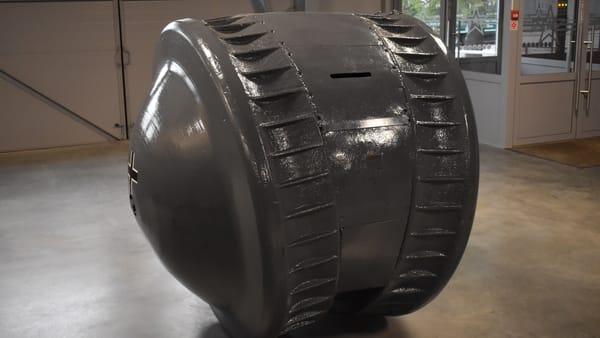
Kugelpanzer: The Most Bizarre Tank of World War II
The Kugelpanzer is WWII's strangest armoured vehicle — a one-man steel ball with no confirmed builder, no known purpose, and no surviving documents.
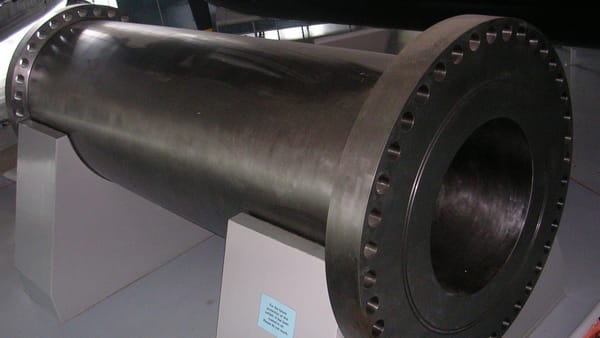
Project Babylon: Saddam Hussein’s Supergun
The true story of Gerald Bull, the Canadian artillery genius who helped Saddam Hussein build a gun capable of firing satellites into space.
A-10 Warthog: Why the Close-Air-Support Icon Is Finally Leaving
The A-10 Thunderbolt II survived decades of retirement fights, but 2026 divestments show why the Air Force is finally moving past the Warthog.