
“Imagine a living symbol of hope, the largest living structure on the planet, one that stretches eight thousand kilometers across Africa, ushering in a new era of sustainability and economic growth.” This vision, as described by the United Nations Convention to Combat Desertification, is known as the Great Green Wall—a truly massive ecological undertaking, with the ultimate goal of stopping the Sahara Desert in its tracks.
Part of a continent-wide effort to stop the spread of Africa’s desert land, the Great Green Wall is the ultimate ecological restoration project, an impenetrable barrier of trees and undergrowth that would make desertification impossible, while returning the land it’s built upon back to nature. It’s an essential step in preserving food security, rehabilitating the economies of Africa’s Sahel nations, and holding back the Sahara as the world grows hotter and hotter. The project is already underway—it has been for years—and its success or failure may well dictate whether Africa grows and prospers in the twenty-first century, or whether half the continent will degrade into a barren, scorched desert wasteland.
Africa’s Predicament
In the year 2022, some sixty percent of the African population lived in areas prone to desertification: Dry, low-humidity land, often with significant winds and high levels of heat, where water-dependent agriculture is difficult to achieve at the best of times and food is often scarce. Over the past several decades, the global effects of climate change have had an outsize impact on these regions of Africa, where pre-existing problems like frequent drought and poor crop growth have gotten significantly more common and severe. Making matters worse, much of the Sahel region is made up of formerly fertile land that has been degraded over time, both due to that same process of climate change and the effects of overly aggressive agricultural practices.
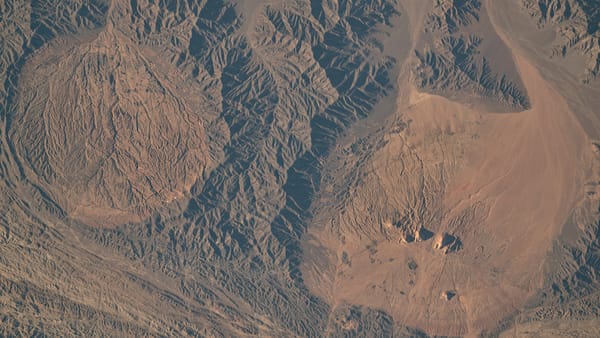
This sort of slowly dying land is highly vulnerable to desertification, a process in which pre-existing drylands lose so much of their former biological productivity that they become deserts. Rain falls less and less often, nutrients are drawn out of the soil or packed under hard layers of depleted topsoil, and existing bodies of water dry up. As a result, new plants cannot grow, any existing ones cannot thrive, and the wildlife dependent on that vegetation dies off, followed quickly by any animals higher up the food chain. In the Sahel region, this process means that the Sahara expands into the dead areas created by desertification—a slow, consistent march across the landscape that the rural or impoverished regions of sub-Saharan Africa are seemingly unable to stop.
The effects have been devastating. In Kenya, two-thirds of the country’s land have experienced severe and recurring drought, and almost half of its cattle supply has died off, along with twenty percent of the country’s sheep and goats. In Tanzania, the deliberate destruction of hundreds of thousands of acres of forest land each year basically just gives that land over to the desert.
In Senegal, the loss of trees and grassland has forced mass migrations out of the country, to alternatives like Gabon or out of the continent altogether. Nearly 98% of the nation of Mali is either already desert, or about to be, and Nigeria’s northern half is being quickly overtaken as well. This problem repeats again and again in large portions of the African continent, but it’s the Sahel region that gets the worst of it.
The Sahara continues to expand outward, and takes everything it can.
The Vision
Desertification in the Sahel isn’t new, and although its severity today is greater than ever before, it’s been on the global radar for the better part of a century. In fact, it’s been hard to miss; the Sahara has expanded by about 10%, or 8.6 million square kilometers, in the last hundred years. But a concrete plan for a solution didn’t emerge until 2002, during a meeting between eleven Sahel countries at the World Day to Combat Desertification and Drought. The answer they proposed was a so-called Great Green Wall, a buffer zone of rich plant life that could prevent the desert from spreading further.
It’s not the first time that something like this has been considered—Algeria planted several million trees in the 1960s for the same reason, and China is undergoing a several-decade-long attempt to build its own Great Green Wall, in order to hold back the Gobi Desert from expanding outward and curtail the massive, intercontinental dust storms it can generate. But the idea of a Great Green Wall in Africa, especially along the Sahara’s southern barrier, would have to happen on a greater scale and with greater international coordination and collective funding than either the Algerian or Chinese examples.
In the case of the Sahel, regional governments envisioned a belt that would span from the Atlantic Ocean to the Gulf of Aden, some eight thousand kilometers long. All the way through, it would assume a width of at least fifteen kilometers, cutting across the northernmost frontier of the Sahel where it runs upon the desert. Running from Senegal to Djibouti, it would also pass through Nigeria, Ethiopia, Sudan, Chad, and several other countries. Primarily reliant on the native acacia family of trees, the Great Green Wall would serve several purposes at once: Blocking dry desert winds, increasing atmospheric and soil humidity, and rehabilitating land in order to welcome a greater diversity of plant and animal species with time.
After several years of planning, the Great Green Wall was endorsed by the African Union in 2007. The project received significant support from Western nations, including infusions of cash in order to pay for the requisite number of trees. As the project was developed further, it also took on elements of developmental programming, with an overall goal to address social and economic impacts of land degradation as well. This expanded the Great Green Wall’s reach significantly, outside of a fifteen-kilometer-long strip of land and into a total of 22 nations looking to share resources and strategies to fight desertification.
By this time, the estimates on the Great Green Wall’s potential impact were staggering. If all went well, it would restore one hundred million hectares of dead or degraded land; it would pull 250 million tons of carbon from the atmosphere; and it would bring ten million environmentally friendly jobs, most of them agricultural, into a region that hadn’t been able to employ its working-age population for decades. The implications for regional food security, for economic opportunities provided to a young and quickly growing population, and for long-term climate resiliency were simply too big to pass up. The participating nations joined together to create the so-called Panafrican Agency of the Great Green Wall, an oversight body that was established to facilitate the project across the Sahel, and with some eight billion US dollars raised or pledged to back the project in its first few years, it got underway.
Implementation Past and Present
The effort to build the Great Green Wall got underway quickly across Africa, and despite political instability in the region and the specter of corruption in many participating nations, the following decade saw consistent gains toward completion of the project. Unlike some of our other videos on grand-scale projects like this, there’s really not that many major pieces of chronological news—after all, we’re dealing with an effort to plant some trees, keep them safe, and wait for their longer-term results to come around. But we can run through some of the initiative’s major achievements to this point, which have had massive effects on the communities they touch.
In the country of Nigeria, some five million hectares of degraded land has been restored. In Senegal, it’s closer to twelve thousand hectares, and in Ethiopia, it’s about fifteen thousand. That works out to literal billions of seedlings planted, including 5.5 billion in Ethiopia alone, and when translating those hectares into square kilometers, we’re talking about an area greater than the country of Nepal or the US state of Iowa.
In these areas, groundwater wells have refilled, agriculture has become productive again, and many villages and communities have been able to gain precious income via hundreds of thousands of new jobs. International partners like the European Union, the UN, the Arab Maghreb Union in Northern Africa, and the World Bank have all partnered on the project, and the governments of the region have been able to strengthen ties relating to conservation as well.
But above all these successes, there lingers a more frustrating reality: even with so much work already done, this is only a small fraction of what is needed for a project that was supposed to be completed by 2030. Various estimates place the Great Green Wall anywhere from four percent completed, to fifteen percent, and even those more favorable estimates do not paint a rosy picture overall. The price tag to come this far has been about two hundred million dollars; according to a 2020 report by the UN, completion by that 2030 deadline would require an annual investment of $4.3 billion.
That’s not an impossible sum. For context, in fiscal year 2020, the United States budgeted $51 billion in foreign aid spending all by itself. But like other foreign aid from Western governments, that money is spread around the world, between many areas that need help just as badly as the Sahel.
Some, like Ukraine, Yemen, and South Sudan, need it much more urgently. Many supporters and critics of the initiative suggest that the Sahel’s own governments should bear a greater portion of the load than they have, but in a recent summit to discuss the initiative and other anti-desertification initiatives, many regional leaders pointed out that they cannot raise that sort of money themselves and have been underwhelmed by the backing from their international partners. A 2019 summit in France, for example, secured $19 billion to support the initiative—but that money has yet to make it to the Sahel.
Making matters worse, they also pointed out that in many areas, the effects of climate change are beginning to accelerate past what the current plan for the Great Green Wall can keep up with, even under the best of circumstances.
And on the ground, the Great Green Wall has also raised some very real problems in the communities along the northern Sahel, many of whom consider it less of a long-term help, and more of a short-term hindrance. The act of planting what is essentially a tree monoculture in agriculturally productive areas, means that the farmers and communities dependent on that land for growing cash crops have to withstand a major hit to their revenues or consider relocation. After all, the trees of the Great Green Wall can’t survive any better in the baked topsoil of new desert areas than other forms of vegetation could. Not only that, but a huge part of desertification is that the water supply becomes more and more limited—and any new trees planted within the Great Green Wall, are going to need a meaningful amount of water to survive.
It’s the same problem seen in communities around the world, when they sit on the front lines of climate change. Often, governments or other oversight groups are able to offer solutions that would make a massive positive impact on those communities in the long term, but the path to achieving that impact frequently involves a higher level of interference in local matters than the population can accept. Sometimes, that’s just a matter of inconvenience; at other times, it can impede people’s livelihoods, contribute to local poverty, or even displace people from their homes.
In the case of the Great Green Wall, many local leaders in the participant countries have argued that they have been left out of major decision-making, with their immediate needs not being considered—despite the fact that those needs are often a matter of survival. In other, similar environmental projects, that lack of local buy-in has been a nail in the coffin. For the impoverished communities surrounding the Great Green Wall, it’s hard to blame them for cutting down newly planted acacia trees for firewood, given that those same acacia trees are planted on the land that used to provide enough revenue to buy firewood through legal means.
Revisions and Future
As the Great Green Wall continues to be cultivated, it’s amidst a number of emerging and entrenched problems that have significantly impeded its overall progress. In relatively undeveloped nations like Chad and Burkina Faso, even enthusiastic local leaders have struggled to plant the amount of trees they could technically afford with the money already disbursed to them. Other countries, like Senegal, are suspected of having not been able to keep as many trees alive in the long run, as they planted in the first place.
In many areas, ongoing violence has obstructed access to the degraded ecosystems that most need restoration. Monitoring and accountability within the Great Green Wall program have been severely lacking, and for money to pour in from Western nations and international aid organizations, those problems are most likely going to have to get dealt with beforehand.
The concerns about tree death and the slow pace of implementation have also raised broader concerns from scientists, on whether the way we imagine the Great Green Wall today, might not actually be the best way to make it happen. Of course, it’s certainly not our place to tell the countries of the Sahel how to do their jobs, or how to reinforce their own natural border against the Sahara. However, it’s worth at least touching on some substantive changes that experts have suggested, in order to enhance the Great Green Wall’s effectiveness and local utility in the future.
As pointed out by David O’Connor and James Ford of McGill University, the Great Green Wall’s current reliance on acacia trees has a few big problems: the trees are slow-growing, they require a fair amount of water especially in poor-quality soil, and their utility as firewood incentivizes struggling local populations to harvest the trees, rather than leave them be. Not only that, but acacia monocultures suffer from the same problems as any other monoculture—they’re vulnerable to diseases and pest outbreaks, and they fundamentally change their local ecosystems such that many other native species are basically iced out. This hasn’t been a shock to ecologists around the world, some of whom have derided the initial plan to “just plant more trees” as being flat-out stupid—and indeed, the idea that a simple wall of monocultured trees could fix such a complex problem is pretty damn reductive.
The solution, according to O’Connor and Ford, might be in transforming the Great Green Wall from a wall of trees, into a wall of high-growing shrubs. And there’s a few very good reasons why this could make a difference: Not only do shrubs grow faster, allowing them to stay ahead of desertification in a way that the acacia trees can’t, but they’re much better at being so-called pioneer species, plants that move into barren areas and inject vital nutrients into the soil through their growth and decay cycles. Through this process, shrubs can enrich the soil in a way trees can’t, actually rehabilitating it to a level where it might be able to support larger-scale agriculture in the future.
And finally, there’s far lower incentive to remove these local shrubs, which are not only less useful when harvested, but consume far less water. They’ll provide the same shade, wind-breaks, and increases in humidity that acacia trees will, but they do it way better, and they actually sink more carbon in the process.
We’ll grant you that “plant a shrub” doesn’t have the same sexy, eco-friendly ring to it as “plant a tree”, but overhauling the Great Green Wall or changing plans for its yet-undeveloped areas could be a major step in the right direction. Several local species of shrub, including the raisin bush and the blue bush, could be candidates for growth, and they’d also bring the potential to move a greater variety of plants in over time, especially with their greater ability to host pollinating insects and birds. With this kind of change, it’s been shown in China and New Zealand that desertification can be not just stopped, but pushed back, and there’s a halfway decent chance that a move to a shrub-focused local ecology could actually restore and return agricultural areas to the local community, instead of just preserving what hasn’t yet been lost.
In recent years, Sahelian governments have begun to take a similar approach toward more intentional plant selections, calling for global supply chains to find more of a use for plants like Bambara nut, baobab, and fonio, all of which are native or locally present cash crops that can tolerate the harsh conditions of the northern Sahel. Although the international market for those sorts of crops is limited at present, fostering a larger market demand could incentivize local communities to contribute to the Great Green Wall by planting and raising those crops themselves, thus alleviating poverty and creating jobs in those same areas.
Similarly, many scientists and sociologists have stressed the importance of focusing on populated and agriculturally productive areas with soil restoration and water management products, rather than spending money on tree-planting expeditions into remote or unpopulated areas. In Senegal, farmers have taken to building circular gardens with outward-facing plants that can resist drought, while in Ethiopia, frankincense trees have proven excellent for use in water retention. Often, the central advice is simple: Listen to the indigenous farmers who have tended these lands for generations, use the methods that are historically and traditionally proven to work, and when a method does work, keep using it.
The importance of these changes cannot be overstated, especially when projecting out the future of what the Sahel is going to be. Temperatures have risen in these regions about one and a half times quicker than the global average, and rainfall continues to become more scarce. When it does fall, more packed ground means more flash floods, where the majority of rainwater just flows away instead of entering the soil. Current estimates anticipate that the population of the Sahel could more than double by 2050, in a region where there are already far, far too many mouths to feed when compared to the amount of food it can produce.
If the situation can be resolved at all, it’s become quite clear that the solutions will be ones that actually reflect the landscape and needs of the Sahel, that can provide short-term gain, food security, and economic stability to its people without sacrificing the region’s future. If that’s going to happen, it will require a major rethinking of how the Great Green Wall looks, the ecology that it creates, and the distribution of funds that can make it a reality. Like so many elements of the global fight against climate change, the Great Green Wall is nearing a point of no return—it can adapt, and it must adapt, for if it doesn’t, then there’s no guarantee that the Sahel and its people will survive.
Conclusion
Even amid the dismay around the current state of the Great Green Wall initiative, it’s important to remember that if this plan can be implemented, it will work. The portions of the Wall that have already been built, show that it is a resounding success—one that doesn’t just hold back the expanding desert, but provides agricultural productivity, jobs, and a version of the Sahel that can and should be livable in the long term. As scientific input and global funding availability begins to catch up with the initial enthusiasm of the project, it’ll be a hell of a needle to thread, if the Great Green Wall is going to be completed. The initiative may demand significant changes in how it’s carried out, the nations of the Sahel are going to need to figure out how to productively leverage these international funds, and the path of the Wall itself may have to be redrawn, given that the Sahara has started to find ways through the cracks.
Through it all, the stakes remain as high as the Great Green Wall itself. Success in this effort, especially if it really can be coordinated across the entire Sahel, would be nothing short of a panacea for the region. Of course, problems like poverty, instability, and political repression don’t go away because there’s a line of trees in the distance, but the Great Green Wall would transform the Sahel from what it currently is—a slow, ticking time bomb toward full desertification—to an environmentally stable, agriculturally productive region where those broader issues could be more easily worked out.
Building strong nations and economies, rooting out corruption, providing health and education to the next generation…these are all things that stop mattering if a person doesn’t know when they’ll see their next meal, or if they are stuck in the crosshairs of an inevitable migration crisis where they know they’ve got nowhere to go. If it works, the Great Green Wall stands a chance at relieving some of that massive, existential pressure, and giving the entire Sahel region a chance to realize a better tomorrow.
Key Takeaways
- The Great Green Wall is an ambitious project to combat desertification in Africa, aiming to restore degraded land and enhance food security.
- Despite initial progress, the project faces significant challenges including funding gaps, political instability, and local resistance.
- Scientists suggest shifting from acacia trees to native shrubs for better soil rehabilitation and faster growth.
- Local communities often view the project as a short-term hindrance due to the displacement of cash crops and water scarcity.
- Successful implementation could transform the Sahel into an environmentally stable, agriculturally productive region.

Simon Whistler
Simon Whistler hosts MegaProjects, bringing engineering, infrastructure, and military-machine stories into clear narrative focus for viewers who want the systems, tradeoffs, and human decisions behind the build.
Frequently Asked Questions
What is the Great Green Wall?
The Great Green Wall is an ecological restoration project aimed at stopping the spread of the Sahara Desert across Africa. It involves planting a massive barrier of trees and undergrowth to prevent desertification and restore degraded land.
How long is the Great Green Wall supposed to be?
The Great Green Wall is envisioned to stretch approximately 8,000 kilometers across Africa, from the Atlantic Ocean to the Gulf of Aden.
What are the primary goals of the Great Green Wall?
The primary goals of the Great Green Wall include stopping the spread of the Sahara Desert, preserving food security, rehabilitating the economies of Africa’s Sahel nations, and creating environmentally friendly jobs.
What challenges has the Great Green Wall faced?
The Great Green Wall has faced challenges such as political instability, corruption, insufficient funding, and local resistance due to the impact on agricultural lands. Additionally, the project has struggled with tree mortality and slow implementation.
What are some proposed revisions to the Great Green Wall project?
Some proposed revisions include shifting from planting acacia trees to high-growing shrubs, which grow faster and require less water. Additionally, there is a focus on using native cash crops and involving local communities in decision-making processes.
How much of the Great Green Wall has been completed?
Estimates place the completion of the Great Green Wall anywhere from 4% to 15%, with significant work still needed to meet the 2030 deadline.
What are the potential benefits of the Great Green Wall?
If successful, the Great Green Wall could restore 100 million hectares of degraded land, pull 250 million tons of carbon from the atmosphere, and create 10 million environmentally friendly jobs.
What role do local communities play in the Great Green Wall project?
Local communities have been involved in planting and maintaining the trees, but there have been issues with local resistance due to the impact on agricultural lands and the need for firewood. Involving local communities more in decision-making is seen as crucial for the project’s success.
What is the current funding situation for the Great Green Wall?
The project has faced funding frustrations, with an estimated $4.3 billion needed annually to meet the 2030 deadline. While significant funds have been pledged, the actual disbursement has been slow, and there are calls for Sahelian governments to contribute more.
What are some of the environmental impacts of desertification in the Sahel region?
Desertification in the Sahel region leads to a loss of biodiversity, reduced agricultural productivity, and increased poverty. It also contributes to mass migrations and conflicts over resources.
Sources
- Original MegaProjects video: Africa’s Great Green Wall: Stopping the Spread of the Sahara
- https://www.earth.com/earthpedia-articles/desertification/
- https://www.prb.org/resources/africas-struggle-with-desertification/
- https://borgenproject.org/desertification-in-africa/
- https://ec.europa.eu/research-and-innovation/en/horizon-magazine/rise-and-fall-monoculture-farming#:~:text=Raising%20a%20single%20crop%20has,and%20control%20pests%20through%20predation
- https://www.mdpi.com/2071-1050/6/10/7142
- https://www.goodnewsnetwork.org/dozens-of-countries-have-been-working-to-plant-great-green-wall-and-its-producing-results/
- https://ens-newswire.com/funding-frustrations-plague-africas-great-green-wall/#:~:text=Spearheaded%20by%20the%20African%20Union,to%20Djibouti%20in%20the%20east
- https://www.theguardian.com/environment/2020/sep/07/africa-great-green-wall-just-4-complete-over-halfway-through-schedule
- https://www.smithsonianmag.com/science-nature/great-green-wall-stop-desertification-not-so-much-180960171/
- https://www.eenews.net/articles/will-africa-ever-see-its-great-green-wall/
- https://african.business/2022/11/energy-resources/making-the-great-green-wall-a-reality/
- https://reliefweb.int/report/chad/conflicts-climate-change-threaten-sprouting-africas-great-green-wall
- https://www.bbcearth.com/news/five-ways-the-great-green-wall-is-helping-to-reforest-the-sahel-region
- https://www.bbcearth.com/news/five-ways-the-great-green-wall-is-helping-to-reforest-the-sahel-region
- https://education.nationalgeographic.org/resource/great-green-wall/
- https://www.greenclimate.fund/document/scaling-resilience-africa-s-great-green-wall-suraggwa
- https://www.nature.com/articles/s41893-021-00801-8
- https://earth.org/the-great-green-wall-legacy/
- https://www.un.org/africarenewal/web-features/africa-great-green-wall-close-18-million-hectares-land-restored-back-health
- https://earth.org/desertification-in-africa/#:~:text=Desertification%20in%20Africa%20Today,today%2C%20as%20well%20as%20globally
- https://www.cnn.com/2021/03/17/africa/africa-great-green-wall-sahara-desert-spc-intl-c2e/index.html
- Hero image source by Bile rene / openverse, by-sa.