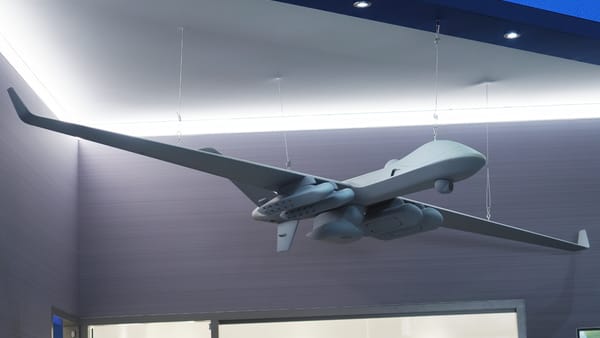

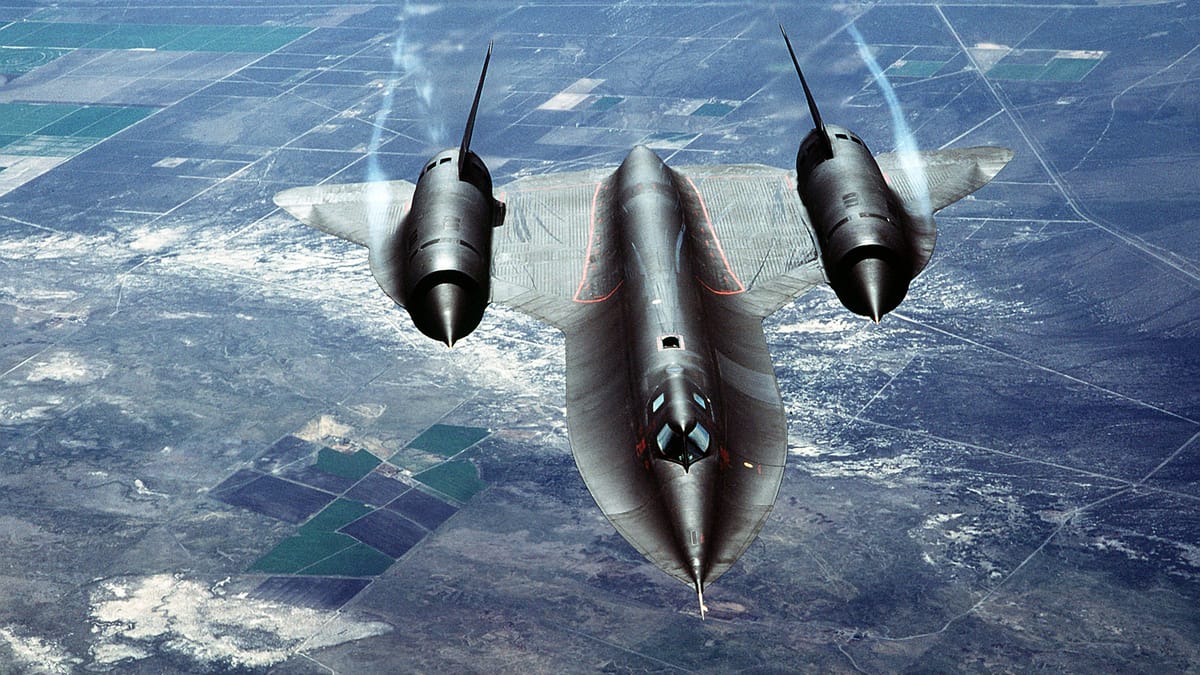
In the quietest, darkest vaults of aerospace legend lies a whisper, a mere, fleeting shadow of an airplane that, if it ever existed at all, might have been among the most incredible aircraft ever created. Presumptively referred to as the SR-91 and given the informal name Aurora by those who believe it exists, this mysterious creation could just as easily have been a real-life airplane or a myth.
Those who would have commissioned it, the US government, have said nothing. Those who would have built it, Lockheed Martin, claim it never existed at all. And those who insist it did exist, or still does, regard it among the most incredible, secretive black projects in American history.
Today we’ll be peering through the mist and trying our best to see the Aurora for what it really was: perhaps a legend, perhaps a hoax, or perhaps a masterpiece, soaring through our skies without a trace.
- First budget reference
- 1985 (FY1986)
- Allotted 1986 funding
- $80million
- Scheduled 1987 funding
- $2.3billion
- Estimated cruise speed
- Mach 5 to Mach 6
- Suspected operating altitude
- ~90,000feet
- Estimated cost per plane
- Up to $1billion
Origins of a Legend
The United States military is very good at keeping secrets, from the locations of its nuclear submarines, to the capabilities of its fifth-generation fighters, to the identities of its intelligence assets around the world. But there’s one group of secrets the Pentagon keeps better than any other: the black projects.
These are programs built on close working relationships between the United States and its defense contractors, and they consume tens of billions of dollars every year, disappearing into a hole from which precious little information has ever escaped. In many cases, the results are never known. In others, they represent some of the most impressive innovations of the US military.
Take the stealth-attack F-117 Nighthawk, which was mass-produced in secret and announced just months before it flew its first combat mission, or the Sea Shadow, an experimental stealth ship completed in the mid-1980s. By and large, these are not projects that become known to the public before the Pentagon is good and ready to let the public know, and it’s that veil of mystery that has bred one of the fiercest rumor mills in the world.
One such rumor began circulating in 1985. While poring over the United States’ annual budget for that year, reporter Ralph Vartabedian of the Los Angeles Times noticed something odd. According to an unclassified budget report for the Pentagon, the Defense Department intended to spend a whole lot of money on something called Aurora. What Aurora was, the report didn’t specify, but two things were clear from the projections: Aurora was a not-insignificant program, and it was in its early stages, with the expectation that it was going to get a lot bigger. The DoD had allotted $80 million for the project in the 1986 fiscal year. In 1987, that number was scheduled to grow exponentially, to an investment of $2.3 billion.
Reading Between the Lines
At face value, both the numbers involved and the general rush toward stealth technology in the US government around this same time led Vartabedian and the general public to believe a few key things.
First, this was probably going to be a stealth program of some kind, perhaps working with Northrop or Lockheed to develop a stealth fighter aircraft. Second, the program was moving really fast. Eighty million dollars was a pretty small amount of R&D money, whereas $2.3 billion is a whole lot even for the Pentagon. Those numbers spoke to a high-priority program and an ambitious timeline.
For reference, the Pentagon was only spending about a billion dollars each year on what would eventually become the B-2 Spirit bomber.
As for who exactly was involved in this Aurora business, it was most likely Lockheed. The company was recruiting intensively at the time and had been seen sending a plane full of Lockheed workers out of an Air Force plant every morning, traveling to an unknown facility. According to Vartabedian, the windows on that plane were taped over, meaning not even the project staff knew where they were headed. We know in the modern day that this could have been for any number of ongoing Lockheed programs, but that wasn’t information news sources of the day had. Finally, the LA Times and other reporters knew that it would be highly unusual for the name of such a program to be included in a report at all.
After the existence of an Aurora program — or an Aurora something — was publicized, the Department of Defense refused to answer questions about it. According to the DoD, the matter was officially classified. This has stayed the official line from the US government ever since: that there was never an Aurora, that no such aircraft was ever built, and that there has never been an aircraft designed for the purpose we’re about to discuss, namely a follow-on to the SR-71 Blackbird. But if we put on our skeptics’ hat, then that’s exactly what the government would say, isn’t it? Regardless of the DoD’s stance, the Aurora had emerged into the realm of speculation, and speculate, we would.
Murky Details, Opaque Process
Once the defense analysts and netizens of the world latched onto the idea that an Aurora aircraft might exist, the next question, obviously, became: what is it?
One clue as to what it wasn’t came from its name. US fighter aircraft, before and after the Aurora was publicized, have typically used the names of animals that can be very aggressive when need be. See the F-14 Tomcat, the F-15 Eagle, the F-16 Fighting Falcon — or, if you prefer, Viper — the F/A-18 Hornet, and the F-22 Raptor. Disregard the F-35 Lightning II; that’s a tribute to the P-38 Lightning of World War II. Another significant clue was that the Aurora budget was referenced right after a mention of the TR-1, a batch of U-2 aircraft made for tactical reconnaissance missions. Combine those two scraps of information, and it was conceivable to work out that the Aurora wasn’t a fighter, but perhaps a reconnaissance plane instead.
The next question was just why it would be so expensive, and those who examined the potential project had a few ideas there too. Chief among them was that the plane was a successor to the SR-71, filling a role expected to be vacant within a few years. With a couple of decades to work, this new plane would be better in some way than the SR-71 had been, and those improvements were expected to come from three main areas: speed, altitude, and stealth.
In terms of speed, the United States was believed to have the potential to create a hypersonic aircraft, one that could fly at five times the speed of sound or more, using ramjets or scramjets — air-breathing engines that allow for incredibly fast travel. In hindsight, we know the Air Force, NASA, and private firms were indeed designing and learning about Mach 5 aircraft during the years immediately preceding 1985, when Aurora itself first showed up. Work was also well underway on the sorts of structures that would let such an aircraft survive the intense heat generated by hypersonic travel. With the capacity to travel at insane speed would come the stealth technology that seemed more and more to be a cornerstone of everything the DoD was working on, and the potential to travel at high altitudes as well.
What the Aurora Might Have Looked Like
As for the shape of the aircraft, both conjecture and the witness reports we’ll discuss in a moment each suggest the Aurora would have been wedge-shaped, with small delta wings hugging tight to the main fuselage. That would allow it to fly with fewer heating issues.
The aircraft was believed to be manned and not believed to be armed, although for a spy plane, logic followed that it would likely have carried onboard cameras, sensors, and other intelligence equipment. It would have been crewed by two people, equipped with a real-time data link for reconnaissance, and able to reach most spots around the world quickly and with minimal fuss. At a speed between Mach 5 and Mach 6, flying dozens of kilometers above the ground, it would have been well outside the range of any current missile technology. Feasibility studies on a hypersonic commercial jetliner suggested a scaled-down aircraft might have had a range of up to ten thousand miles while carrying a one-ton sensor suite.
According to aerospace analyst Wolfgang Demisch, a program of this size may have yielded some thirty production-line aircraft in total. Security expert Lawrence Harris suggested a probable first flight in or around 1989 and entry to service as early as 1995. Harris’ analysis extrapolated a total price tag of $4.4 billion to $8 billion for development, and up to another $24 billion to actually procure a fleet, with prices potentially as high as a billion dollars per plane. The aircraft most likely got a different name, given that the Aurora name — if it indeed corresponded to this secret program — would probably have been considered compromised in 1985 when it was released to the public.
The Aurora program never appeared in later Department of Defense materials, at least under that name. While that in itself shouldn’t have been a surprise, it also meant any later budget allocations after 1987 were completely hidden from the public. The program could have grown and grown for years; it could have held steady; it could have disappeared. The DoD wasn’t going to say a word about it, and for a little while it seemed as if that might be the end of this odd little anomaly.
Then the sightings began.
Competing Realities
One of the earliest sightings tied to the Aurora legend, and perhaps the most credible one to this day, came in 1989. Chris Gibson, working on the Galveston Key oil rig in the North Sea just east of Britain, saw something unusual.
If you’re the Department of Defense and you’re going to be flying an ultra-secret aircraft around, Chris Gibson was not the guy you wanted spotting it. He’d spent twelve years with the Royal Observer Corps, a British civil defense organization whose entire job was spotting, identifying, and tracking aircraft, and he was very, very good at knowing what he was looking at. According to Gibson, he observed an unfamiliar aircraft in the shape of an isosceles triangle — two long sides of equal length and a short third side, like an equilateral triangle stretched out by pulling on one of its tips. The unidentified aircraft appeared to be refueling from a Boeing-made KC-135 Stratotanker, with a pair of F-111 Aardvark fighter-bombers operating as escort. For several minutes the group lingered in a part of the sky Gibson could see, before eventually moving out of sight. Gibson sketched the incident, but wouldn’t publicize it until 1992, when he presented the account to Jane’s Defence Weekly.
By that time, sightings of a strange unidentified aircraft over the British Isles had grown far more common. Most reported incidents took place over Scotland and England, with press rumors suggesting that whatever they were seeing was operating out of RAF Machrihanish on Scotland’s Kintyre peninsula. Locals reported not only seeing an aircraft that matched the Aurora’s visual description, but also loud sonic booms and other noises.
The British government appeared to investigate the reports, almost as if they too were being kept in the dark. As British Defence Secretary Tom King said in 1992, “There is no knowledge in the MoD of a ‘black’ programme of this nature, although it would not surprise the relevant desk officers in the Air Staff and Defence Intelligence Staff if it did exist.”
And Chris Gibson was not the only knowledgeable person who believed he’d seen the Aurora. Royal Air Force officer Group Captain Tom Eeles reported that in the autumn of 1993, a strange plane passed over his home near the US Air Force’s Mildenhall base in Suffolk. According to Eeles, there was “a very strange-sounding aircraft passing overhead; the engine noise was a pulsing sound quite unlike anything I’d ever heard before.”
Eeles didn’t get much of a look at the plane but saw lights disappearing in the direction of the Mildenhall base. When he asked a senior RAF officer about the aircraft the following day, he received very forceful instructions to stop asking about the thing.
Things That May Have Gone Wrong
While this alleged secret aircraft would have been operating around Britain, there are at least some indicators that something might have gone wrong.
A few weeks prior to Eeles’ sighting, an unknown US aircraft had been forced to land at the base, but was quickly hidden from sight and taken away in a C-5 Galaxy. A year later, a mysterious crash at the Boscombe Down RAF base — a known testing site for military aircraft — saw a massive response by US military aircraft and British Special Air Service personnel, with the base itself closed shortly afterward. Reports have since emerged that the crash was due to a towed missile decoy malfunctioning, but even if we accept that premise now, it certainly fueled Aurora speculation at the time. Several news sources, including The Independent, reported that a top-secret hypersonic American spy plane had crashed, based on a report by Air Forces Monthly. The Independent also referenced unexplained sonic booms over the Netherlands in 1992, and intercepted radio transmissions from an airplane descending from 65,000 feet — an altitude that, at that time, was not thought to be reached by any aircraft other than the U-2 or the Space Shuttle.
The American Sightings
Then there are the sightings that came out of the United States, starting with a series of unusual sonic booms across southern California. Their profile suggested a small vehicle with no known match, and later analysis indicated it was traveling at a speed between Mach 4 and Mach 5.2, around an altitude of 90,000 feet.
In 1990, Aviation Week & Space Technology published claims that a high-altitude aircraft was crossing the night sky at extremely high speeds over the continental United States, sometimes seen as a single, pulsating bright light. In 1992, an observer in Texas spotted unique contrails referred to as “donuts on a rope,” which he associated with a deep, pulsating roaring sound that had caused his home to vibrate. That same observer, Steven Douglass, claimed he had intercepted radio transmissions in which two aircraft used the call signs “Darkstar November” and “Darkstar Mike” — call signs that didn’t quite make sense, given that aircraft known to use the Darkstar moniker would not have produced those specific aerial phenomena. In a separate 1992 incident, observers around Beale Air Force Base, the longtime home of the SR-71, reported a triangular aircraft that seemed to resemble the Aurora. An Area 51 enthusiast named Chuck Clark even claims to have filmed the Aurora taking off from Groom Lake, although he says he kept the tape locked away.
Based on the array of witness statements, analysts who’ve followed the Aurora legend for years believe the aircraft would have been undergoing testing in the southwestern United States, and possibly in Scotland as well, but could very well have assumed an operational role, explaining the instances in which it allegedly popped up around the world. By mid-1992, analyst Bill Sweetman was confident enough to suggest that whatever program was responsible for the wave of sonic booms wasn’t just working with a prototype. Instead, it was going on missions around the world, doing who-knows-what, and when it operated in closely allied countries, the heads of those national governments didn’t appear to know what was up.
The Skunk Works Denial
But all this speculation was blunted in a major way in 1994, when a book by Ben Rich — the former head of the Lockheed Skunk Works division responsible for the SR-71 and many of the United States’ other coolest black projects — attempted to put the Aurora issue to bed once and for all.
As Rich said himself, “Although I expect few in the media to believe me, there is no codename for the hypersonic plane because it simply does not exist.” According to him, Aurora had been a budgetary code-name referring to the project that would eventually evolve into the B-2 Spirit bomber, and the name had bumbled its way into the budgetary report as a simple mistake. How much credence you give this idea is really up to you.
On the one hand, Ben Rich is perhaps the most knowledgeable person outside the Pentagon on what Aurora might have been, and he was out of Lockheed Martin by the time he published. On the other, he was also a deeply enmeshed civilian inside the DoD’s mess of secrets, and the question of whether his assertion is believable has been a subject of debate in itself.
Did the Aurora Ever Exist?
With the nebulous entity that might or might not be known as the Aurora program represented as fully as we’re able, we’re left with one critical question: did the Aurora ever exist?
For an answer, we’ll defer to Alex Hollings, writing for The National Interest in October of 2023. Said Hollings: “After pouring over historic media reporting, declassified documents, eyewitness accounts, and more forum posts than you could photograph from the U-2, it seems extremely unlikely that the United States ever had an operational fleet of secret hypersonic aircraft… but that doesn’t mean something like it never darkened the massive hangar doors at Area 51.”
We’ll take Mr. Hollings at his word on all those forum posts, but we concur that even if an Aurora or Aurora-like program flew, even if whatever flyable end product it produced did at some points fly over Britain and other US allies in Europe, a production-line fleet in the multiple dozens of planes was probably never built. At an incredible cost per plane, it would have been very difficult for the US government to hide a large-scale procurement. And while the rate of sightings is by no means low, it’s nowhere near what you’d expect from a large number of aircraft in continual operation.
It’s also hard to keep a secret this big for this long. Between program staff, current and former Skunk Works employees, pilots, maintenance crew, foreign military members who saw the thing at foreign airbases, and more, it’s more likely than not that all these people would have let something slip. But that likelihood goes way down if we’re talking about the small circles that would be in-the-know about a prototype or a handful of four to six aircraft.
That said, the witness reports we’ve covered here come from seemingly credible sources, for the most part, and they share enough commonalities that it’s not unreasonable to assess that there was something in the sky, spreading strange sonic booms and funky pulsating sounds, in the early-to-mid 1990s. Some of the most compelling evidence — the profiles of those sonic booms — suggests a plane matching the Aurora’s description and capabilities might well have been flying around up there. There would also have been real strategic value in a replacement to the SR-71. With a plane that can travel so far, so fast, even a couple of working prototypes or a very small fleet could have made a big impact, while keeping the overall numbers small would have simultaneously kept costs low, kept the program in the shadows, and reduced the likelihood of a plane crashing, malfunctioning, being spotted, or otherwise becoming known.
Why a Replacement Made Sense
Also of note is the Department of Defense’s stated rationale for ending the SR-71 program — the very reason an Aurora would need to exist at all.
According to the DoD, the SR-71’s operating and maintenance costs were simply too high to justify continued operation. A second, equally important piece was that satellites could perform global surveillance more efficiently, and far more cheaply, than manned aircraft like the Blackbird. But that claim has come under fire too, with a wide range of analysts before and after the program’s cancellation emphasizing that the intelligence value of a high-speed, high-stealth reconnaissance aircraft goes beyond what satellites can offer.
Aircraft fly lower, they can get over a target just as fast or even faster, they can move with a lower probability of being tracked, and they’re easier to dispatch on a moment’s notice to deal with emerging crises. Most days, satellites will be enough — but when geopolitical tensions really start getting serious, you’re going to want an Aurora in your back pocket.
The SR-72 and the Hole in the Timeline
Lastly, we turn back to Skunk Works for an indicator that hypersonic spy plane technology has evolved even further than it hypothetically would have in the days when the Aurora was said to have flown. That indicator comes in the form of the SR-72, a hypersonic unmanned aircraft proposed privately by Lockheed Martin to the US government in 2013. According to Lockheed Martin itself in 2018, a prototype was then expected to fly by 2025, and recently Lockheed has been more and more willing to drop hints that a hypersonic something does indeed exist, and was possibly already delivered to the US Air Force.
We bring up the SR-72 not because we believe it’s the Aurora — we’d argue that’s not the case at all. We bring it up because if it is real, then it would be a massive evolution on any of the technologies in the Blackbird or any other known US aircraft. The development of advanced military technology like this is not something that happens in leaps and bounds, or all at once. Progress is typically incremental, with each new development building toward the next, and the next, and the next after that.
For the United States to go from the SR-71 to the SR-72 with nothing in between would be highly unusual.
Our best guess is that the USA didn’t go from the -71 to the -72 at all. Looking at all the information we know, and all the information we think we know, we’d be willing to bet that there was an aircraft in the middle, possibly a whole series of them. We don’t know what they did, we don’t know how many there were, we don’t know how long they operated. But there is a hole in the United States’ chronology of high-speed intelligence aircraft, and if that hole was ever filled, then it was by a plane we call Aurora — even if its true name might forever be lost to history.
Key Takeaways
- The name “Aurora” first surfaced publicly in 1985, in an unclassified Pentagon budget report spotted by LA Times reporter Ralph Vartabedian — $80 million allotted for FY1986, scheduled to balloon to $2.3 billion in 1987.
- Clues in the budget (its placement near the TR-1 reconnaissance line) and the era’s stealth push led analysts to suspect a hypersonic, Mach 5-to-6 successor to the SR-71 Blackbird, not a fighter.
- A wave of sightings followed: Chris Gibson’s credible 1989 North Sea observation, sonic booms over California and Britain, “donuts on a rope” contrails, and the mysterious 1994 Boscombe Down crash response.
- In 1994, former Skunk Works chief Ben Rich claimed Aurora was merely a budget code-name for what became the B-2 Spirit, with no hypersonic plane behind it.
- The consensus among analysts, including Alex Hollings, is that a large operational fleet almost certainly never existed — but a prototype or a tiny fleet of a few aircraft remains plausible.
- The 2013-proposed SR-72 implies a technological lineage; a jump from the SR-71 straight to the SR-72 with nothing in between would be highly unusual, suggesting a missing link.

Simon Whistler
Simon Whistler hosts MegaProjects, bringing engineering, infrastructure, and military-machine stories into clear narrative focus for viewers who want the systems, tradeoffs, and human decisions behind the build.
Frequently Asked Questions
What is the SR-91 Aurora?
The Aurora is a suspected American black-project aircraft believed by some to be a hypersonic successor to the SR-71 Blackbird, sometimes informally labeled the SR-91. The US government and Lockheed Martin both deny it ever existed. It is known only through a 1985 budget reference, witness sightings, and analyst speculation, with no confirmed aircraft ever revealed.
How did the public first hear about Aurora?
In 1985, Los Angeles Times reporter Ralph Vartabedian noticed a line item called “Aurora” in an unclassified Pentagon budget report. It allotted $80 million for fiscal year 1986, scheduled to grow to $2.3 billion in 1987. The report didn’t say what Aurora was, but the figures and the era’s rush toward stealth technology fueled speculation about a major new program.
What was the Aurora supposed to be capable of?
Analysts believed it would be a manned, two-crew reconnaissance aircraft improving on the SR-71 in speed, altitude, and stealth. Estimates put its cruise speed between Mach 5 and Mach 6, using ramjet or scramjet engines, flying dozens of kilometers up — well beyond the reach of then-current missile technology. It was thought to carry cameras, sensors, and a real-time data link rather than weapons.
Who actually claimed to have seen the Aurora?
The most credible witness was Chris Gibson, a twelve-year Royal Observer Corps veteran who reported a triangular aircraft refueling from a KC-135 over the North Sea in 1989. RAF Group Captain Tom Eeles described a strangely pulsing-engined plane near Mildenhall in 1993. In the US, observers reported unusual sonic booms over California and “donuts on a rope” contrails in Texas.
Why did Ben Rich say Aurora never existed?
In his 1994 book, former Lockheed Skunk Works chief Ben Rich stated there was no codename for a hypersonic plane “because it simply does not exist.” He claimed Aurora was just a budgetary code-name for the program that became the B-2 Spirit bomber, and that it landed in the report by mistake. How much weight to give this is debated, since Rich was both highly knowledgeable and deeply enmeshed in DoD secrecy.
Is the SR-72 the same thing as the Aurora?
No. The SR-72 is a separate, hypersonic unmanned aircraft that Lockheed Martin proposed to the US government in 2013, with a prototype once expected to fly by 2025. The article argues the SR-72 isn’t the Aurora, but that the leap from the SR-71 directly to the SR-72 would be so unusual that some aircraft likely filled the gap in between.
So did the Aurora really exist?
The likely answer is that no large operational fleet was ever built — hiding a procurement of dozens of billion-dollar planes would have been nearly impossible. But credible, overlapping witness reports and distinctive sonic-boom profiles suggest something unusual was flying in the early-to-mid 1990s. A prototype or a handful of aircraft remains plausible, and there is a genuine gap in the US chronology of high-speed spy planes.
Sources
-
Original MegaProjects video: The SR-91 Aurora: The Plane That Doesn’t Exist
-
Original 1985 Aurora budget report coverage — Los Angeles Times archive
-
Hero image source by Tech. Sgt. Michael Haggerty / U.S. Air Force, public domain.
Related Projects
The Lockheed U-2: Spying Before Satellites
How Lockheed's U-2 spy plane flew to 70,000 feet to photograph Soviet secrets, survived being shot down, and outlasted every replacement for seven decades
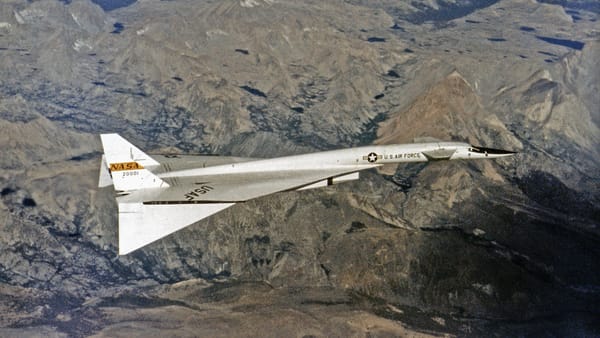
Aurora Spy Plane: The $2 Billion Aircraft That May Never Have Existed
The Aurora legend began with a black-budget line item, sonic booms, and triangular sightings. The evidence points to something murkier than one spy plane.
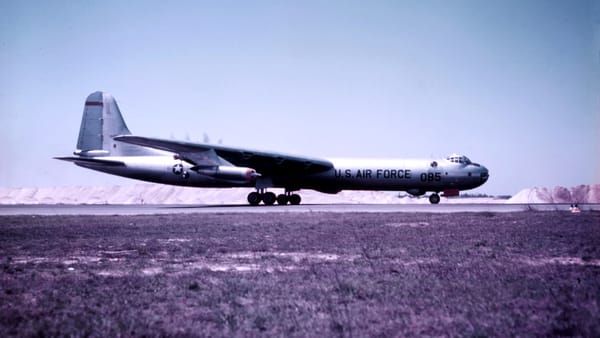
The Convair B-36 Peacemaker: The Absolute Unit That Carried America Into the Cold War
The Convair B-36 Peacemaker was the largest combat aircraft ever built — a six-engine nuclear behemoth whose real mission was to never be used at all.