
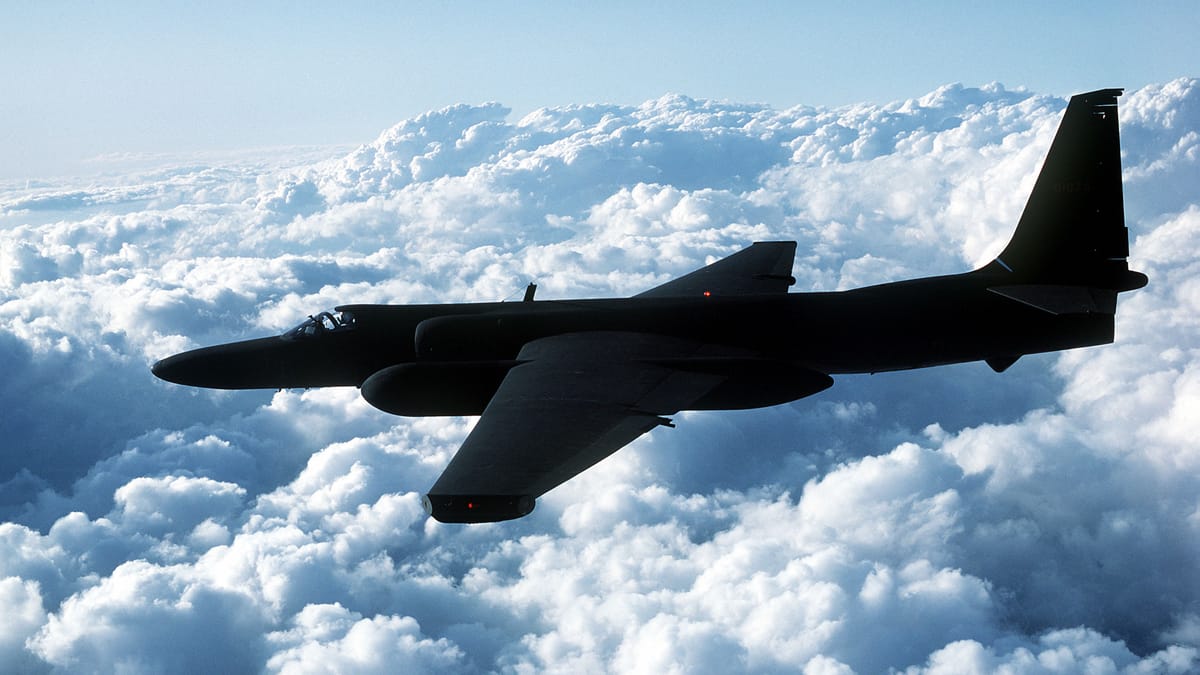
High above the Cold War’s battle lines, an aircraft was flying where no fighter could follow and no missile could reach. Pencil-thin, impossibly light, and able to soar to 70,000 feet, it peered straight into the Soviet Union’s most guarded secrets — and for years, there was nothing anyone could do about it. This was the U-2, America’s original, and best, high-altitude spy plane.
Born from the paranoia of the 1950s, when U.S. leaders feared they were falling behind in bombers and missiles, the U-2 was Lockheed’s answer: a reconnaissance aircraft that could slip over enemy territory, snap crystal-clear photos, and return home unscathed. It wasn’t built for speed or firepower. It was built for altitude — so high that pilots had to wear space suits just to survive the cockpit.
It uncovered the truth about Soviet capabilities, shaped the outcome of the Cuban Missile Crisis, and endured decades of attempted replacements. Even today, more than 65 years after its first flight, the U-2 is still flying missions that no satellite or drone can quite match.
- Operating altitude
- 70,000ft
- Wingspan (original)
- 80ft
- First flight
- 1 August 1955
- Service run
- ~7decades
- Iraq 2003 deployment
- 15aircraft
Original of the Species
In the 1950s, two problems in particular had U.S. strategists terrified: the “bomber gap” and the “missile gap” — basically, the idea that the Soviets had far more bombers and missiles than earlier intelligence had assumed, and thus that a gap in capabilities existed in the Soviets’ favour.
In the end, both concerns would be proven invalid — ironically by U-2 overflights — but at the time the fear was very real and pressing. So U.S. planners turned to Kelly Johnson, head of Lockheed’s top-secret “Skunk Works” R&D division, and tasked him with delivering an aircraft that could fly at altitudes of 70,000 feet (modern airliners fly at 30,000 to 40,000 feet for reference), stay up there for hours, and snap crystal-clear pictures as it went.
Even for Johnson — the man who had given us the P-38 Lightning, America’s venerable twin-engine WWII fighter; the P-80 Shooting Star, its first operational jet fighter; and the L-049 Constellation, the first pressurised airliner to see widespread service — it was a tall order and a demanding set of specifications.
The solution, as he soon realised, was to come at the problem from left field and devise a whole new, and frankly weird, way of doing reconnaissance aircraft. “Article 001,” as the U-2 was referred to in development, soon grew into an aircraft with a pencil-thin fuselage for minimal weight and drag, a razor-thin set of wings (again to reduce drag) that stretched out to a width of 80 feet for maximum lift, and a bicycle-style “one wheel in front of the other” landing gear — because the design was so thin and slender that that was all there was space for.
A genuinely quirky machine
This naturally means the U-2 is nothing if not quirky. Because the bicycle-style landing gear isn’t exactly stable, so-called “pogos” have to be used during take-off — detachable wingtip landing skids that simply fall away onto the runway once the wheels are off the ground.
That, as you can imagine, also makes landing a particular treat. After intentionally stalling on approach to the runway — the ultra-high-lift wings literally won’t let it land otherwise — the pilot has to balance on the inline wheels and slooowly bring the speed down to a point where the wingtips can be placed onto the runway without damaging them. There are titanium skids mounted on the wingtips, and a “chase car” follows behind as it lands, talking to the pilot to let him know how well he’s balancing.
The weight saving went far beyond just making the U-2 thin and slender. Inside, the early U-2s had no redundant systems, no ejection seat, the most crude of autopilots, and flight controls that were entirely cable-driven — i.e. human pushing power — without any sort of hydraulic assist at all.
Power came from a single Pratt & Whitney J57, the same kind of engine used in the F-100, the first jet fighter capable of supersonic speeds in level flight. Specifically, they went for the “P-31” variant — not, as many sources claim, the “P-37A.” They had intended to use the P-37A, but after it was found to flame out between 57,000 and 65,000 feet, it was thrown in the bin.
To keep the whole thing under wraps — it was, naturally, top, top secret — the U-2 wasn’t even produced at Lockheed’s normal Burbank plant. Instead, early production occurred at a satellite location just down the road, dressed up as a tyre factory by way of a cover story.
An accidental first flight
After barely two years in development, the first prototype took to the skies on 1 August 1955, piloted by Tony LeVier. It was an accidental first flight, having only been intended as a high-speed taxi test. Remember those ultra-high-lift wings? When the aircraft hit 81 mph, it leapt up off the ground — and thus the first test flight, unwittingly, began. Fortunately, all went well, and LeVier returned to earth both unharmed and rather pleased with himself.
The next natural part of the story — when it entered service — is an elusive detail, absent from both the internet and the five books used as sources here. The closest we get to a date is in Unlimited Horizons: Design and Development of the U-2, published by NASA in 2015, which states that “[Following] a 5-day training exercise in April 1956, [Colonel] Yancey reported that the detachment was ready for deployment. He then briefed a high-level Pentagon panel that included the Secretary of the Air Force and the Chief of Air Staff. These officials concurred with Yancey’s determination that the U-2 was ready to become operational.” So, as a provisional date, let’s say it entered service in April 1956.
As for who would fly them, behind the scenes the CIA — the U-2’s benefactor and initial operator — was working tirelessly to train a cadre of elite former U.S. Air Force pilots. They had to resign their commissions and assume false civilian identities to join the program. As far as the rest of the world — and indeed even their families — were concerned, they were weather research pilots for the National Advisory Committee for Aeronautics, the predecessor of NASA.
Straight over Moscow
The CIA wasted no time. On 4 July 1956, Hervey Stockman flew the first overflight of the Soviet Union. This wasn’t a toe-dipping “skim the border and see if Moscow sends us an angry telegram” flight either: Stockman went right over both Moscow and Leningrad at 70,000 feet, snapping crystal-clear pictures of military installations all the while.
The Soviets were well aware he was there — he was detected clear as day on radar as he approached their airspace, while he was in it, and as he left. But there was nothing they could do about it. The MiG-17s running interceptor duty topped out at around 55,000 feet, max, and surface-to-air missiles (SAMs) that could actually reach such a height — never mind accurately — hadn’t been rolled out yet.
With that first proper flight a flyaway success, the CIA did more. The details of dozens of flights over both the Soviet Union and its Warsaw Pact vassals have since been declassified, and almost certainly more occurred — all of which revealed nuclear test sites, missile deployments, and the layouts of entire military-industrial complexes.
The CIA weren’t stupid, though. Knowing full well that the Soviets would be aware of these high-altitude flights and would be upping their interceptor and SAM game accordingly, they launched Project RAINBOW — an effort to reduce the U-2’s radar cross-section using special coatings and minor airframe tweaks. Did it work? In a word: no. No, it did not.
Bullet the Blue Sky
The Soviets were working hard to up their interception game and finally bag this mysterious, very obviously American reconnaissance aircraft that kept penetrating their airspace and lingering over their important military installations.
They accelerated the rollout of the MiG-19. First introduced in 1955, it could break the sound barrier in level flight, get to targets quicker, and just about make it to 60,000 feet or so. That still wasn’t good enough, so the Su-9 was rolled out in 1959. It could hit Mach 2 and just about reach a U-2 — if it had a suitably skilled pilot at the stick and was flying suitably light.
Not a bad effort given how quickly they had to turn it around. But ultimately it was blown out of the water by advances they made with their SAMs. The S-75 Dvina missile system, introduced in 1957, could reach heights of 80,000 feet when paired with the best radar tracking and command guidance the Soviet Union had. That would let them bag a U-2 alright — and indeed, that is exactly what they did, on 1 May 1960.
The Powers incident
On that day, Francis Gary Powers took off from Peshawar, Pakistan, on a mission deep into Soviet airspace, aiming to capture critical intelligence on missile sites and key military installations. It was intended to be one of the most comprehensive and daring flights yet attempted, stretching across the very heart of the Soviet Union into extents and depths not yet penetrated.
Just four hours into the flight, however, as Powers soared over Sverdlovsk at roughly 70,000 feet, Soviet radar operators locked onto his aircraft. At first, Su-9s were sent up — flying unarmed to reduce weight and drag and so squeeze out a bit more altitude. Their orders, given that they had no weapons? To ram Powers instead.
When that didn’t work — the pilots kept missing thanks to the vast difference in speed between the lightning-fast Su-9s and the comparatively glacial U-2 — the S-75s were fuelled up instead. And they found their mark, with one exploding directly behind the U-2, shattering its tail and wings and sending it spiralling straight down towards the earth.
Miraculously, Powers survived the initial explosion. After manually removing the canopy and crawling out of the spinning wreck that wanted to keep him pinned into his seat, he descended via parachute straight into the waiting hands of Soviet forces, who were already on the ground waiting for him.
A cover-up unravels
Initially assuming Powers had died in the crash, the U.S. attempted a hasty cover-up, publicly claiming the downed aircraft was merely a NASA weather research plane that had strayed off course.
When that story reached Soviet Premier Khrushchev, he set a cunning political snare for his American counterpart. Publicly, he announced to the world that a U.S. spy plane had been downed deep inside Soviet territory — but, crucially, left out one critical detail: that they’d recovered the pilot, alive and well.
U.S. officials, unaware they were being baited, doubled down on the fabricated explanation, claiming the U-2 was merely a NASA weather research aircraft whose pilot had suffered oxygen-supply issues while flying over Turkey, possibly causing him to pass out and allowing the plane to drift into Soviet airspace on autopilot. And then, on 7 May, Khrushchev revealed the full truth.
The impact on both the U.S. generally and the U-2 program specifically was profound. President Eisenhower faced intense political embarrassment and international condemnation, leading him to terminate all direct U-2 overflights of Soviet territory. The incident also accelerated America’s pivot towards satellite reconnaissance, prominently represented by the CORONA program. The U-2, it looked like, was dead.
Walk On
Looks can be deceiving. Despite every good reason to pull the plug in 1960, and the many, many voices calling for exactly that, the U-2 instead adapted, survived, and would go on to thrive.
While Soviet skies may have been permanently closed, the rest of the world remained wide open — and America’s appetite for intelligence was insatiable.
Out went the perilous deep-penetration flights over enemy capitals. Instead, the U-2 took up long-endurance orbits far from hostile airspace, gathering intelligence from hundreds of miles away with increasingly advanced oblique cameras and sophisticated signals-intelligence systems. Its sensors evolved rapidly: cameras delivered crisper imagery, and electronic listening gear could pinpoint enemy radar and communications sites from a safe distance.
Control of the program shifted steadily from the CIA toward the U.S. Air Force through the 1960s. Where the CIA had once favoured secrecy and bold surgical missions, the Air Force brought consistency, routine deployments, and a truly global reach. By 1974 the transition was complete, and the U-2 had become a cornerstone of the Air Force’s strategic reconnaissance capabilities.
The U-2R: bigger and better
But Lockheed recognised that aging airframes needed more than upgraded sensors to stay relevant. So in 1969, Kelly Johnson’s team introduced a dramatically improved variant — the U-2R.
It was bigger, heavier, more robust, and had significantly larger payload capacity and longer range. Wings were stretched to over 100 feet, incorporating internal fuel tanks for extended endurance. New underwing superpods provided space for even more sophisticated equipment, transforming the airplane into a versatile multi-role platform capable of radar mapping, electronic eavesdropping, and even acting as a high-altitude communications relay.
With those new capabilities, the U-2 settled comfortably into its new role throughout the 1970s. It monitored critical flashpoints worldwide — tracking Soviet ship movements in the Mediterranean, observing North Korean military exercises from offshore orbits, and collecting nuclear debris samples from the upper atmosphere following Chinese atomic tests.
The TR-1A
Still the U-2 had more to give. In 1981, specifically to boost its tactical-reconnaissance ability, the TR-1A variant was introduced. Equipped with state-of-the-art side-looking radar capable of producing detailed imagery at night or through dense cloud cover, it also featured enhanced electronic-warfare suites, sophisticated signal-intercept capabilities, and advanced communications equipment, dramatically improving the aircraft’s ability to relay real-time intelligence.
Despite the advances, the U-2 remained the same fundamentally quirky aircraft it had always been. The landing gear still had its bicycle arrangement, and pilots still wore astronaut-esque pressure suits — but now only to protect against depressurisation rather than to keep them alive outright, as these later variants had fully pressurised cockpits instead of cockpits pressurised only to the equivalent of 29,000 feet.
Stay (Faraway, So Close!)
As for what the U-2 actually did after Gary Powers, here are a few examples to give you a flavour.
The Cuban Missile Crisis
Let’s start in 1962, because there — mere months after Powers had been released from Soviet custody — the U-2 earned its absolution in the eyes of the military big hats thanks to its critical role in one of the most dangerous moments of the Cold War: the Cuban Missile Crisis.
It was Major Richard Heyser, behind the stick of a U-2, who first uncovered Soviet ballistic missile installations being hurriedly built on Cuban soil — crystal-clear images that pushed the world to the brink of nuclear confrontation.
Such flights weren’t risk-free. On 27 October, Major Rudolf Anderson’s U-2 was shot down, again by an S-75 missile. Unlike Powers, Anderson would not survive: a piece of shrapnel went through the fuselage, through his pressure suit, and straight into his abdomen, killing him through severe hypoxia long before his physical wound had a chance to do the same.
Project Black Cat over China
Over in Asia, U-2s saw plenty of action out of Taiwan. Under Project Black Cat, Taiwanese pilots flew missions deep into mainland China between 1962 and 1974 — the only non-American pilots to ever fly them in real missions.
Braving heavy defences, they gathered invaluable intelligence about Chinese nuclear developments and missile deployments. These incredibly daring missions came at a high price: six aircraft lost; four pilots — Majors “Pete” Wang, “Sonny” Liang, and Yao Hua Chih, as well as Captain “Charlie” Wu — killed; and two more — Major “Denny” Hwang and Lieutenant Colonel Huai Sheng Chen — captured and imprisoned for decades.
Vietnam and the Middle East
Similarly, in Vietnam the U-2 played a pivotal role as American involvement grew ever more intense. Operating out of Thailand, U-2 pilots meticulously tracked North Vietnamese troop movements, mapped key logistical supply routes like the Ho Chi Minh trail, and identified dangerous surface-to-air missile sites. U-2-sourced intelligence guided bombing campaigns and protected countless American pilots and troops, becoming essential eyes in an extraordinarily difficult conflict.
The Middle East was another front where the U-2 became indispensable. It monitored the critical developments of both the Six-Day War of 1967 and the Yom Kippur War of 1973. One particularly remarkable mission during the 1973 conflict reportedly revealed Soviet nuclear warheads secretly deployed in Egypt — though the declassified report the claim comes from is more black square than text, so the details remain murky.
The inner German border
Then to Europe, where in the tense atmosphere of the 1980s the TR-1A variant became a real asset. With its state-of-the-art side-looking radar, enhanced electronic-warfare suites, and advanced signals-intelligence capabilities, it conducted near-constant surveillance through rotating flights along the sensitive inner German border.
Far from being grounded after Powers’ capture, the U-2 went on to soar higher than ever, its value only increasing through the decades as it proved indispensable across every theatre of the Cold War.
Elevation
The end of the Cold War spelled doom for much of America’s biggest, fanciest, most cutting-edge kit as budgets tightened. Even the U-2’s younger, much faster, and — bluntly — better-in-almost-every-way-save-operating-costs cousin, the SR-71, wasn’t spared. No sooner had the Berlin Wall fallen in 1989, spelling eventual doom for the whole Soviet project, than the mighty Blackbirds were pulled from U.S. Air Force service.
The U-2, however, persevered. While it wasn’t as glamorous or headline-grabbing as its faster cousin, it quietly remained essential.
The U-2S overhaul
It even got another upgrade. By the early ’90s the fleet was scattered across multiple aging configurations, prompting the Air Force to consolidate and modernise the surviving airframes into a single standardised model: the U-2S.
This wasn’t a wholesale redesign but a comprehensive, ground-up overhaul. The headline upgrade was swapping out the old, thirsty Pratt & Whitney J75s for the modern, efficient General Electric F118 — as also used on the B-2 stealth bomber.
It was everything the U-2 needed to prep it for the 21st century: lower maintenance needs, more reliability, far better fuel efficiency — all of which boosted endurance and operational flexibility. It didn’t make the aircraft particularly faster, which is probably a good thing. Take a moment to consider the U-2’s shape and general fragility: if it so much as teases the sound barrier, it immediately disassembles itself mid-flight.
Internally, the changes were equally significant. The old Cold War-era analogue cockpit — with its dials, cluttered panels, and even a sextant for navigation — was torn right out and replaced with a sleek glass cockpit: digital multifunction displays, advanced GPS navigation, and enhanced autopilot systems. The pilot’s life-support systems were upgraded too, making those gruelling multi-hour sorties at 70,000 feet slightly less punishing.
The U-2S was also wired for modular, swappable sensor packages, providing unprecedented mission adaptability. Sensor technology took giant leaps forward, exemplified by the Senior Year Electro-Optical Reconnaissance System rolled out across the fleet — capable of delivering razor-sharp multispectral imagery day or night, through clouds or clear skies — and the upgraded Advanced Synthetic Aperture Radar System, capable of detailed radar mapping and precise tracking of moving targets regardless of weather.
In all, 31 airframes were converted to U-2S standard between 1994 and 1998, plus a further four or five — it depends on who you ask — converted into TU-2S two-seat trainers.
Earning its keep after the Cold War
It was money well spent, because the upgraded U-2s proved themselves still very capable in the post-Cold War world — quietly toiling on the fringes of conflict, far from the glamorous headlines but absolutely indispensable.
Over the Balkans, the U-2 earned its keep by mapping hostile terrain and scrutinising troop movements from on high during the 78 days of NATO intervention in the 1998-1999 Kosovo War — during which it flew an incredible 189 sorties.
The War on Terror in the 2000s kicked the U-2’s operational tempo into overdrive. Within weeks of 9/11 they were crisscrossing Afghan skies, inaugurating Operation Enduring Freedom in October 2001. From their perch at 70,000 feet, they peered down through Afghan dust and clouds, hunting for hidden Taliban camps and al-Qaeda strongholds. Those new sensors paid dividends, scooping up actionable intel even on moonless nights or through bad weather.
When the U.S. turned its attention to Iraq in 2003, the U-2 was front, centre, and very, very high up yet again. A whopping 15 aircraft — nearly half the whole fleet by that point — were deployed for the invasion. So large was this contingent that it was the single largest deployment of U-2s ever.
They snooped on Iraqi air defences, tracked armour columns racing across the desert, and went sniffing for those ever-elusive weapons of mass destruction. Through sandstorms and chaos, the U-2 kept the intel flowing to commanders in real time via improved data links, proving crucial in the campaign’s critical opening stages.
Even after the end of major combat operations, the U-2 remained on hand. As insurgencies flared in Iraq and Afghanistan, it shifted seamlessly into the role of high-altitude sentinel for ground troops. Its powerful sensors could detect subtle changes in the landscape — a telltale sign of a freshly buried roadside bomb or makeshift mine — and pinpoint insurgent hideouts from miles up. By spotting improvised explosive devices and tracking militant movements, the U-2 saved lives on the ground without the enemy ever hearing a thing overhead.
Beyond the battlefield
Remarkably, it’s proven just as useful outside the traditional battlefield. U-2s have lent their eagle eyes to humanitarian and peacetime missions whenever called upon, mapping disaster zones after hurricanes, floods, and earthquakes to help first responders direct aid.
The most unexpected assignment of all? Tracking the migration of destructive spruce bark beetles chewing through Alaskan forests. No hyperbole — that’s legitimately something the U-2 has been used for.
Until the End of the World
Now, as of the time of writing, it does appear the curtain is finally being called on the U-2. On the 70th anniversary of its introduction, it’s set to head to the scrap heap.
Frankly, it’s a miracle it has made it this far. Its obituary has been drafted repeatedly — by Pentagon bean-counters, Air Force brass, and even political leaders desperate for a talking point to pretend they cared about fiscal responsibility at their next election.
In the 1970s, Air Force generals argued that satellites made the U-2 redundant, touting their shiny new orbital toys as the future of reconnaissance. But satellites had one pesky limitation — they couldn’t easily loiter in place. So, quietly, the U-2 saw off those naysayers and stayed airborne, indispensable to commanders who appreciated real-world flexibility over on-paper technological promise.
Then came the ’90s and those post-Cold War budget cuts. Not happy with just killing the SR-71, planners wanted to bag and tag the U-2 as well. Their charge? That upcoming drones like the RQ-4 Global Hawk were the new high-altitude big boys.
The U-2 survived that by the skin of its teeth, as counter-arguments about the unbeatability of a pair of real eyes for high-value missions were heeded — particularly as the drone neared introduction and it became clear that, for all its very real merits and trailblazing technology, there were just some things it couldn’t do.
Then, in the 2000s, it seemed like every Secretary of Defense from Donald Rumsfeld to Robert Gates was out to claim the U-2’s scalp, banging the “drones and satellites” drum with renewed vigour. Each time, though, the U-2 survived, thanks to frontline commanders and intelligence agencies who insisted the jet provided irreplaceable battlefield awareness and flexibility.
And — pardon a single tinfoil-hat moment — there’s a gut feeling, impossible to prove, that it’s no coincidence the U.S. Air Force seemed to get weirdly relaxed around this same time about lending the jet out for TV bits, such as when a certain driving-slowly enthusiast lucked his way into one in 2009 for a BBC documentary. Call it mad, but if you were an Air Force general who didn’t want to give up your favourite toy, making the public love it — and thus making its cancellation a potentially vote-losing issue — isn’t a bad way to make it hang around. Just ask the A-10 Warthog, which can chalk some of its longevity down to the fact that it goes BRRRRRRRRRRRRRRRT.
Out of luck at last
But now, in the mid-2020s, the U-2 is, at long last, out of luck. The Air Force has slated fiscal year 2026 as the official end of its service life, with divestment beginning in October 2025. Unlike previous death sentences that were quietly nipped in the bud in their nascent stages, this one has made it past mere chatter and has actually been implemented.
So, after a near-mythical seven-decade run, the U-2 is finally preparing to take its final bow. And what a ride it’s had — from gutsy Cold War overflights to intelligence sagas in deserts and mountain skies, to helping scientists track insect invasions.
There has never been another aircraft that can put all of that on its resume, nor provide the capabilities the U-2 has, for as long as it has. And frankly, with the changing times, there probably never will be again. So enjoy her while you can — because you’ll miss her when she’s gone.
Key Takeaways
- The U-2 was Lockheed Skunk Works’ answer to 1950s “bomber gap” and “missile gap” fears, designed by Kelly Johnson to fly at 70,000 feet — roughly double the cruising altitude of an airliner.
- Its extreme weight-saving design produced an 80-foot wingspan, bicycle landing gear with detachable “pogos,” no ejection seat in early models, and cable-driven controls, requiring a chase car to talk pilots down on landing.
- For four years the U-2 flew over Soviet territory with impunity until 1 May 1960, when an S-75 missile downed Francis Gary Powers, triggering a failed U.S. cover-up and the end of Soviet overflights.
- Far from finished, the U-2 evolved through the U-2R, TR-1A, and U-2S variants and served in the Cuban Missile Crisis, Vietnam, the Middle East, the Balkans, Afghanistan, and Iraq.
- It repeatedly outlasted satellites and drones touted as replacements, prized for its ability to loiter and carry swappable, cutting-edge sensors.
- As of the time of writing, the Air Force has slated fiscal year 2026 as the end of the U-2’s service life, with divestment beginning in October 2025.

Simon Whistler
Simon Whistler hosts MegaProjects, bringing engineering, infrastructure, and military-machine stories into clear narrative focus for viewers who want the systems, tradeoffs, and human decisions behind the build.
Frequently Asked Questions
How high could the U-2 fly, and why did it matter?
The U-2 was designed to fly at around 70,000 feet — roughly double the 30,000-to-40,000-foot cruising altitude of modern airliners. That altitude put it above the reach of 1950s Soviet interceptors like the MiG-17, which topped out around 55,000 feet, and beyond surface-to-air missiles that hadn’t yet been rolled out, letting it overfly Soviet territory unchallenged for years.
Why is the U-2 considered such a quirky aircraft to fly?
Its extreme weight-saving design gave it a pencil-thin fuselage, an 80-foot wingspan, and bicycle-style landing gear with one wheel in front of the other. Take-off required detachable wingtip skids called “pogos” that fell away on the runway, and landing meant intentionally stalling, then balancing on the inline wheels while a chase car followed and talked the pilot down.
What happened to Francis Gary Powers in 1960?
On 1 May 1960, Powers was flying over Sverdlovsk at roughly 70,000 feet when an S-75 missile exploded behind his U-2, shattering it. He survived, manually removed the canopy, and parachuted into the hands of waiting Soviet forces. The U.S. tried to pass the aircraft off as a NASA weather plane, but Khrushchev — having secretly recovered Powers alive — sprang the trap and exposed the cover-up.
Did the U-2 stop flying after the Powers incident?
No. Eisenhower ended direct overflights of Soviet territory, but the U-2 shifted to long-endurance orbits outside hostile airspace and kept evolving through the U-2R, TR-1A, and U-2S variants. It went on to serve in the Cuban Missile Crisis, Vietnam, the Middle East, the Balkans, Afghanistan, and Iraq, with the Iraq invasion drawing the single largest U-2 deployment ever — 15 aircraft.
What was upgraded in the U-2S?
The U-2S was a ground-up overhaul in the 1990s that swapped the thirsty Pratt & Whitney J75 engine for the efficient General Electric F118 used on the B-2 bomber. It added a glass cockpit with digital displays and GPS, upgraded life support, and modular swappable sensor packages including the Senior Year Electro-Optical Reconnaissance System and Advanced Synthetic Aperture Radar System. In all, 31 airframes were converted between 1994 and 1998.
Why did the U-2 outlast satellites, drones, and even the SR-71?
The SR-71 was retired after the Cold War, and satellites and drones like the RQ-4 Global Hawk were repeatedly touted as replacements. But satellites couldn’t easily loiter over a target, and early drones couldn’t match a manned platform for high-value missions, so frontline commanders kept insisting on the U-2’s flexibility and irreplaceable battlefield awareness.
When is the U-2 being retired?
As of the time of writing, the U.S. Air Force has slated fiscal year 2026 as the official end of the U-2’s service life, with divestment beginning in October 2025. Unlike previous proposed retirements that were quietly reversed, this one has reportedly been formally implemented.
Sources
-
Original MegaProjects video: The Lockheed U-2: Spying Before Satellites
-
Unlimited Horizons: Design and Development of the U-2 (NASA, Peter W. Merlin)
-
Facing Retirement, U-2 Flies Record Mission to Celebrate 70 Years (Air & Space Forces Magazine)
-
Air Force prepares to retire U-2 spy planes in 2026 (Air Force Times)
-
Hero image source by Ken Hackman / U.S. Air Force, public domain.
Related Projects
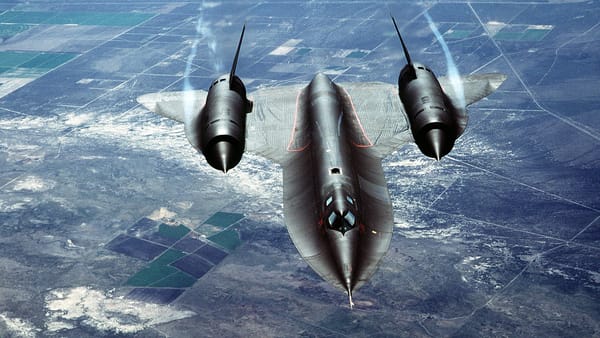
The SR-91 “Aurora”: The Plane That Doesn’t Exist
A 1985 budget line, sightings over Britain and California, a Skunk Works denial. Inside the Aurora, the spy plane that may never have existed
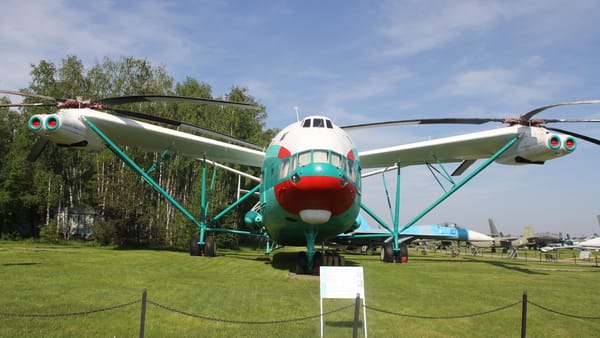
The Mil V-12: The Largest Helicopter Ever Built
The Soviet Mil V-12 still holds the record as the largest helicopter ever built. Here's why this engineering marvel never made it past two prototypes
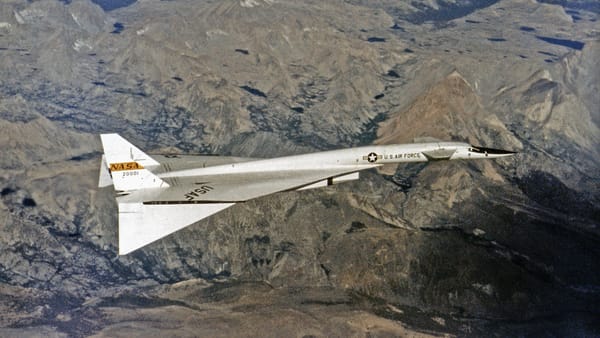
Aurora Spy Plane: The $2 Billion Aircraft That May Never Have Existed
The Aurora legend began with a black-budget line item, sonic booms, and triangular sightings. The evidence points to something murkier than one spy plane.