

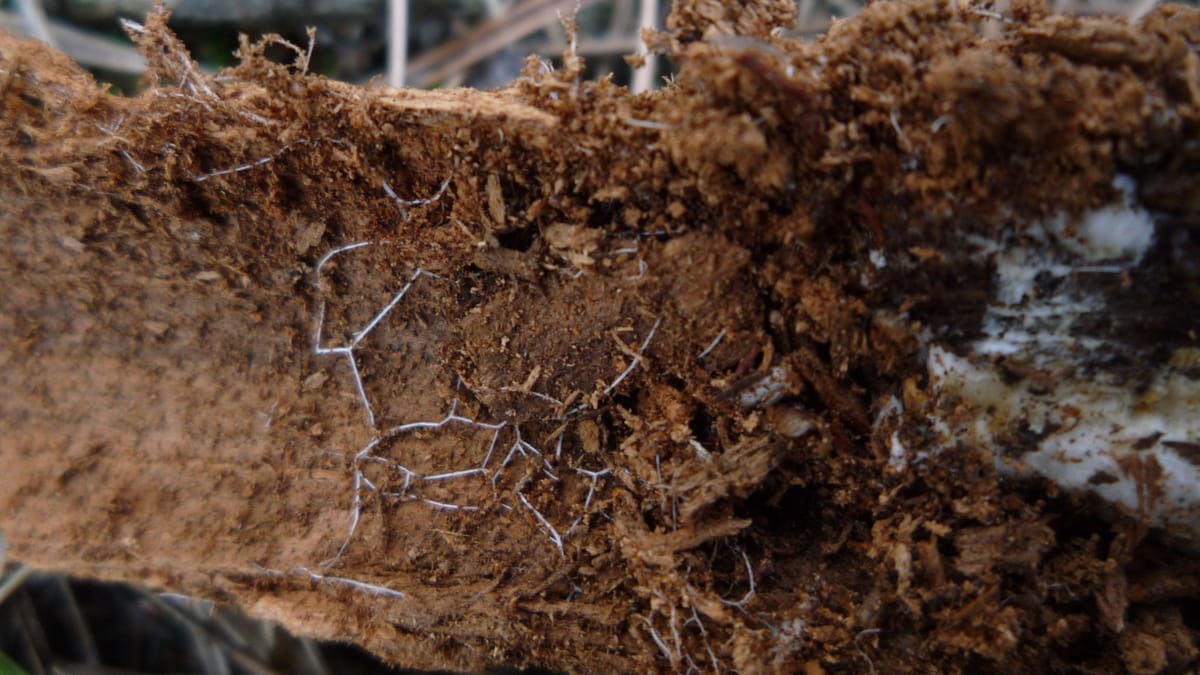
Consider the fungus. It is a sort of life so old that it predates any other living organism, with more species under its vast umbrella and more of the Earth hosting its presence than any of the other kingdoms of living things. It is an incredibly diverse life-form, only somewhat understood by humans and, at times, mind-boggling both in terms of how it works and what it’s capable of. Fungi are overlooked on a daily basis, often regarded only as an inconvenience or an oddity, but those who really know fungi know just how special they really are.
But even the most fungus-obsessed super-nerds out there might be surprised by one recent revelation: fungi can be computers. And as it turns out, they might actually be crazy effective at tasks that classical, binary computers struggle to perform. Forget quantum computing. Mushroom computing might be the way of the future, and today we’re going to find out why.
A Fascinating Fungus
If you want to find out what’s going on in the world these days, you’ll probably log on to the world-wide web. But if you want to find out what’s going on in the forest, you’re going to need a different source. The so-called “wood-wide web” has been investigated by modern science for the better part of a decade now, and while it’s the sort of strange natural phenomenon that just begs to be blown out of proportion, the actual realities are pretty cool in themselves.
- Lead institution
- Unconventional Computing Laboratory, University of the West of England,Bristol
- Lab director
- AndrewAdamatzky
- Fungal phylum used
- Basidiomycota
- Computing approach
- Parallel, not sequentialbinary
- Project stage
- Proof-of-concept (step one complete)
The concept in question is a common mycorrhizal network, or CMN: natural networks of fungus that spread out in filaments through the soil of a given forest. At times, those filaments connect the roots of trees to each other, and in some cases they connect quite a few root systems all at once. There is a lot about CMNs that we don’t know, even if that won’t stop a hell of a lot of websites from claiming that trees literally talk to each other. But what does seem clear is that these fungi transfer information to each other — not by any conscious means, of course, but by steering each other toward things like nutrient or chemical deposits in soil. It is a very different form of communication than anything we humans do, but it’s quite literally living proof that fungi in the natural world are able to transmit information about their underground ecosystems.
As cool as that finding is all by itself, it’s also become a jumping-off point for a handful of scientists and researchers to ask a bigger question: is it possible to harness the information-processing power of fungi and turn it to the advantage of humans? There are a few ongoing efforts around the world to answer that, but the best-known among them — and the one we’re covering today — is the Unconventional Computing Laboratory at the University of the West of England in Bristol. Headed by laboratory director Andrew Adamatzky, the Bristol lab plays a leading role in fungal-computing research, and they’ve been at it for quite a while now.
From Slime Moulds to Mushrooms
In the early days, Adamatzky and his team were fascinated by the idea of transforming slime moulds into devices that could both compute and explore the world around them in a meaningful way. They were drawn to one slime mould in particular: Physarum polycephalum. It turned out to be one hell of an organism. Adamatzky and his team, along with other researchers around the world, found it to be incredibly adaptable. As Adamatzky and co-authors put it themselves, “the slime mould can solve tasks of computational geometry, image processing, logic and arithmetics.”
By presenting data to Physarum polycephalum in the form of attracting and repelling stimuli — a profoundly weird version of binary data that forces the organism to process it in order to go through its life — the Bristol team could make their slime mould problem-solve, make decisions, and even store memories. These are not the sorts of behaviors you’d expect from the gross-looking stuff at the back of the refrigerator. The team even explored the ways these slime moulds could express their own unique form of creativity, generating novel and useful ideas and solving maze problems. Again, this is a slime mould we’re talking about. They aren’t even proper fungi, and they can solve mazes.
But as the 2010s wore on, the Bristol team realized that, as awesome as their slime moulds were, one problem was going to seriously limit their potential for computing. Because the networks that make up a slime mould are constantly changing, they can’t be relied upon to form a stable computing device — sort of like if the neurons forming a network in your brain were always swimming around and changing the structure between them, or dying off and being replaced in unexpected spots. The team needed a new subject: a proper fungus that mirrored the positive properties of the slime mould but could create a more stable network. Bonus points if it was easier to find, easier to manipulate, or easier to keep alive in laboratory conditions.
Before long, they had a mushroom that checked all the boxes: a humble little phylum of fungus named Basidiomycota. These are primarily filamentous fungi, and — if we may say so — they are some freaky-looking individuals. Among the more recognizable members of the group are the oyster fungus, the ghost fungus, the Enoki fungus, the split-gill fungus, and the Cordyceps fungus of The Last of Us fame. They also appeared to be ideal candidates to form part of a computer. They, too, transmitted information, this time via electrical activity; they could run computations across their networks; and their fruiting bodies formed an interface. They respond to stimulation with electrical signals similar to those in plants, and they proved to be programmable — albeit with a very different sort of programming than you’d learn in an Intro to Java class.
At least in theory, they could solve all the same geometric problems the old slime moulds could, including the traveling salesman problem — the fairly complex task of finding the shortest possible route between a network of points while visiting each only once. Whether the mycelia, or the slime moulds for that matter, understood the idea of a traveling salesman was thankfully much less important.
Living Computers
Once the candidate Basidiomycota had been identified, the next step was to figure out how to integrate them into computer systems. In this role, a fungus would become a piece of so-called “wetware” — instead of either hardware or software. In general, wetware is any biological component added to a computer system, whether a seed, a virus, a culture of bacteria, or even a brain. For the most part wetware has been theoretical, so crossing the gap with a fungus would also constitute one of the first times wetware had ever truly been integrated into a computer system at all.
And when you look at some of the work done in Bristol, you’ll quickly realize that when we say the mushrooms are added to the computer system, we aren’t kidding. In the past few years, that lab has produced actual motherboards with mushrooms growing out of them, and mycelia growing inside containers and interfacing with a wide range of electrodes — all in hopes of incorporating the natural structure of a mushroom into the motherboard or the electrical circuitry directly.
If you take a mushroom, it’s important to recognize that the mushroom itself is not the entire fungus. There’s also mycelium attached to it: a branching web that functions roughly like a root system in plants. Those root systems can conduct electrical signals, which can be received and passed along from a non-mushroom source like a computer, then passed from the mycelium to other mycelia, or to the mushroom part.
That mushroom is called a fruiting body, and much like in an animal brain, the fruiting body contains enough hardware to send and receive complex electrical signals. These signals allow it to be a place where a mushroom can keep data in the form of memory. And just like the slime moulds, mushrooms should be able to engage in complex computing processes that modern binary computers can’t handle.
These processes depend on mushroom cells’ ability to transfer electrical signals between each other, similar to how a brain works. That sort of communication inside the fruiting body of a fungus — by cells that aren’t talking in a straight line but are enmeshed in a three-dimensional spiderweb of connections — enables a level of sophistication that is exponentially more complex than what today’s computers can do.
Like the neurons in a brain, mycelium networks have a lot of other advantages over regular computers. For example, if you stimulate a mycelium from at least two points, the conductive pathway for electricity to travel between those points gets a lot stronger. Signals can travel faster and be more reliable. Other mycelia have different shapes or structures, enabling them to carry out different tasks. Hypothetically, these networks could conceivably be built into a fungal imitation of an animal brain — but that’s not what the Bristol team or anyone else wants to do with them, at least not yet. For now, the fungi are given a simpler task: interfacing with the signals sent within modern computer hardware, and establishing an ability to communicate in a common language.
A Common Language: Electrical Pulses
That language is as simple as electrical pulses. At this point, the team at Bristol and others like it have shown they can get externally generated electrical signals to interface with a mycelium network — basically, zapping the mycelia in a way that makes them talk to each other. They can also get signals out: have the mycelia send electrical pulses to the researchers’ electrodes, and then translate those signals into something meaningful on a classical computer.
The presence of an electrical signal coming from the mycelium translates to one half of a binary language for a computer; the absence of a signal is the other half. That, all by itself, is the Rosetta Stone connection that allows living beings to talk to machines in a common tongue.
At this stage, the completed loop between fungi and motherboards is not particularly complex, and the goal as it stands is just to keep providing proof-of-concept. And don’t get us wrong: there are plenty of limitations to the idea that simply translating electrical pulses into binary data would let a computer fully understand what a fungus is telling it. That’s the functional equivalent of someone with a hundred-thousand-word vocabulary trying to explain concepts to someone with a ten-word vocabulary — you end up leaving a lot on the table. But where the fundamentals are concerned, that proof-of-concept is already there, and now that the bridge has been crossed for organic fungal matter to communicate with electronics, it’s a matter of adding new capabilities and making the process work better. Put simply: step one on the path to mushroom computers appears to be complete.
Why Fungi?
So that’s a rough idea of how a fungal computer could really work — and we do say a rough idea, because many of these processes are far too complex to sum up in a single sitting. But what’s worth exploring now is what a fungal computer might hypothetically be capable of, if the technology can be evolved the way researchers currently hope.
First, there are the advantages in computing itself, and they are pretty massive. Fungi are able to conduct calculations in parallel to each other, rather than sequentially as in a binary system, meaning they can not only handle multiple tasks at the same time but do their work significantly faster than current technology. They could hypothetically handle processes and tasks that current computers can’t: everything from image and video processing, to simulating or processing biological systems, to potentially even understanding massive, ever-shifting phenomena like the Earthly environment or the universe in a much more grounded way than modern computers can. They can also evolve, meaning that from an engineering perspective they can be developed into new and ever-improving sorts of computers, with a high degree of flexibility in what you can actually do with them.
Then there are the practical advantages of a computer literally made of living material. They’d consume far less energy than a traditional computer, and can be disposed of without adding to the immense amount of electronic waste humans generate — after all, they’re biodegradable. They can self-repair and recover from issues that would cause system failure, a far cry from laptops and tablets that can’t survive a splash of water. They might even be resilient to electromagnetic pulses, although on that issue the jury’s still out.
More than anything, fungal computers are special because of how complex and adaptable they could prove to be. If there’s one thing modern computers are not, it’s flexible; they can’t morph the way they work to solve new problems, and they can’t truly learn the way a living being can. Mycelia change all that, and they show particular promise when it comes to forming highly evolved neural networks and AI models that could prove far more advanced than anything humans have today. That said, fungal computers aren’t an improvement across the board: much like quantum computers, there are things they hypothetically wouldn’t be able to do well that traditional computers can. They’ll also need some pretty specific environmental conditions to function — a certain humidity, a certain temperature range, all that stuff.
Where Mushroom Computers Might Show Up
When we start to examine where these fungi might eventually appear, their potential value to humanity becomes very hard to ignore. They could end up invaluable as wearable technology — imagine an ultra-advanced fitness tracker that actually understands what’s going on inside your body, rather than just taking a few readings and trying to guess the rest. Living fungal apparatuses have been shown to respond to all sorts of physical stimuli from a human body, including chemical processes that current wearable technology is incapable of accounting for. That innovation alone would revolutionize the way humans monitor our own bodies and respond to health crises.
Fungal computers can also be incorporated into so-called “smart” building materials and everyday commercial and household technologies, at exceptionally low cost and hardly any environmental cost. Fungi have incredible potential to function as advanced sensors, processing the world around them in a way no typical electronic sensor could, while surviving environmental challenges that would render a modern sensor inoperable. And of course there are the other myriad benefits of mapping a fungal version of a neural network in mycelia — particularly the insight we might gain into communicating directly with brain structures like our own.
How far the current work in fungal computing will ultimately lead is impossible to know until we get there. Perhaps a future society will become inter-reliant with fungal symbiotes, the biotechnological version of the animal sidekick perched on a movie character’s shoulder. Perhaps fungal supercomputers will fill entire warehouses with cultivated, interconnected mycelia, capable of tasks that would require classical supercomputers a hundred times the size.
Or perhaps it’s all a pipe dream, and the hyper-futuristic world a century from now considers mushrooms a quaint little relic for the vegetable garden. If one thing’s for sure, it’s that any large-scale adoption of fungal computers will be a lot more complex than a device-for-device replacement of the technology we use today. Instead, it’ll be a sophisticated fusion of technology with biology — creating something fundamentally different, and with any luck fundamentally better, than even the most stunning technologies we have today.
Key Takeaways
- Fungi can transmit and process information, and researchers are now harnessing that ability to build “fungal computers” — biological alternatives to classical binary machines.
- The leading effort is the Unconventional Computing Laboratory at the University of the West of England in Bristol, directed by Andrew Adamatzky.
- The team began with the slime mould Physarum polycephalum — which can solve geometry, logic, and maze problems — but its constantly shifting network proved too unstable for reliable computing.
- They moved to the fungal phylum Basidiomycota (oyster, ghost, Enoki, split-gill, and Cordyceps fungi), which forms more stable mycelium networks that conduct electrical signals.
- The core breakthrough is a “Rosetta Stone”: the presence or absence of an electrical pulse from the mycelium maps onto binary, letting fungi and computers communicate. Step one — proof-of-concept — appears complete.
- Fungal computers could compute in parallel, self-repair, run on little energy, biodegrade, and serve as advanced sensors and wearables, though they require specific environmental conditions and can’t do everything a classical computer can.
Eliot Harper
Eliot Harper writes about grids, launch infrastructure, complex fabrication, and the operational constraints that make modern megaprojects succeed or stall.
Frequently Asked Questions
What is a fungal computer?
A fungal computer uses living fungus as a computing component, making it a form of “wetware” — a biological part added to a computer system, as opposed to hardware or software. Researchers stimulate fungal mycelium with electrical signals and read the signals it sends back, using those pulses to perform computation. It’s one of the first times wetware has truly been integrated into a computer system at all.
Who is leading research into mushroom computers?
The best-known effort is the Unconventional Computing Laboratory at the University of the West of England in Bristol, headed by laboratory director Andrew Adamatzky. The lab has produced actual motherboards with mushrooms growing out of them and mycelia interfacing with electrodes. They have been working on unconventional computing for many years.
Why did researchers switch from slime moulds to mushrooms?
Adamatzky’s team first worked with the slime mould Physarum polycephalum, which can solve computational geometry, logic, and even maze problems. But because a slime mould’s network is constantly changing, it couldn’t form a stable computing device. They moved to the fungal phylum Basidiomycota, which transmits electrical signals and forms a more stable, manipulable network.
How do fungi and computers communicate?
The shared language is electrical pulses. Researchers can send externally generated signals into a mycelium network and also read pulses the mycelium sends back to their electrodes. The presence of a signal represents one half of binary; the absence of a signal represents the other — a “Rosetta Stone” that lets fungi and machines talk in a common tongue.
What advantages could fungal computers have over traditional ones?
They could compute in parallel rather than sequentially, handling many tasks at once and potentially faster. They’d use far less energy, are biodegradable, can self-repair, and may even resist electromagnetic pulses, though that last point is unsettled. They show particular promise for flexible, learning systems like neural networks and AI.
What are the limitations of fungal computing?
The technology is still at the proof-of-concept stage, and translating electrical pulses into simple binary leaves much of what the fungus “says” on the table. Like quantum computers, fungal computers wouldn’t do everything well that traditional computers do. They also need specific environmental conditions, such as a certain humidity and temperature range, to function.
Where might mushroom computers eventually be used?
Potential applications include wearable technology that can sense chemical processes inside the body that current devices miss, “smart” building materials, and low-cost environmental sensors that survive conditions that would disable conventional electronics. Researchers also hope the work yields insight into communicating directly with brain-like structures.
Sources
-
Original MegaProjects video: The Mushroom Motherboard: Fungal Computers
-
Popular Science — Inside the lab that’s growing mushroom computers
-
TechSpot — Scientists have developed a “living PC” made from mushrooms
-
Hero image source by Grzegorz Jaglarski / Wikimedia Commons, CC BY-SA 3.0.
Related Projects

Active Camouflage
From World War II's Project Yehudi Lights to OLED chameleon suits, here's how close military science actually is to true active camouflage.

National Ignition Facility
How Lawrence Livermore's National Ignition Facility turned 192 lasers, Cold War stockpile science, and decades of failed shots into laboratory fusion ignition.

X-59 QueSST
NASA and Lockheed Martin's X-59 Quesst experimental aircraft aims to solve the sonic boom problem that has plagued supersonic commercial flight since the Concorde era.