

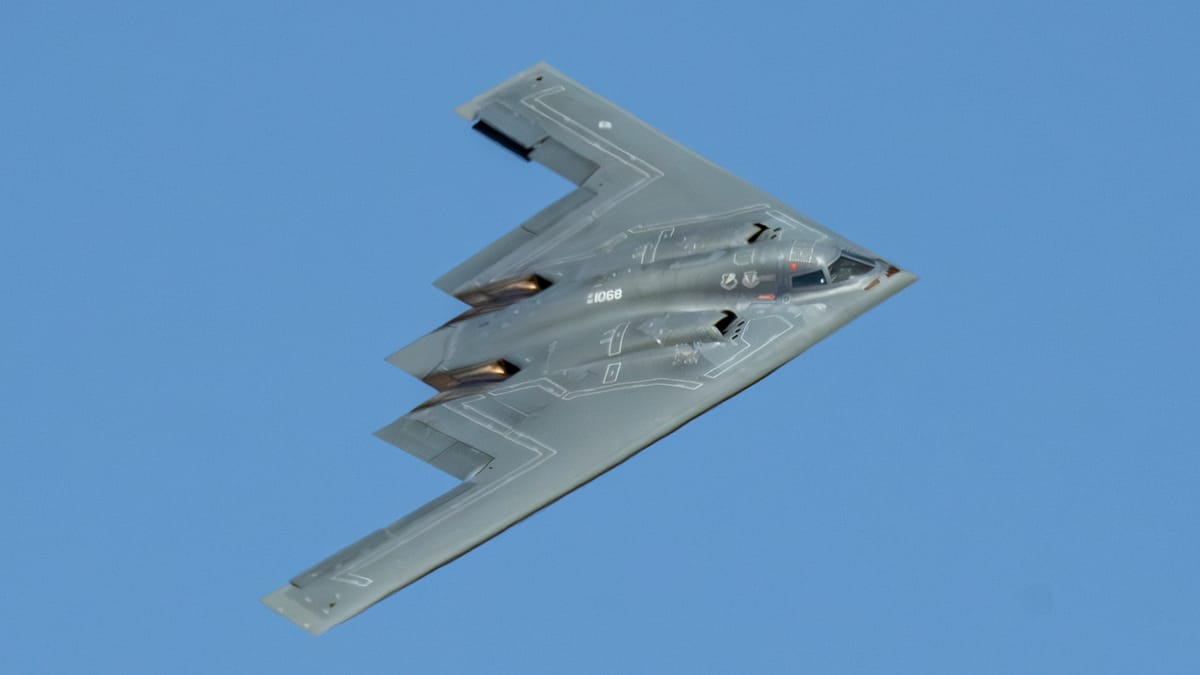
On February 23, 2008, a United States Air Force plane crashed moments after takeoff from Andersen Air Force Base in Guam, a U.S. territory in the Pacific. Both pilots ejected successfully. No bystanders were harmed. No foul play was suspected. To a casual observer, the incident might have seemed unremarkable — a mishap in poor weather conditions, far from any urban center, with the crew walking away largely intact.
But this was no ordinary aircraft. The downed plane was the Spirit of Kansas, a B-2 Spirit Stealth Bomber — one of fewer than two dozen ever built — carrying a base price of $1.2 billion at the time of its introduction. In a single morning, waterlogged sensors reduced one of the most sophisticated and expensive machines in human history to a smouldering heap on a Pacific runway. The fire burned for six hours.
The wreckage was beyond salvage. Adjusted to 2024 dollars, the loss amounted to roughly $2 billion — making it the most expensive plane crash in recorded history, and one of the costliest accidents involving military equipment outside of wartime.
- Cost of the destroyed aircraft
- ~$2billion (2024 dollars)
- B-2 Spirits ever produced
- 21
- B-2s remaining in active fleet
- 18 (as of 2022 incident)
- Wingspan
- ~52metres
- Maximum range on one tank
- 6,000 nauticalmiles
- Northrop Grumman maintenance contract (2024)
- $7billion
The B-2 Spirit Stealth Bomber
The Northrop Grumman B-2 Spirit is a genuinely extraordinary achievement in aerospace engineering. First publicly displayed in 1988 at Air Force Plant 42 in Palmdale, California, the B-2 was the product of a sprawling industrial partnership — Northrop Grumman Integrated Systems Sector led the programme, with Boeing Military Airplanes, Hughes Radar Systems Group, General Electric Aircraft Engine Group, and Vought Aircraft Industries all contributing.
The first operational aircraft, the Spirit of Missouri, was delivered to Whiteman Air Force Base in Missouri in December 1993. It entered combat not long after, flying strike missions against Serbian targets during the Yugoslav Wars — taking off from Whiteman, completing missions over Kosovo, and returning home nonstop. That round trip underscores perhaps the most striking aspect of the B-2’s design: it can fly 6,000 nautical miles (roughly 11,000 kilometres) on a single tank of fuel, a range approximately equivalent to the distance from London to Beijing. Aerial refuelling — which can be carried out mid-flight — extends that range further still.
The B-2 belongs to a category called “flying wing” aircraft: no tail, no conventional fuselage, just a swept, aerodynamically refined shape that minimises drag and maximises both fuel efficiency and stealth. These designs became viable in the 1970s as computing power advanced sufficiently to manage the complex flight dynamics that no human pilot could control alone.
The aircraft is powered by four General Electric F118-GE-100 engines, producing a combined 36,000 kilograms of thrust — and notably, the B-2 has no afterburners, which further reduces its infrared signature. With a wingspan of approximately 52 metres and a length of around 21 metres, the aircraft is instantly recognisable: a flat, angular silhouette coated in black or dark grey that has been compared, with some affection, to a flying dorito. Its operating weight sits around 72,000 kilograms — roughly equivalent to one-and-a-half M1 Abrams tanks — and its top speed approaches 1,010 kilometres per hour, close to but below the speed of sound.
On the weapons side, the B-2 can carry both conventional and thermonuclear payloads, and it remains the only known in-service aircraft capable of deploying large air-to-surface standoff weapons while maintaining full stealth operation.
Central to its flight systems are 24 Port Transducer Units, or PTUs — sensors that continuously calculate airspeed, angle of attack, altitude, and other critical metrics and feed that data to the aircraft’s onboard computer. It is these sensors that would bring the Spirit of Kansas down.
Only 21 B-2s were ever produced, each costing approximately $1.5 billion when all components are factored in. Shortly after the aircraft’s introduction, in 1991, Northrop Grumman was awarded the Collier Prize — the most prestigious annual recognition in American aeronautics, issued by the National Aeronautic Association. And throughout its operational history, no B-2 has ever been lost to enemy fire in combat.
The Accident
In the days before the crash, heavy rains had swept across the southern Pacific. Guam is susceptible to high humidity at the best of times, and the sustained moisture had accumulated inside the Port Transducer Units of the Spirit of Kansas while it sat on the runway at Andersen Air Force Base. The result was that the PTUs began generating faulty environmental data — effectively feeding the aircraft’s computer system false readings about speed and altitude.
On the morning of February 23, 2008, the Spirit of Kansas began its taxi at approximately 10:30 a.m. local time. It was one of four B-2s stationed at Andersen, deployed as a strategic deterrent to China and North Korea — both within reach of the aircraft’s extraordinary range despite the distance. The B-2s had been on Guam for four months and were preparing for their final flight back to Whiteman in Missouri.
Neither pilot was aware of what the humidity had done to the Air Data System. The B-2 was already showing a slightly inaccurate altitude reading while on the ground, but the discrepancy was minor enough to go unnoticed. The more consequential error involved airspeed: as the aircraft began its takeoff roll, the PTU sensors reported a runway speed of 262 kilometres per hour — a safe takeoff speed — when the aircraft was actually travelling at only 243 kilometres per hour, which was not.
Acting on the false data, the aircraft lifted off. Once airborne, the computer system registered what it interpreted as a rapid loss of altitude and automatically initiated a nose-up manoeuvre, commanding a sharper upward climb angle. But at the aircraft’s actual speed, weight, and momentum, that manoeuvre was not achievable. The pilots, suddenly confronted with an aircraft that was not behaving as expected, struggled to understand and correct what was happening.
Within seconds, the B-2 began to descend back toward the runway. The left wing struck the tarmac. A crash was inevitable. Both pilots ejected — one was discharged from hospital the same day, the other sustained spinal compressions and remained for several days before being released. The Spirit of Kansas hit the ground and immediately caught fire.
The blaze on the Andersen runway burned for six hours. Recovered wreckage was shipped back to the United States for analysis, but the aircraft was a total loss.
The Investigation and Aftermath
An accident investigation was launched, as is standard procedure for all aerial incidents. Its conclusions were unambiguous: the crash was caused by moisture in the PTUs generating faulty data, leading the aircraft’s computer to attempt a manoeuvre the plane could not physically execute at its actual speed. Both pilots were cleared of any fault.
The investigation also surfaced an uncomfortable prior history. Air Force engineers conducting an inspection at Andersen in 2006 had identified the risk that Guam’s humidity posed to the PTU sensors and had recommended that heaters be installed to dry the units out after exposure to wet weather. That recommendation had not been acted upon. Following the crash, it was implemented as standard procedure across the fleet.
The financial reckoning was stark. The cost of the Spirit of Kansas, expressed in 2024 dollars, amounted to approximately $2 billion — more than the entire GDP of Samoa at the time of the crash. It remains the single most expensive aviation loss in history outside of deliberate destruction in wartime.
Later Incidents and the Fleet’s Future
The 2008 crash did not ground the B-2 programme. The aircraft continued to operate, and its combat record — no losses to enemy action — remained intact. But the Spirit of Kansas was not the last B-2 to suffer serious damage.
In 2010, an unnamed B-2 lost one of its four engines mid-flight and was forced to make an emergency landing at Andersen, once again. The aircraft was repaired and returned to service, but the process took two years.
In 2021, another B-2 caught fire during a training sortie at Whiteman Air Force Base. Details were kept limited, but it was announced that the aircraft would be repaired. Then, in 2022, yet another B-2 caught fire at Whiteman. On this occasion, the aircraft was not returned to service — confirmed by the Air Force in a statement cited by Defense One — reducing the effective fleet from 21 to 20 aircraft.
When combined with the destruction of the Spirit of Kansas in 2008 and the 2021 aircraft still under repair at the time, the active fleet had fallen to 18. The writer notes that if the 2022 aircraft were tallied alongside the Spirit of Kansas as a total write-off, the combined cost of both losses would approach $4 billion.
In 2024, Northrop Grumman was awarded a $7 billion contract for fleet-wide maintenance and enhancement of the B-2, covering software updates and expanded support equipment through to 2029. The contract signals that the aircraft remains central to U.S. strategic planning for the foreseeable future.
At the same time, the U.S. Air Force has announced significant fleet-wide reductions. By 2025, it plans to cut 250 aircraft from its overall inventory, with a further 687 to follow by fiscal year 2029 — generating an estimated $18 billion in savings. These reductions are not intended as a drawdown of capability but as a reallocation of resources toward next-generation technology: the Sentinel intercontinental ballistic missile, the Next Generation Air Dominance programme (including a successor to the F-22 Raptor), autonomous aircraft capable of flying alongside manned fighters, and — most directly relevant to the B-2’s future — the development of a new stealth bomber, the B-21.
Whether the B-2 fleet, updated and maintained through 2029, will eventually give way to its successor remains to be seen. Nineteen extraordinary aircraft, carrying a combined estimated value of around $38 billion, represent both an extraordinary concentration of capability and an ongoing operational and financial commitment. Military aviation remains one of the fastest-evolving fields in human technology, and the question of how long the B-2 remains relevant is one that only time will answer.
Key Takeaways
- The Spirit of Kansas, a B-2 Spirit Stealth Bomber valued at approximately $2 billion in 2024 dollars, was destroyed on takeoff at Andersen Air Force Base in Guam on February 23, 2008 — making it the most expensive plane crash in history.
- The crash was caused entirely by moisture that had accumulated in the aircraft’s Port Transducer Units during heavy rains, causing the sensors to feed false airspeed and altitude data to the flight computer.
- A 2006 Air Force inspection had already flagged the risk that Guam’s humidity posed to the PTUs and recommended heater installations; that recommendation was not acted upon before the crash.
- Both pilots ejected successfully and survived, with one sustaining spinal compressions and the other discharged from hospital the same day.
- No B-2 Spirit has ever been lost to enemy fire in combat, making the three losses and damage incidents on record all the result of accidents or mechanical failures.
- Only 21 B-2s were ever produced; by 2022, the effective fleet had dropped to 18 aircraft following the Guam crash and two subsequent incidents at Whiteman Air Force Base.
- A $7 billion Northrop Grumman maintenance contract awarded in 2024 extends the B-2’s planned service life to at least 2029, even as the Air Force develops its B-21 successor.

Simon Whistler
Simon Whistler hosts MegaProjects, bringing engineering, infrastructure, and military-machine stories into clear narrative focus for viewers who want the systems, tradeoffs, and human decisions behind the build.
Frequently Asked Questions
What caused the B-2 Spirit crash in Guam in 2008?
Heavy rain and high humidity at Andersen Air Force Base caused moisture to accumulate inside the aircraft’s Port Transducer Units — sensors that measure airspeed, altitude, and angle of attack. The corrupted sensors fed false data to the flight computer, which believed the aircraft was travelling at a safe takeoff speed when it was not, and then commanded an unachievable nose-up climb once airborne. The aircraft stalled and the left wing struck the runway.
Why is the Guam B-2 crash considered the most expensive plane crash in history?
The B-2 Spirit is one of the most expensive aircraft ever built, with a unit cost of approximately $1.2 billion at introduction and roughly $2 billion in 2024 dollars when all components are included. Only 21 were ever produced, meaning each loss represents a significant fraction of the entire fleet’s value. No other aviation accident has involved the complete destruction of a single aircraft of comparable monetary value.
Were the pilots of the Spirit of Kansas held responsible for the crash?
No. The official investigation cleared both pilots of any blame. The accident was attributed to faulty sensor data caused by moisture ingress — a failure in aircraft systems that neither pilot could have detected from the cockpit given the readings they were presented with. The investigation did note that a prior recommendation to install heaters to protect the PTUs from humidity had not been implemented.
How many B-2 Spirit bombers remain in service?
Of the 21 B-2 Spirits originally produced, the effective active fleet had fallen to approximately 18 aircraft by 2022, accounting for the Spirit of Kansas destroyed in 2008, a second aircraft written off following a 2022 fire at Whiteman Air Force Base, and another still under repair from a 2021 incident. Northrop Grumman was awarded a $7 billion maintenance contract in 2024 to sustain and upgrade the remaining fleet through 2029.
Has any B-2 Spirit ever been shot down in combat?
No. Despite regular operational use since the 1990s — including missions against Serbian targets during the Yugoslav Wars — no B-2 Spirit has ever been lost to enemy fire. All losses and serious damage incidents on record have resulted from accidents or mechanical failures.
What is replacing the B-2 Spirit?
The U.S. Air Force is developing the B-21 Raider as the next-generation stealth bomber, intended to eventually succeed the B-2. Alongside the B-21, the Air Force’s broader modernisation programme includes the Sentinel intercontinental ballistic missile and the Next Generation Air Dominance initiative, which encompasses a replacement for the F-22 Raptor fighter and autonomous aircraft designed to operate alongside manned platforms.
Sources
-
Original MegaProjects video: The Most Expensive Plane Crash in History…
-
Defense One — B-2 crashed in 2022 won’t be fixed, Air Force confirms
-
Hero image source by Giancarlo Casem / U.S. Air Force, public domain.
Related Projects
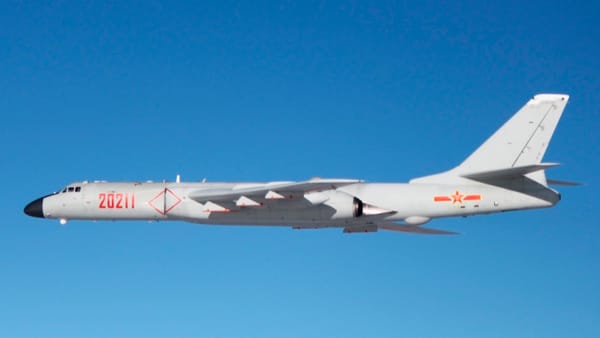
H-20: China’s Stealth Bomber
China's H-20 stealth bomber has been promised for years. The public record still shows a program wrapped in secrecy, delay, and unproven claims.
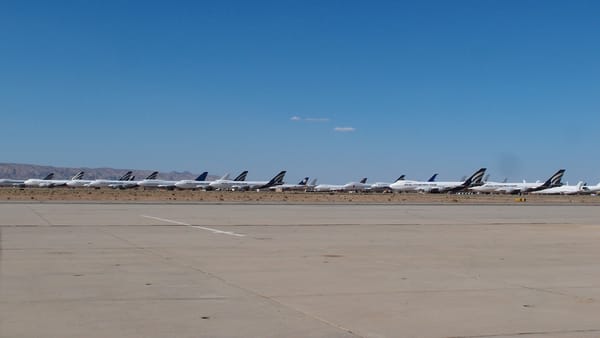
The Boneyard: Where Aircraft Go to Die
Inside the 309th AMARG at Davis-Monthan AFB — how 3,200 aircraft are stored, maintained, and redeployed from the Arizona desert.


.jpg)