
It reads like the opening of a war chronicle: Japan has a long, brutal history with an enemy that isn’t a nation. It’s water – falling, rushing, heaving. Priests bless it, farmers pray for it, and planners try to cage it with levees and gates, always a step behind its moods. Every generation adds a new line to the playbook: higher embankments, smarter pumps, better maps. And every generation learns the same refrain – respect the sea, or it will teach you.
This is a nation that doesn’t just brace for disaster – it out-engineers it. And the results are nothing short of staggering. From hidden rivers beneath Tokyo, to wall building projects that give their Chinese neighbours a run for their money, Japan’s approach to flood prevention is part sci-fi, part civil service.
Some say it’s overkill. Others say it’s genius. Either way, these are the flood defences that have turned one of the most disaster-prone nations on Earth into a blueprint for survival – and they have to be seen to be believed.
Tokyo’s Underground Temple of Floodwater
Beneath Tokyo, an astonishing structure lurks – a colossal subterranean cathedral built not for worshippers, but for floodwater. Officially named the Metropolitan Area Outer Underground Discharge Channel, it’s the world’s largest underground flood diversion facility.
Known more casually by its nickname ‘G-Cans’ – taken from its Japanese name – it has become an iconic example of megastructure flood defence. As for exactly how ‘mega’ it is, picture a space longer than two football pitches, 177 metres, wider than a jumbo jet’s wingspan, 78 metres, and tall enough to stack a five-story building inside, 18 metres, and you’ve got the idea.
And even then, those dimensions are just the ‘main’ bit of it, the massive pressure-adjusting tank where floodwaters gather – a vault that is supported by 59 hulking concrete pillars weighing 500 tons each, so enormous they dwarf tour groups like ants in a drainpipe.
This underground sanctuary of civil engineering was born out of dire necessity. Tokyo’s metropolitan area sits on a flat, low-lying plain laced with rivers that would, left to their own devices, turn ordinary ‘normal’ neighbourhoods into Venice on a bad day.
It’s a recent problem too, one caused by rapid and extensive urbanisation after WWII, which paved over naturally spongy and absorbent rice paddies and fields, and thus left storm runoff with nowhere to go but into peoples’ homes. We do want to stress the word EXTENSIVE here too, as in the basin that comprises Northern Tokyo and its surrounding greater metropolitan area, urban land cover exploded from just 5% in 1955 to over 50% today.
As a result, then, by the late 20th century, it was clear that conventional dikes and drains just weren’t going to cut it anymore – and so engineers opted to think really, REALLY big instead, and thus G-Cans was born, an entirely underground, entirely auxiliary river of sorts – into which all of that runoff could be sent when things got a bit too wet.
Work began in 1992, and after 230 billion Yen – about 1.6 billion USD – had been spent, the Underground Discharge Channel officially opened in 2006. And say what you like about that being a fair whack of cash, but they certainly seem to have gotten their money’s worth, as in addition to the main giant ‘cave’ already discussed, they also constructed five monumental vertical shafts up to 74.5 metres deep – which is deep enough for the Statue of Liberty to fit inside with room to spare.
These shafts serve as giant storm drains: when heavy rains hit, excess water from overflowing rivers pours into the shafts instead of inundating city streets. The water then rushes through around 6.5 kilometres of tunnels – each tunnel being 10 metres across – and then converges into the main tank. From there, an army of pumps, each powered by rather meaty turbine engines, can blast 200 cubic metres of water per second out of the tank and – harmlessly – into the Edogawa River, which carries the deluge out to Tokyo Bay.
The overall capacity of this underground colossus is mind-bending. The entire system can hold up to 670,000 cubic metres of floodwater at a time – roughly equal to 268 Olympic-size swimming pools worth of water. Mercifully, it hasn’t ever needed to hold quite that much – and let’s hope it never does. Instead, it’s a better to have too much safety measure – an overengineered solution that could handle a truly biblical downfall, IF such a thing should ever come.
On average, it gets used about seven times a year, which, when you stop to think about it, is quite a lot – that’s an average of seven life and economy ruining floods a year, swept aside and pushed out to sea. We can put numbers to the economic damage averted too, as in the first 18 years of the G-Cans operation, it has prevented an estimated 148 BILLION yen, one billion USD exact(ish), in flood damage – i.e., not far off paid for itself outright, with many, MANY years of operation still left in it.
Apparently too, when you stand in the main vault during a tour – don’t worry, they only offer them in the dry season – it feels otherworldly, and it’s easy to forget this space isn’t a sci-fi film set or a supervillain’s lair, but a very practical piece of infrastructure, one that most locals remain unaware of as they go about their day free from wading, and returning to their home and finding it out on a drift, bound for the Pacific Ocean.
A question though, because, actually, it turns out that the G-Cans only protects a portion of Greater Tokyo – something that is hardly surprising if you’ve ever been there, and come to appreciate just how stupidly big the place actually is – so what do you do when one mega-drain isn’t enough? Obviously, you build more.
Tokyo’s Hidden Flood Rivers – The Subterranean Reservoirs
If the G-Cans is Tokyo’s superhero flood tunnel, its lesser-known (and smaller) siblings are more like the sidekicks – silent, unseen, but always on standby. These ‘hidden rivers,’ as some have taken to calling them, might lack the spectacle of G-Cans’ colossal columns and capacity, but in day-to-day flood protection, they’re EVERY bit as vital.
Take the ‘Furukawa Underground Regulating Pond’ – which we have a feeling may have translated a bit too directly – as an example, it was built between 2009 and 2017, and lies beneath Minato Ward – the one with Tokyo Tower in it – and comprises a 3.3 kilometre long, 7.5 metres in diameter tunnel, which is capable of storing up to 135,000 cubic metres of flood water – the equivalent of 54 Olympic swimming pools.
Built at a cost of 24.5 billion Yen, roughly 170 million USD, it functions as an emergency detour when rainfall overwhelms surface channels, with water being diverted down a 52-metre vertical shaft into the tunnel, which it then fills up, and is later pumped back up to be returned downstream once the storm has passed.
Notice the subtle difference in operation there, too, as unlike the G-Cans, which hurls floodwater along into the Edogawa River, Furukawa’s design is more self-contained – it collects the water, then returns it when it is safe to do so.
Its construction was, unsurprisingly, given how much stuff is underneath Tokyo, an exercise in threading the needle. The tunnel route passes directly beneath skyscraper foundations, sewer lines, and the Namboku metro line. As a result, crews had to drill with surgical precision, A), to avoid unwittingly drilling into the side of a 3000 Series Electric Multiple Unit, and B), to not create vibrations severe enough that might disturb, or even endanger the various other subterranean amenities around them.
Remember how we said there was more than one of these such systems too? Well, sure enough, the Furukawa Pond was in fact the city’s second such underground reservoir, with the first having opened in 1997 to cover the Kanda River, another flood-prone waterway in Western Tokyo. That particular project involved a 4.5 kilometre long tunnel, that was 13 metres wide, and since it opened, the Kanda has behaved itself — no floods, no drama. And now, there are even plans afoot to maybe extend the tunnel all the way to Tokyo Bay, effectively creating a second Kanda River beneath the original.
And if you’re wondering how many such systems there are in total, the Tokyo Metropolitan Government lists 27 ‘Regulation Ponds,’ à la Furukawa, as well as a further eight ‘Diversion Channels’ – a different type of engineered waterways – that can come both open or enclosed – that reroute excess river flow via an alternative path during floods.
This overall approach, however, the ‘give water different places to go’ one, isn’t ALL that Tokyo does to fend off the floods, with the city still building traditional levees, storm surge barriers, and elevated embankments.
And while some criticise the cost, engineers say that Japan has no choice but to build underground. There simply isn’t space to build enough appropriate systems above ground, and the alternative – do nothing – is… obviously unwise.
That mindset, however, has given rise to some of the most ambitious subterranean engineering in the world. In other cities, flood prevention means digging ditches, praying to the god of your choosing, and stocking up on sandbags, but in Tokyo, it means building multi-million-dollar holes in the ground that (hopefully) will never need to be fully used.
The Great Wall of Japan
If Japan’s underground flood tunnels show how seriously the country takes storms, its tsunami defences reveal what happens when that same seriousness goes into overdrive.
You see, after the catastrophic 2011 Tōhoku Earthquake and subsequent tsunami – which killed at least 19,759 people and destroyed 45,700 buildings – Japan launched one of the most ambitious coastal defence campaigns in modern history. The goal? Ensure nothing like that, or even approaching it, EVER happens again. The result: a nearly 400-kilometre-long chain of seawalls, up to 14.7 metres high, that now guards the country’s northeastern coastline.
Some, for obvious reasons, have taken to calling it the ‘Great Wall of Japan.’
Construction took over a decade and cost roughly 820 billion Yen, around 5.6 billion USD, and represented one of Japan’s largest civil engineering undertakings, EVER – which is saying something given their rather illustrious history in that regard.
Japan was no stranger to seawalls before 2011, too. Towns like Tarō, devastated by tsunamis in 1896 and 1933, had already built extensive barriers. Tarō’s 10-metre-high, double-layered seawall system, was completed in the 1950s, and had even earned an early version of the same ‘Great Wall’ nickname that we have already seen. Many engineers had assumed these walls could withstand all but the rarest tsunamis, with them being designed to handle waves of up to 8 metres.
And for decades, that held true… then came the 11th of March 2011.
On that fateful day, a magnitude 9 earthquake triggered a tsunami with waves as high as 15 metres. In Tarō, the existing seawall, long thought nigh on impenetrable, was overtopped easily – naught but a speedbump in the face of such a ferocious onslaught of water.
The town was devastated, with 181 people lost their lives there alone, despite the defences. Elsewhere, and similarly, concrete barriers were overwhelmed or destroyed entirely. Japan had planned for what they thought would be a worst-case event – but their estimations were WAY off, and their defences just were not good enough as a result.
The national response, however, was equal parts swift and bold: if the old walls weren’t tall enough, the new ones would be – simple as, end of, no ifs, and no buts. But Japan’s engineers didn’t just go higher – they also went smarter too, with the new seawalls incorporating deeper foundations, up to 25 metres at their most extreme, interlocking concrete blocks, reinforced cores, and wave-dissipating revetments. Some, at the most vulnerable areas, even include geotextile membranes to hold everything together if overtopped. The guiding principle: the wall may not stop the wave entirely, that had to be taken as a given after 2011, but it should remain standing, blunt the force, and buy time for those on the other side to make for the hills.
However, this new ‘Great Wall’ has sparked debate. Critics say it’s changed the very nature of coastal communities. Where there were once open vistas, there are now concrete barriers. Some residents feel boxed in. Fishermen say the wall has severed towns from their historic ties to the sea. There’s also concern about complacency – will people trust the wall too much, and not bother to evacuate when they really, REALLY ought to?
Some scientists also worry that these barriers could even backfire: if breached, they might trap water inland like a dam…
As of the time of writing – 2025 – the project is, at long last, entering its final stretch. According to a Government document released in August 2024, after over a decade of digging, pouring, relocating, and rebuilding, the government now says it’s reached the “overall completion” phase for tsunami-hit regions. Most of the hard infrastructure – the seawalls, the housing, the 570 km of new roads – has been ticked off the list. What’s left is finishing touches: repurposing old relocation zones, fixing up the local seafood trade, and helping the last evacuees settle back in properly.
The target for wrapping it all up? March 2026.
And before we wrap this chapter up, consider this little extra bonus story for a bit more context:
In 1972, the Mayor of a village by the name of Fudai, Kotoku Wamura, pushed through a 15.5-metre floodgate across the local cove. It took 12 years to build and was widely mocked as overkill – with Kotoku himself being called a fool, paranoid, and all manner of other words that’d get this video savagely demonetised.
But then, when the 2011 tsunami hit, while Fudai’s wall was overtopped – it didn’t fail. It slowed the surge just enough to spare the town, and so, while neighbouring communities were destroyed, Fudai remained largely intact. One resident later said: “Without it, Fudai would have disappeared.”
And that, ultimately, is the wager with these structures. They may be expensive, intrusive, and even a bit brutalist – but they exist for one purpose only: to stand between entire communities and annihilation. In a country like Japan where the sea gives and takes with equal ferocity… we’d be lying if we said we thought it was a wasted effort.
Super Levees – Reinventing the Humble Riverbank
Sometimes, flood defence isn’t about building taller or digging deeper – it’s about going wider… much, MUCH wider. Enter Japan’s ‘super levees,’ perhaps the least visually dramatic, but most quietly revolutionary of its anti-flooding megaprojects.
The idea behind them is a simple one: take a traditional levee – typically 20 to 30 metres wide at its base – and, as the name rather gives away, supersize it, resulting in a levee that can be up to 300 to 500 metres wide.
The concept was born in the late 1980s, when planners in Tokyo started worrying about so called “zero-metre zones” – low-lying areas at or below sea level that line the Arakawa and Sumida rivers. These areas house millions of people, and contain critical infrastructure, and as a result, a single levee breach could flood subway tunnels, office towers, and entire wards in a matter of hours. After a few close calls, Tokyo decided to rethink the riverbank from the ground up.
The result? A levee so wide and gently sloped that even if it gets overtopped, it doesn’t collapse—it just becomes a shallow inland lake, slowly draining without catastrophic failure.
The benefits of this approach are massive. First, it’s virtually unbreachable. Even sustained overtopping doesn’t eat away at the inner slope like it would on a conventional steep-sided levee. Second, the vast width gives it built-in earthquake resistance – hugely important in a city that sits on multiple fault lines.
And third, unlike most flood barriers, super levees actually create usable land. Instead of a narrow strip of embankment with a maintenance road, you now have space for parks, housing, shops – even entire districts.
To make this work in dense cities, Japan linked levee building with urban redevelopment. When old industrial sites or housing blocks along the rivers come up for renewal, the government steps in: the site gets cleared, a massive platform of compacted engineered earth is built, and then the city builds back – only higher and safer than before. It’s a rare case where flood control and city beautification go hand in hand – but here you are!
The process isn’t a fast one, however. One pilot project in Tokyo’s Adachi ward built a 1.3-kilometre-long super levee that’s now home to a park and residential buildings; all perched above the flood plain. Another in eastern Tokyo blends flood protection with modern high-rise living – and most residents have no idea their buildings sit atop what is essentially a green-clad mega-dyke. Osaka has also adopted the approach along the Yodo River.
But these projects are time-consuming and expensive, especially in areas that are already developed. As of a few years ago, only 2.3 kilometres of super levees had been completed in Tokyo, with another 6 kilometres underway. At this rate, covering all vulnerable zones, if it’s possible at all, will take decades – perhaps even centuries.
Still, planners remain committed. Japan’s engineers view super levees as a long-term solution – one that future generations will benefit from, even if it takes a lifetime to build. And considering the increasing risk of climate-fuelled mega-storms, it’s hard to fault their logic.
The engineering effort itself is massive too. Each section involves shifting millions of cubic metres of earth. The base must be carefully layered with clay cores and drainage layers to prevent subsidence or erosion. In cross-section, a finished super levee resembles a pyramid the width of a small town… kind of.
Super levees, we’d be the first to admit, are less dramatic than walls or tunnels, but their ambition is no less gargantuan. They reflect Japan’s disaster management mindset: if you can’t move people out of harm’s way, or build a whopping great wall, reshape the land beneath itself so they can stay safely where they are. It’s slow, costly, and politically tricky – but it works.
Kamaishi’s Titanic Breakwater
For Japan, however, not every tale of anti-flood mega-engineering is a success. For all Japan’s prowess, there are some projects that ended in abject disaster, and failed when it mattered most. And nowhere is that more stark than in the case of the Kamaishi Breakwater – a structure that was massive, ambitious, and ultimately, powerless in the face of the very thing it was built to resist.
Located in Kamaishi Bay, Iwate Prefecture, this wasn’t just any seawall. This was the deepest tsunami breakwater – a breakwater being an offshore structure built to absorb or deflect incoming waves and protect the shoreline behind it – ever built, and at the time, it was a world-record-holding symbol of Japanese ingenuity.
Construction started in 1978, and didn’t finish until 2009 – nearly 30 years of meticulous effort and ocean-dwelling concrete work. By completion, the breakwater stretched 1.9 kilometres across the bay, plunged 63 metres down, and had cost nearly 220 BILLION Yen, or around 1.5 billion USD.
Outwardly, it was a marvel: rows of giant concrete caissons, carefully locked into one of Japan’s deepest coastal trenches. For Kamaishi, a town regularly smacked by tsunamis, it wasn’t just a barrier – it was a promise. A promise that next time would be different. That next time, they were ready.
And why wouldn’t they think that? It had been explicitly designed to blunt the kind of tsunamis Kamaishi had already seen – which were typically 8 to 10 metres high. The models said it would work, that it would cut wave height by 40%, maybe more, that it would delay the surge, and buy people time to get out. There was even early talk of it reviving the local economy – investment would follow the safety, they said.
But in the end, none of that mattered on the 11th of March 2011, when, as we already know, the Tōhoku Earthquake hit.
At Kamaishi, the tsunami on that day wasn’t 8 metres. It wasn’t 10. It was 20 metres high as it swept in. The breakwater did its job… briefly, with some reports suggesting it delayed the first wave by a few precious minutes – which was long enough for some to flee. But then the ocean didn’t stop. It rolled over the top of the wall, then slammed into its rear like a hammer.
What came next was devastating. The breakwater could take no more, and simply shattered. Vast concrete blocks, each the size of a truck, were ripped from the seabed and hurled ashore like rubble. The water, now unimpeded, surged into the city. Homes vanished, businesses disappeared, and 1,064 lives were lost.
For all its scale and sophistication, the world’s deepest tsunami barrier had lasted mere minutes. And in doing so, it upended more than just buildings – it shattered confidence. Because if a structure this huge, this expensive, this overengineered couldn’t hold the line, then what could?
Some researchers later suggested it may have even made things worse. As it broke, they say, it may have channelled water in unexpected directions – creating chaotic currents, flinging debris, and amplifying destruction in some areas. A fortress had become a battering ram.
Yet, to call it a complete failure may be unfair. Some officials maintain the delay, however slight, DID save lives. One port worker later even said his family survived only because the wall gave them six extra minutes to run, and the so-called ‘Kamaishi Miracle’ saw hundreds of schoolchildren successfully evacuate, many of them leading adults to safety. In the face of a wave that tall and that fast, six minutes is a lifetime it would seem.
Not long enough to save a city, nor long enough to save all its people, but long enough to save some of them.
In the aftermath, the debate began. Should it be rebuilt? Could it be improved? In the end, the answer was: not really.
The breakwater was partially restored to a more modest spec, but no-one rushed to repeat the original. Instead, attention shifted: toward better evacuation systems, warning networks, and ‘soft’ defences like coastal forests. Ironically, on that latter point, Kamaishi’s century-old pine tree buffer, a natural seawall from a simpler age, held up better than the concrete monster of modernity beside it.
Still, the breakwater didn’t vanish from memory. Far from it. It became legend – a cautionary tale in Japanese civil engineering. The ultimate ‘too big to fail’ project… that failed anyway.
What the Kamaishi story reminds us, however, more than anything, is that no matter how good the modelling, nature doesn’t always stick to the script. Engineering can be brilliant. It can be beautiful. But it cannot make the world safe. Not completely. Not forever.
So yes, the breakwater was a marvel. And yes, it was a monument to human resolve. But it was also a warning: that not every battle with nature can be won with height, depth, or rebar. Some storms you can’t outbuild. You can only try to survive them.
Conclusion
In the end then, what does everything we have seen today add up to?
It adds up to tunnels that could swallow skyscrapers, to seawalls that split the horizon, and to levees wide enough to build entire neighbourhoods on. Japan’s flood defences are the product of a country shaped – sometimes quite literally – by disaster. A nation that doesn’t just brace for catastrophe, but tries to out-think it, out-dig it, and, when necessary, out-build it.
Some of these defences are triumphs. Others are cautionary tales. But whether they’re underground caverns the size of stadiums, breakwaters taller than most apartment blocks, or grassy super levees that double as city parks, they all speak to the same truth: Japan takes the threat of water seriously – and meets it with engineering that’s bold, brash, and occasionally bizarre.
Overengineered? Possibly. Overprepared? Definitely. But with so much at stake – as was gravely proven back in 2011 – pardon us for thinking that Japan just might have the right idea here, because as the waters rise and the risks keep mounting, the choice isn’t really about ambition anymore. It’s about survival. And if that means concrete by the kilometre and tunnels you pray you never have to use – well, better that than wondering, too late, if you should’ve built bigger…
Key Takeaways
- Japan’s extensive flood defenses include massive underground tunnels and seawalls.
- Tokyo’s G-Cans facility is a colossal underground flood diversion system.
- The Great Wall of Japan is a 400-kilometer-long chain of seawalls built after the 2011 tsunami.
- Super levees in Japan are wide, gently sloped embankments that create usable land and resist earthquakes.
- The Kamaishi Breakwater, despite its size, failed during the 2011 tsunami, highlighting the limits of engineering.

Simon Whistler
Simon Whistler hosts MegaProjects, bringing engineering, infrastructure, and military-machine stories into clear narrative focus for viewers who want the systems, tradeoffs, and human decisions behind the build.
Frequently Asked Questions
What is the G-Cans and where is it located?
The G-Cans, officially named the Metropolitan Area Outer Underground Discharge Channel, is the world’s largest underground flood diversion facility located beneath Tokyo.
How does the G-Cans help prevent flooding in Tokyo?
The G-Cans collects excess water from overflowing rivers through vertical shafts and tunnels, then pumps it into the Edogawa River, preventing it from inundating city streets.
What are the hidden rivers in Tokyo and how do they function?
The hidden rivers, such as the Furukawa Underground Regulating Pond, are underground tunnels that store floodwater during heavy rains and release it once the storm has passed.
What is the Great Wall of Japan and why was it built?
The Great Wall of Japan is a nearly 400-kilometre-long chain of seawalls built after the 2011 Tōhoku Earthquake and tsunami to protect the northeastern coastline from future disasters.
What are super levees and how do they benefit Tokyo?
Super levees are wide, gently sloped embankments that can withstand overtopping without collapsing, creating usable land for parks, housing, and shops while protecting against floods.
What was the Kamaishi Breakwater and what happened to it?
The Kamaishi Breakwater was a massive offshore structure built to protect Kamaishi Bay from tsunamis. It was destroyed during the 2011 Tōhoku Earthquake and tsunami, despite being designed to withstand such events.
How does Japan’s approach to flood defence differ from other countries?
Japan’s approach involves building extensive underground infrastructure, massive seawalls, and wide levees to out-engineer natural disasters, rather than relying on traditional methods like sandbags and ditches.
What is the economic impact of Japan’s flood defences?
Japan’s flood defences, such as the G-Cans, have prevented billions of yen in flood damage, effectively paying for themselves over time.
What are some of the criticisms of Japan’s flood defence projects?
Critics argue that these projects are expensive, intrusive, and may cause complacency among residents, leading them to rely too heavily on the defences and neglect evacuation efforts.
How does Japan balance flood defence with urban development?
Japan integrates flood defence with urban redevelopment by building super levees and other structures that create usable land for parks, housing, and commercial areas.
Sources
- Original MegaProjects video: Japan’s Gargantuan Flood Defences
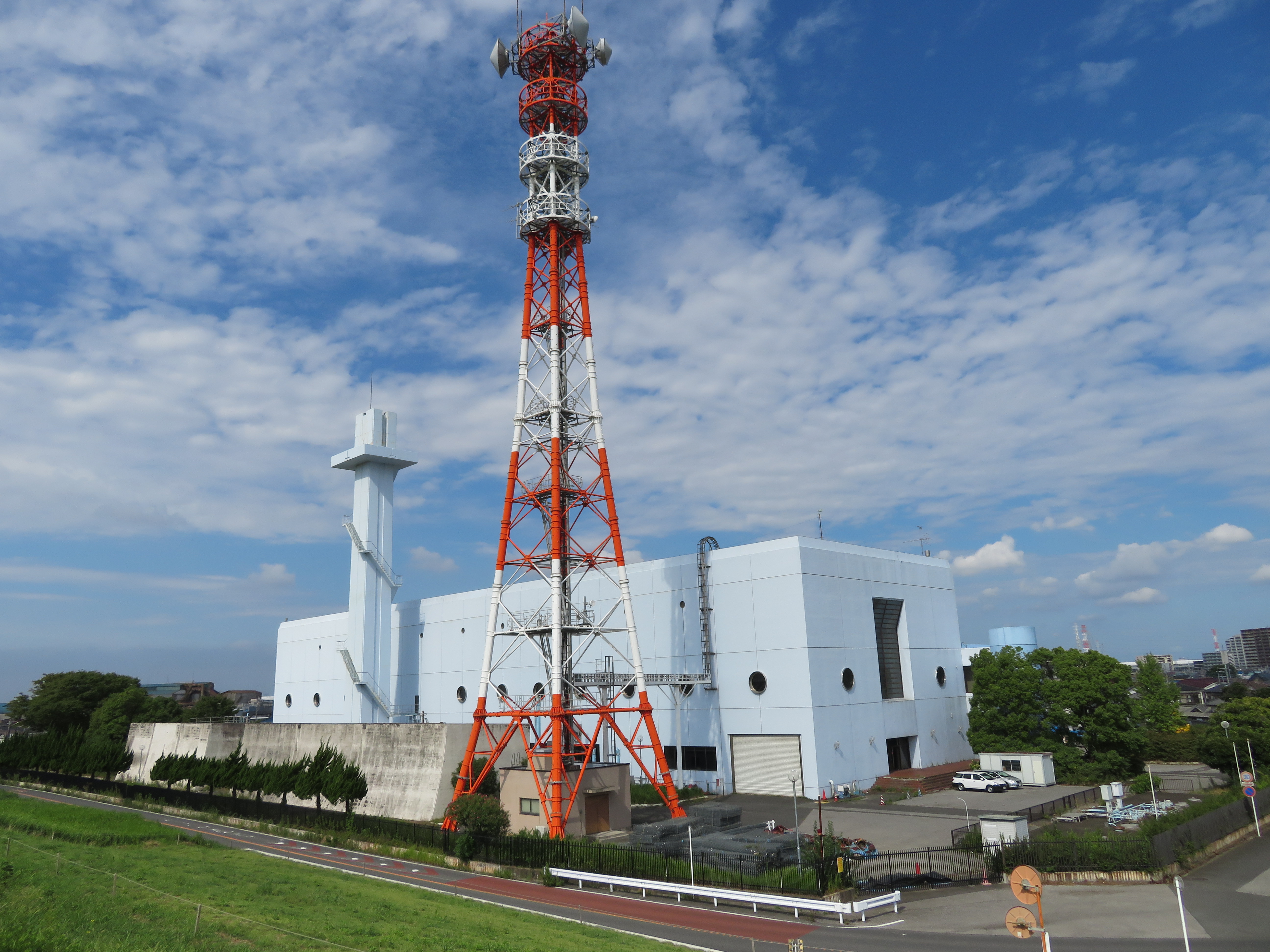
- Hero image source by Ebiebi2 / openverse, by-sa.