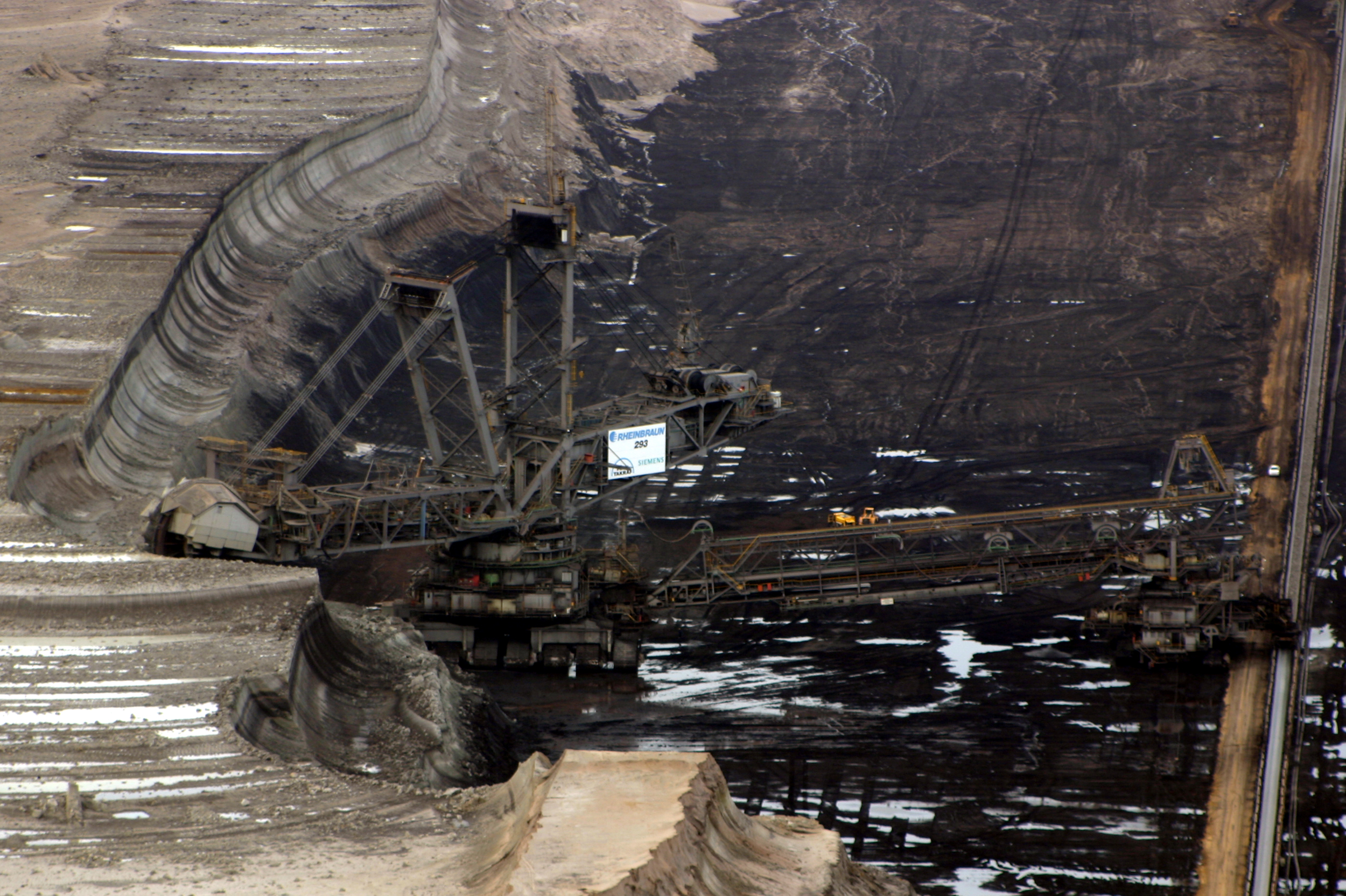

Europe has no shortage of huge mines. From the Aitik copper mine in Sweden to the Tagebau Hambach in Germany, the continent’s mining industry makes up a significant portion of the world’s mineral production, especially concerning gold, coal, and iron ore.
However, the deepest mine in Europe has nothing to do with the extraction of precious metals or fossil fuels. In fact, its whole purpose is to retrieve a natural resource you probably don’t know that much about, but one that certainly has an impact on your life.
This is the Woodsmith Polyhalite Mine, located in North Yorkshire, England, and even if you were to look right at it, you probably wouldn’t even recognize that you’re looking at one of Britain’s largest industrial megaprojects of recent years, as it’s been designed to seamlessly blend in with the countryside.
Once it comes online in the next few years, it will be the deepest mine on the continent, feature the longest tunnel in Great Britain, and contain one of the longest conveyor belt systems in the entire world. Today we’re going to explore how such a massive structure was able to be constructed so inconspicuously, what polyhalite exactly is, and how the Woodsmith Mine will solidify Britain’s monopoly over this valuable resource.
Polyhalite
So first of all, let’s tackle the question of what polyhalite even is and why it’s so important. Polyhalite is a sulfate, which is essentially a type of mineral salt made of sulfuric acid. This one contains, along with sulfur, potassium, magnesium, and calcium, generally giving it a rather colorless appearance of white or grey, however, it is often found with a bit of a reddish hue thanks to the presence of iron oxide, the same compound responsible for the iconic color of the surface of Mars.
Polyhalite is also an evaporate mineral, meaning it gets concentrated into large deposits when briny bodies of water evaporate quickly, leaving behind a thick layer of this prized mineral.
This process is exactly what happened around 250 million years ago, in the ancient Zechstein Sea. This was a large, shallow sea that began forming just as the supercontinent Pangea was starting to break apart. Repeated cycles of flooding and evaporation built up these mineral layers, making some of them reach thicknesses of dozens of meters or more. These salty deposits were eventually buried over the years by rock and land, and as the continents shifted over the eons, much of it ended up being stored beneath the North Sea.
And this is where Great Britain enters the picture, as geologists in the 20th century discovered that England sat right on the edge of this ancient seabed, giving them access to the largest known deposit of this type in the entire world. However, at first, they were only interested in potash, a similar salt, which was extracted in the Boulby Mine.
After more than 40 years of operation, The Boulby Mine finally took interest in Polyhalite, secured some funding for its extraction and became the first place on earth to ever mine it in 2016, and this is when it was realized just how much potential Polyhalite could have in the world market.
Now, if you’re wondering who could possibly be the customer base for Polyhalite, the answer is pretty much every major food producer in the world. The elements in Polyhalite make it an incredibly effective fertilizer, rapidly replacing many nutrients that soil loses over time as more and more crops are harvested in the same spot.
Soil degradation is a serious problem that has plagued humanity for thousands of years, and is only getting worse in the modern era as the global population grows and agricultural demand continues to rise with it. What’s great about polyhalite is that it does not require any chemical treatment or additives of any sort, making it super safe for farmlands and their surrounding ecosystems. Not to mention, in contrast to some very common chemical fertilizer options, polyhalite is not explosive, which is always a reassuring fact when you have a cargo ship filled with literal tons of the stuff.
And so, with all these benefits in mind, proposals for a mine specifically centered around extracting polyhalite began popping up in the early 2010s, and soon enough, work was already underway.
Out of Sight
The early days of the Woodsmith Mine were a bit shaky. The venture was first started up by a company called York Potash, who then became a subsidiary of a parent company called Sirius Minerals, who, in turn, were then bought out by a company called Anglo American.
Corporate finances aside, getting started on the Woodsmith Mine was no easy feat. Geologic surveys had located the largest and highest-grade Polyhalite deposit in the world, the only problem was that it was located entirely within the territory of North York Moors National Park, causing a stir in the local community who worried that the huge, industrial mining facilities would be an eye-sore in the middle of an otherwise gorgeous national park. The protests, and the mine’s environmental impact as a whole, caused plans for the project to go back to square one on more than one occasion, but, eventually, the final blueprints were unveiled.
The first unique aspect of the Woodsmith Mine is that the vast majority of its infrastructure is being constructed entirely underground. From above, the area seems to consist of nothing more than farmlands, and the countryside that the locals have known and loved, because any new buildings that need to be above ground, such as the entrance to the mine itself, are actually housed within buildings designed to look like local agricultural barns, blending the whole operation right into the surrounding scenery. Along with this, the mine employs teams of people to monitor and minimize noise, dust, and potential light pollution. To top it all off, there won’t even be a large parking lot for the many workers, as the company has limited the space for personal cars to minimize traffic, and are instead incentivizing workers to carpool or use company buses.
Once you step foot in the underground facilities, the true scale of the project can be understood. Two twin mineshafts have been constructed, one for the 1,400 workers and one for the polyhalite itself. Each of these shafts reaches a depth of 1,600 meters, ending right where the mineral deposits begin.
Vertical mineshafts such as these require the use of winders, or hoisters, a small tower with the necessary cables to lower and lift workers and materials up and down the shafts. However, even these have been hidden from view, as the Woodsmith Mine has become the first location in the world to also build these entirely underground.
Once you’ve reached the pit bottom, you’ll be completely surrounded by polyhalite, as it gets up to 70 meters thick in some places. Here, a system of roads will allow workers to systematically excavate the minerals using large cutting machines, which, if you’re not familiar, are essentially vehicles with a series of giant saws on the front. As these cutters claw away into the walls of the mine, the Polyhalite is collected and sent to the project’s next engineering marvel: the mineral transportation system.
Originally, the plan was to use the second shaft to raise the mined goods back up to the surface where they could be met with a new rail line, which would easily transport them out of the area. However, the idea of trains moving in and out of the national park would have completely ruined the whole ‘environmentally friendly’ approach that necessitated building everything underground in the first place. The second option was a pipeline, which would have required turning the polyhalite into a slurry by mixing it with water, then filtering the water back out at its destination, but not only would this pipe have ALSO been an ugly surface feature, it would have required extra labor and processing at both ends of the production line. And, so, the third option for mineral transport was chosen, a tunnel.
Freshly mined polyhalite is crushed into small bits and placed in the material shaft, but instead of being hoisted all the way back to the surface, it instead stops a bit short, reaching a depth of about 300 meters, where it placed on a conveyor belt. This conveyor belt takes the polyhalite on a ride for 24 kilometers, or 15 miles, to an interchange point where it is then placed on a second conveyor belt taking it a further 13 kilometers or 8 miles.
The tunnel for these conveyor belts will be the longest in the United Kingdom when it is finished. It is currently being dug by two Tunnel Boring Machines, or TBMs. Each of these TBMs weigh around 2,000 tons and can dig forward at a pace of about 15 meters per day. This sounds slow, but it’s actually quite remarkable when you learn how complex these machines are.
Sharp cutting disks in the front of the TBM spin to chip away at rock and dirt, which, as it falls off, is shipped backward through the machine itself on a conveyor belt. Then, every few meters, the TBM pauses to install segments of the tunnel’s concrete lining, which it secures to the surrounding rock using grout that it slowly pours as it moves.
The first TBM has been launched from the tunnel’s final destination, Teesside, an industrial cluster on the River Tees, and is heading southeast toward the mine. The second TBM was launched a bit later, as it had to be disassembled, lowered into the Woodsmith mine, and then reassembled before beginning its journey as an industrial mole. When the two TBMs meet in the near future, the final few meters of tunnel will be excavated and prepared in the traditional manner.
Since this tunnel will be quite shallow compared to the mine, it has been planned to not pass underneath any housing to avoid any potential collapses.
Back to the conveyor ride, once the polyhalite has finished its journey and arrives in Teesside, the mineral will enter the handling and processing facilities, where it will be ground into a fine powder and packaged as Anglo American’s trademark product Poly4. It is at this point that it can be placed on a cargo ship and sent to any customer anywhere in the world.
The project’s close proximity to a port gives it a distinct advantage over many other mines in the world, lowering the need for transportation during its production and helping to keep the price low.
Around the World
The Woodsmith Mine is scheduled to begin production in 2027, and will reportedly reach a maximum output of 22 million tons of polyhalite every single year. And unlike the many hurdles during planning and the engineering challenges faced during construction, Anglo American has had absolutely no problem finding customers for their new fertilizer. A yearly contract of 1.7 million tons has already been ordered by distributors in the United States, 830,000 yearly tons have been ordered in south east Asia, and a Brazilian firm has just reached a deal to purchase a staggering 2.8 million tons per year.
And if everything goes according to plan, these sales are only going to continue rising as polyhalite grows in popularity as a large-scale fertilizer, especially with how the Woodsmith Mine has been marketing itself as an environmentally sustainable project. Current estimates believe that the mine will bring around 100 billion dollars to the UK’s economy over the next 50 years, quite a remarkable feat for a single operation that will employ around a thousand people.
As for how long the mine will be able to run, the mineable portion of the deposit seems to be around 62,000 acres in size, which, for reference, is about the size of Malta. Analysts believe that at the expected rate of extraction, which again is about 22 million tons annually, this deposit should hold strong for around 100 years, but there are already sings that this could be extended significantly as our extraction techniques and technology improve.
With its already widespread customer base, and proven track record as a safe and extremely effective fertilizer, the trajectory of polyhalite’s global influence is set to soar. This means, in the not-so-distant future, polyhalite could become a keystone in the production of food around the world, from the rice fields of Vietnam and cornfields of the American Midwest, all the way to fruit plantations in South America, and everything in between. Before you know it, you may soon have Europe’s deepest mine to thank for the fresh food in your local grocery stores.
Key Takeaways
- The Woodsmith Polyhalite Mine in North Yorkshire, England, is Europe’s deepest mine, focusing on extracting polyhalite, a valuable fertilizer.
- Polyhalite is a mineral salt containing sulfur, potassium, magnesium, and calcium, formed from ancient sea evaporation.
- The mine is designed to blend with the countryside, with most infrastructure underground and minimal surface impact.
- The mine features the longest tunnel and conveyor belt system in the UK, transporting polyhalite to Teesside for processing.
- The Woodsmith Mine aims to produce 22 million tons of polyhalite annually, with significant global demand and economic benefits for the UK.

Simon Whistler
Simon Whistler hosts MegaProjects, bringing engineering, infrastructure, and military-machine stories into clear narrative focus for viewers who want the systems, tradeoffs, and human decisions behind the build.
Frequently Asked Questions
What is the deepest mine in Europe?
The Woodsmith Polyhalite Mine in North Yorkshire, England, is the deepest mine in Europe.
What is polyhalite and why is it important?
Polyhalite is a sulfate mineral containing sulfur, potassium, magnesium, and calcium. It is important because it is an effective fertilizer that helps replenish nutrients in soil, making it valuable for agriculture.
Where is the largest known deposit of polyhalite?
The largest known deposit of polyhalite is located beneath the North Sea, with England sitting right on the edge of this ancient seabed.
What makes the Woodsmith Mine unique in terms of its construction?
The Woodsmith Mine is unique because most of its infrastructure is constructed underground to blend in with the countryside and minimize environmental impact. It features twin mineshafts, underground winders, and the longest tunnel in the UK for conveyor belts.
How does the Woodsmith Mine transport polyhalite?
The Woodsmith Mine uses a 24-kilometer conveyor belt system within a tunnel to transport polyhalite from the mine to processing facilities in Teesside.
When is the Woodsmith Mine expected to begin production?
The Woodsmith Mine is scheduled to begin production in 2027.
What is the expected annual output of the Woodsmith Mine?
The Woodsmith Mine is expected to reach a maximum output of 22 million tons of polyhalite every year.
How long is the Woodsmith Mine expected to operate?
The mineable portion of the deposit is expected to last around 100 years at the current rate of extraction, but this could be extended with improvements in extraction techniques and technology.
What is the economic impact of the Woodsmith Mine expected to be?
The Woodsmith Mine is expected to bring around 100 billion dollars to the UK’s economy over the next 50 years.
What are the environmental considerations of the Woodsmith Mine?
The Woodsmith Mine has been designed to minimize environmental impact by constructing most of its infrastructure underground, blending buildings with the countryside, and using conveyor belts within a tunnel to transport polyhalite.
Sources
- Original MegaProjects video: Europe’s Deepest Mine is Not What You Think…
- Hero image source by Elsdorf-blog.de / openverse, by.